Eastern Fiddler Ray
Trygonorhina fasciata
| Stock | Variations | Price | Quantity |
|---|
Every order ships with our standard 3-hour live arrival guarantee. Need more time? Add our 5-Day Guarantee at checkout.
Full guarantee terms →Ships Monday – Thursday for next-day arrival at your nearest FedEx Hold location — typically ready by 9 AM. We monitor every delivery.
Shipping details →
Monday – Friday 8 AM – 9 PM
Saturday 12 PM – 4 PM
Sunday 12 PM – 9 PM
Healthy, stable animals from vetted suppliers — inspected before packing, shipped overnight. Decades of experience built this model so we can deliver premium livestock at 30%+ less than you'd pay elsewhere.
| Care Level | Expert |
|---|---|
| Temperament | Peaceful |
| Reef Safe | No |
| Functional Benefit | Ornamental Only |
| Diet Type | Carnivore |
| Mininum Tank Size | 300 gallons+ |
| Max Size | 24 inches |
| Temperature | 72–78°F |
| pH Range | 8.1–8.4 |
| Specific Gravity | 1.022–1.025 |
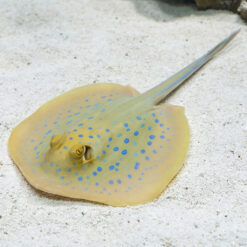
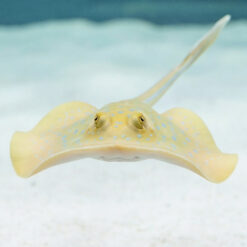
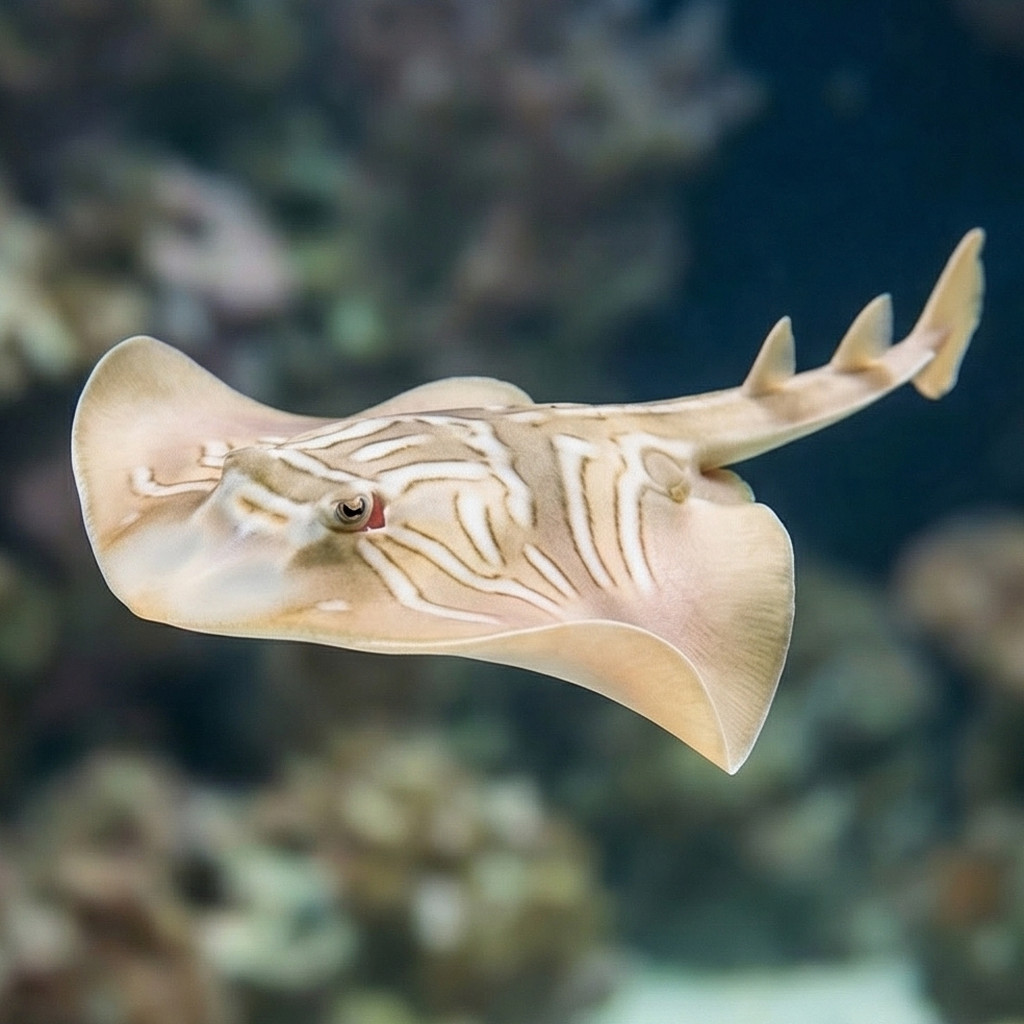
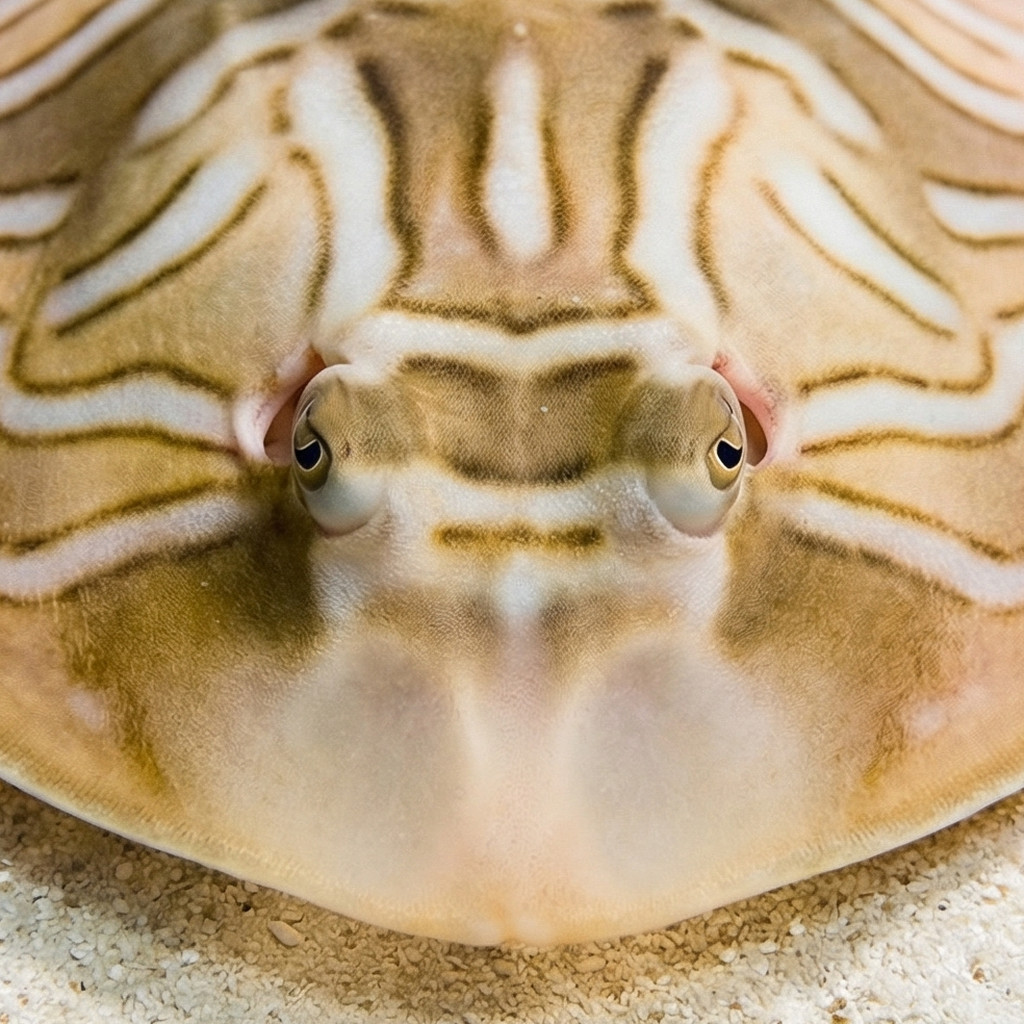
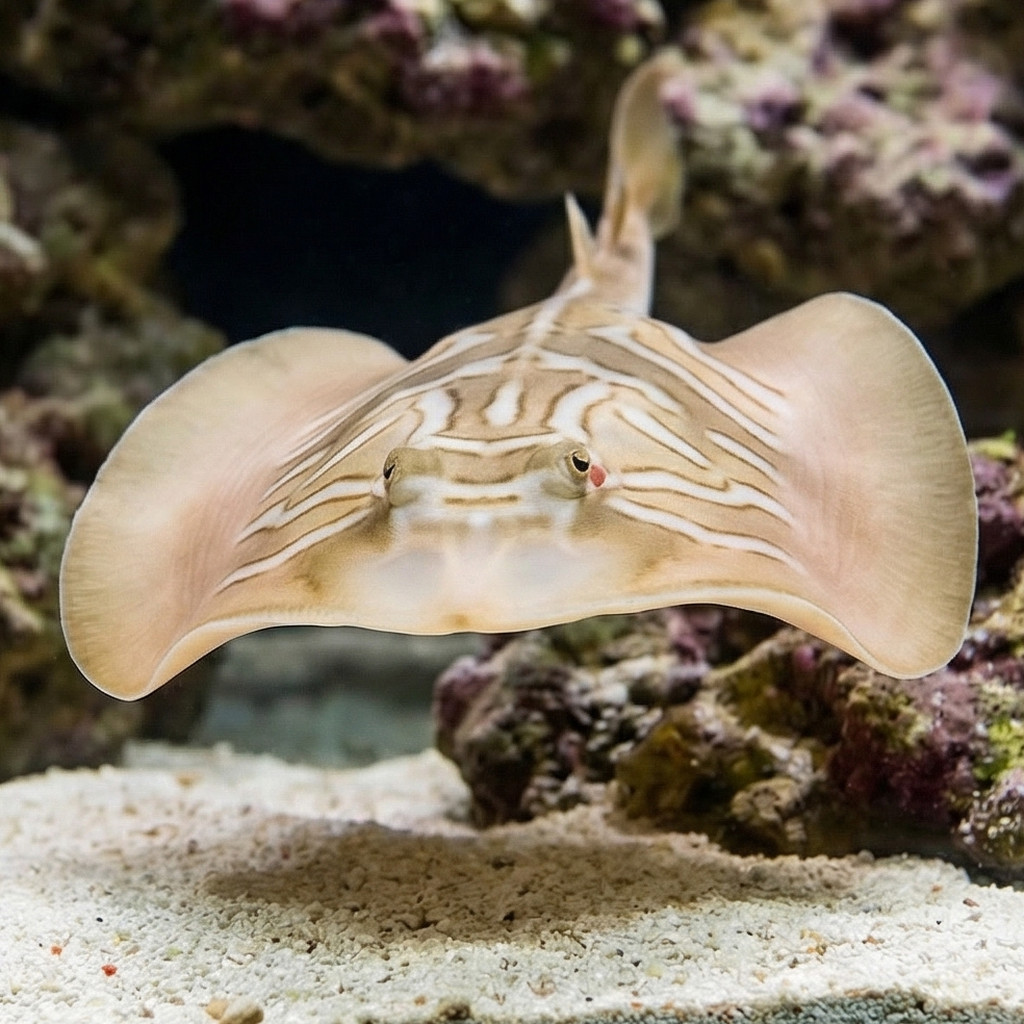
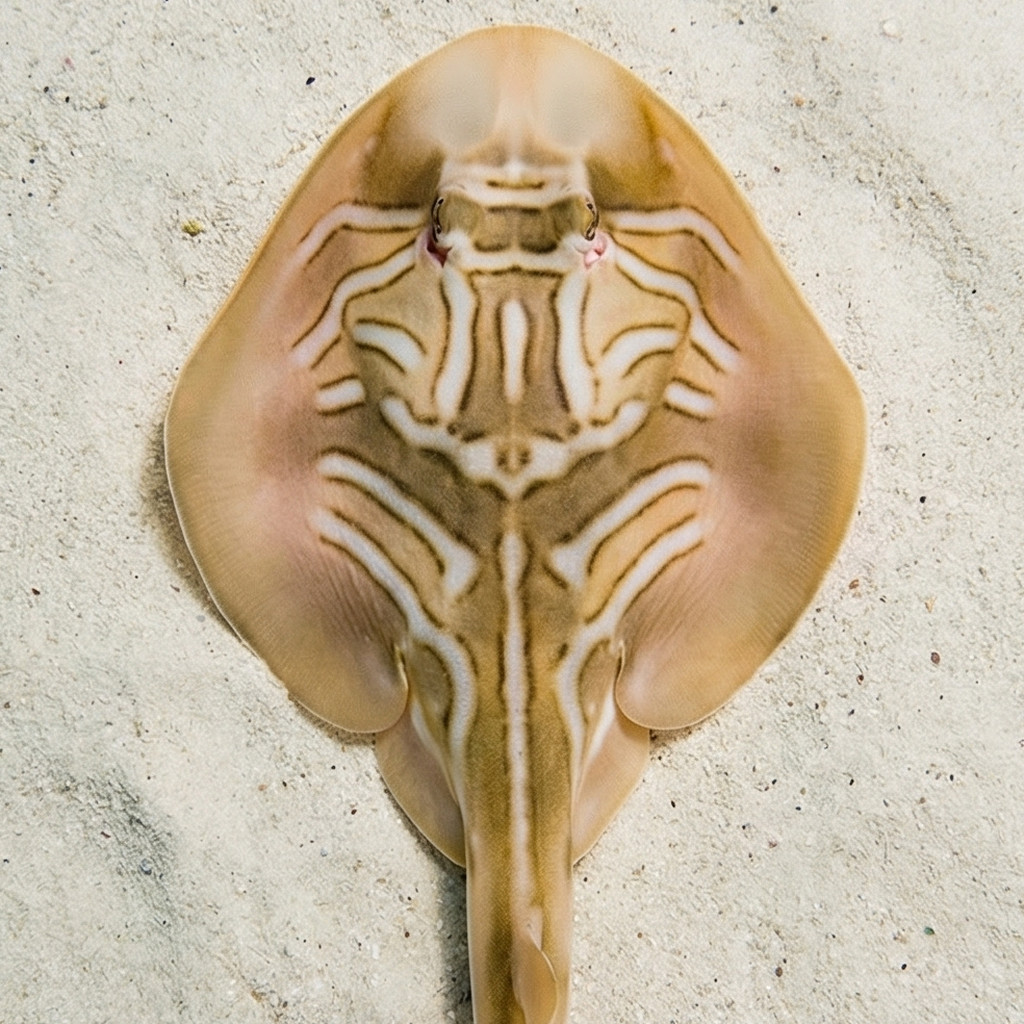
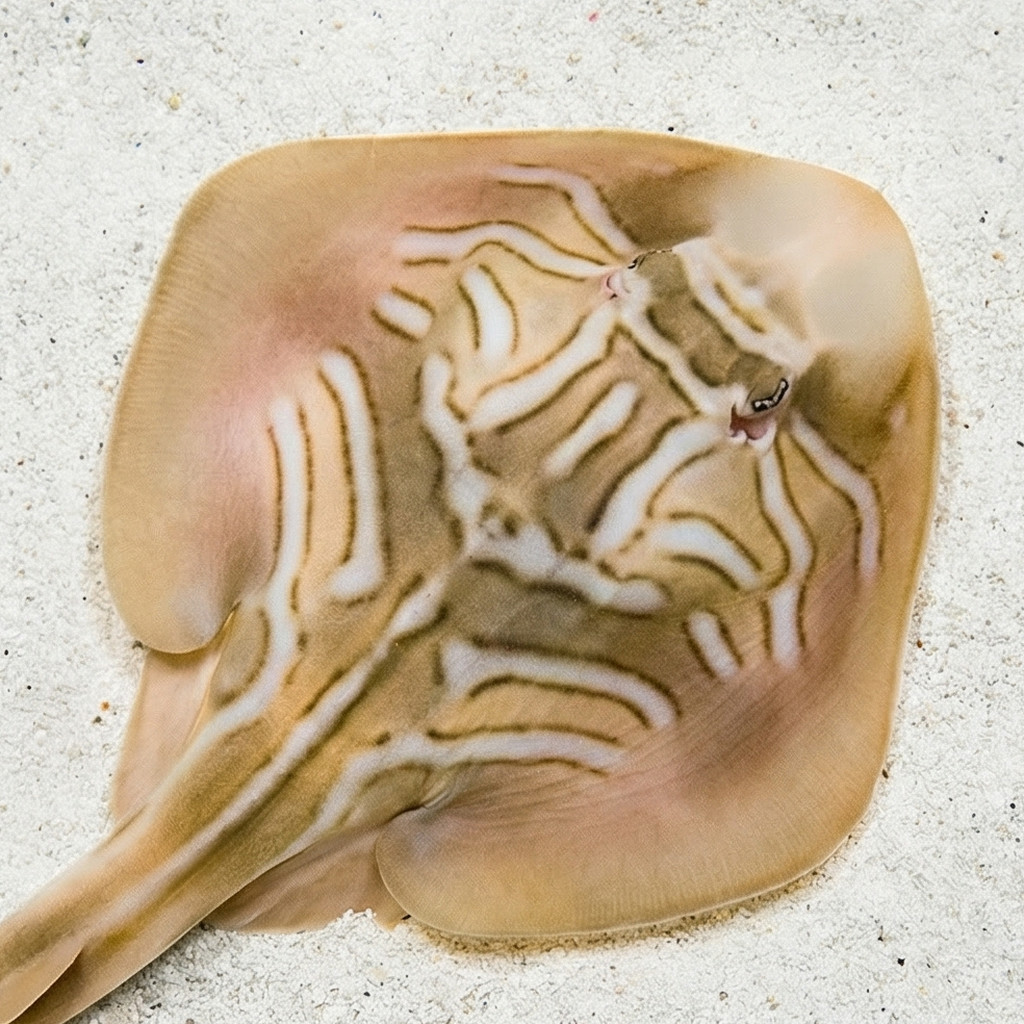
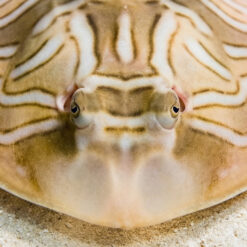
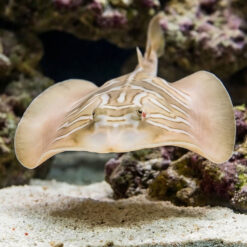
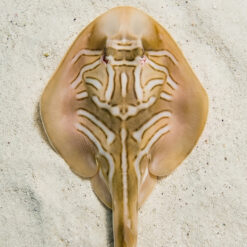
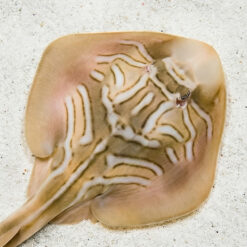
The Eastern Fiddler Ray (often called a banjo shark) is a bottom-dwelling guitarfish from Australia that spends most of its time cruising over sand and seagrass areas. Its rounded “disc” shape and bold banded pattern make it a true centerpiece for large, open-bottom marine systems.
What You’ll Observe:
- Gliding along the sand with smooth, steady movement
- Settling into shallow sand and partially burying at rest
- “Hunting” the bottom by nosing into sand for buried foods
- Taking larger meaty foods methodically once it recognizes a feeding spot
Set up your aquarium with a wide, open sand flat and keep rockwork secured and pushed to the edges to preserve cruising room. Offer a rotation of meaty foods (shrimp, squid, scallop, and other marine-based items), and use tongs or a feeding stick to place food on the sand so it can feed at its own pace. Choose tankmates that stay calm near the bottom and won’t rush every feeding, and you’ll get consistent, natural foraging behavior.
Will it spend a lot of time buried in the sand?
Yes—partial burying is a normal resting behavior, and many keepers see it most often during quiet periods.
How do people make sure it actually gets its share of food?
A common approach is target-feeding with tongs or a feeding stick, placing food on the sand in the same area each time.
Does it rearrange the aquascape?
It can shift sand while cruising and foraging, so most hobbyists build rockwork on a stable base and keep loose frags out of the sand zone.
Can it live with ornamental shrimp, crabs, or snails?
Most discussions treat these as food items for rays over time, so keepers usually plan the tank around fish-compatible livestock instead.
What tank footprint matters more than “gallons” with rays?
Keepers focus on open bottom area (front-to-back width and length) so the ray can turn easily and cruise without weaving through rockwork.
Each fish is checked for strong appetite and activity before we approve it for your tank.
Recently viewed products