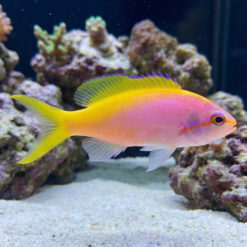
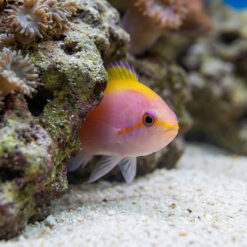
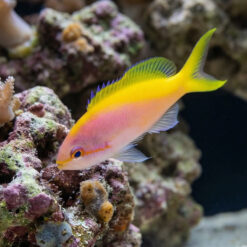
Evansi Anthias
Mirolabrichthys evansi
Original price was: $110.99.$58.99Current price is: $58.99.
| Stock | Variations | Price | Quantity | |
|---|---|---|---|---|
| Only 6 left | 2 - 3" - Indian Ocean | Original price was: $110.99.$58.99Current price is: $58.99. |
-
+
|
|
| Out of Stock | 2" or smaller - Indian Ocean | Original price was: $106.99.$55.99Current price is: $55.99. | Email me |
Every order ships with our standard 3-hour live arrival guarantee. Need more time? Add our 5-Day Guarantee at checkout.
Full guarantee terms →Ships Monday – Thursday for next-day arrival at your nearest FedEx Hold location — typically ready by 9 AM. We monitor every delivery.
Shipping details →
Monday – Friday 8 AM – 9 PM
Saturday 12 PM – 4 PM
Sunday 12 PM – 9 PM
Healthy, stable animals from vetted suppliers — inspected before packing, shipped overnight. Decades of experience built this model so we can deliver premium livestock at 30%+ less than you'd pay elsewhere.
| Care Level | Expert |
|---|---|
| Temperament | Peaceful |
| Reef Safe | Yes |
| Functional Benefit | Ornamental Only |
| Diet Type | Planktivore |
| Mininum Tank Size | 70 gallons |
| Max Size | 5 inches |
| Temperature | 72–78°F |
| pH Range | 8.1–8.4 |
| Specific Gravity | 1.022–1.025 |
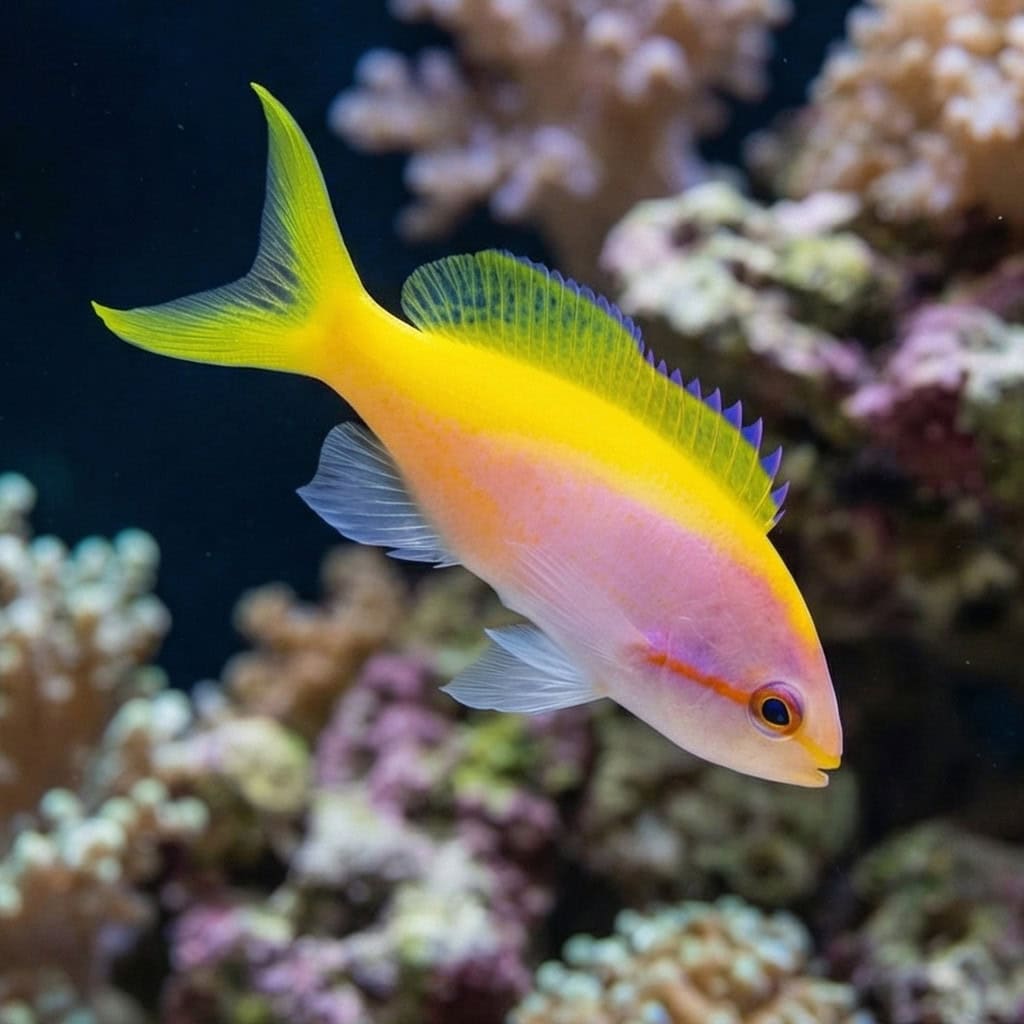
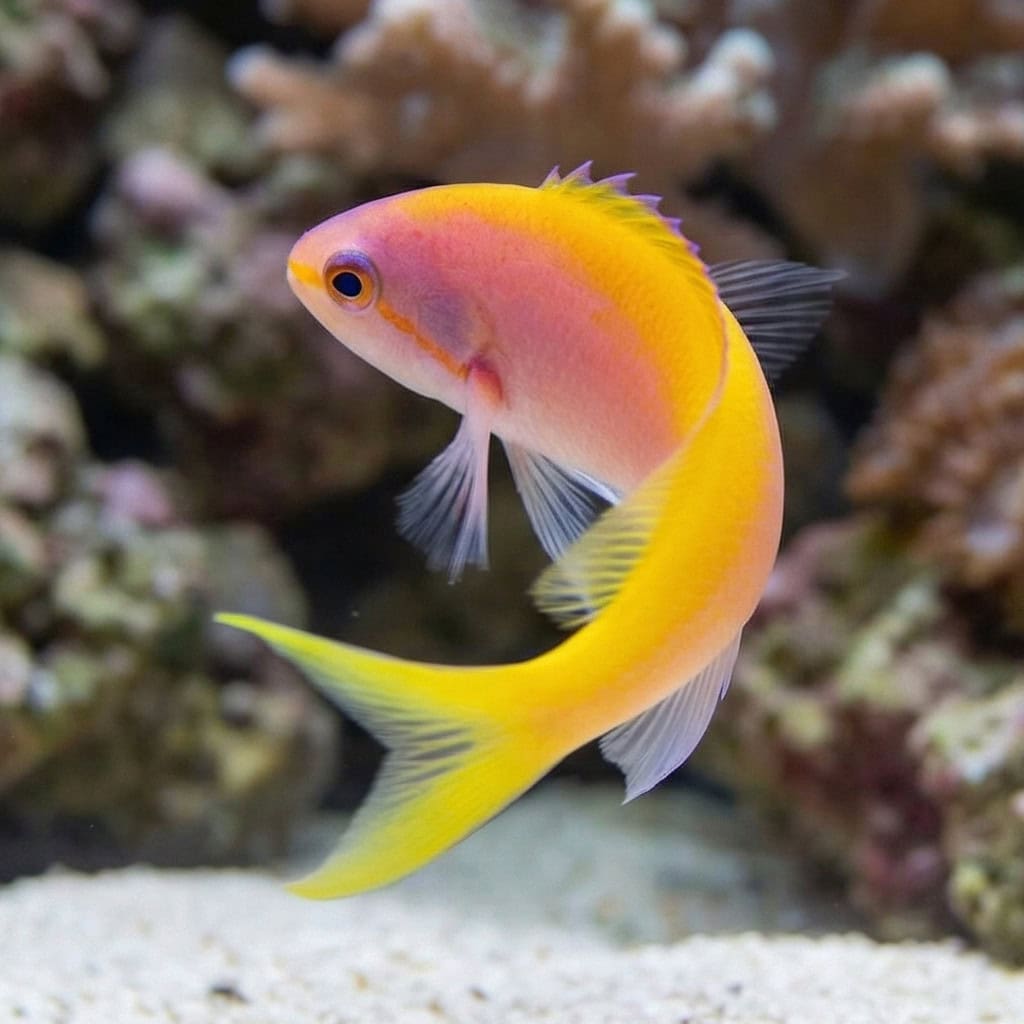
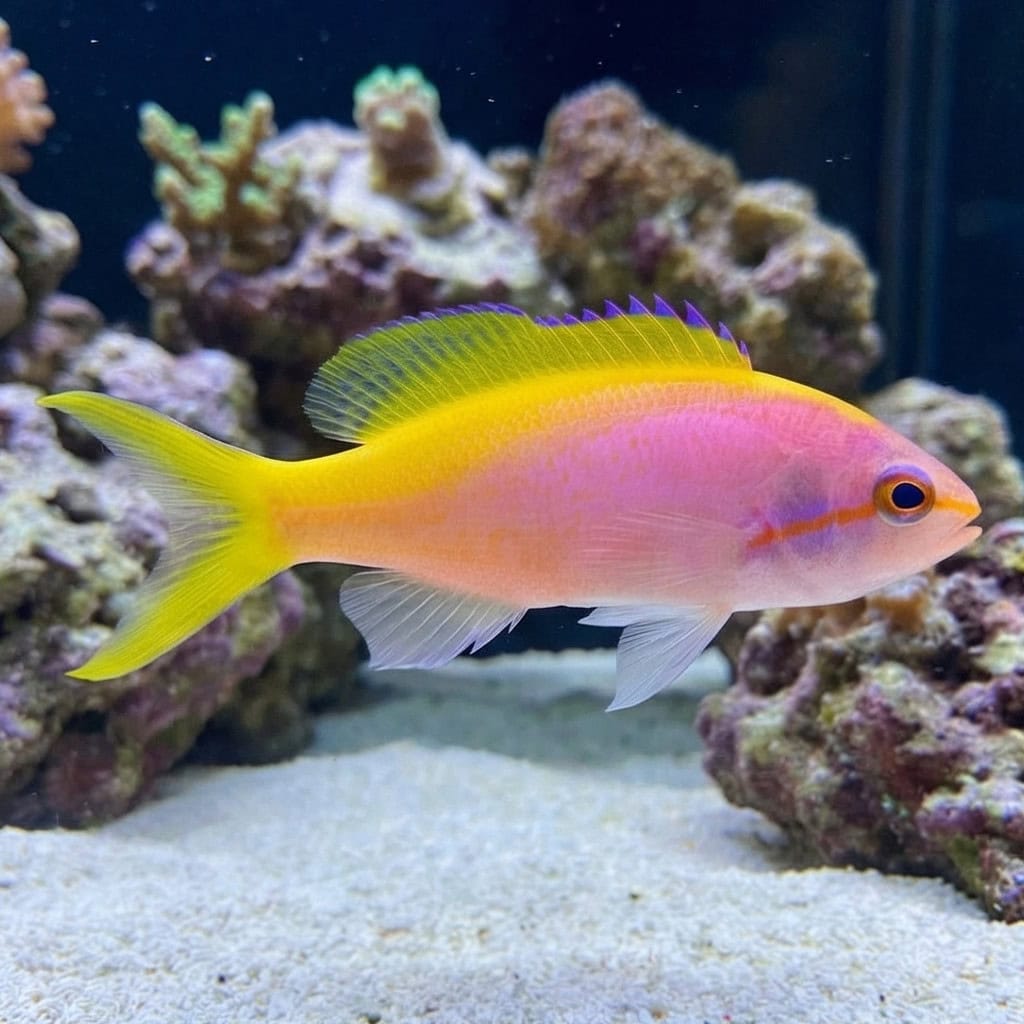
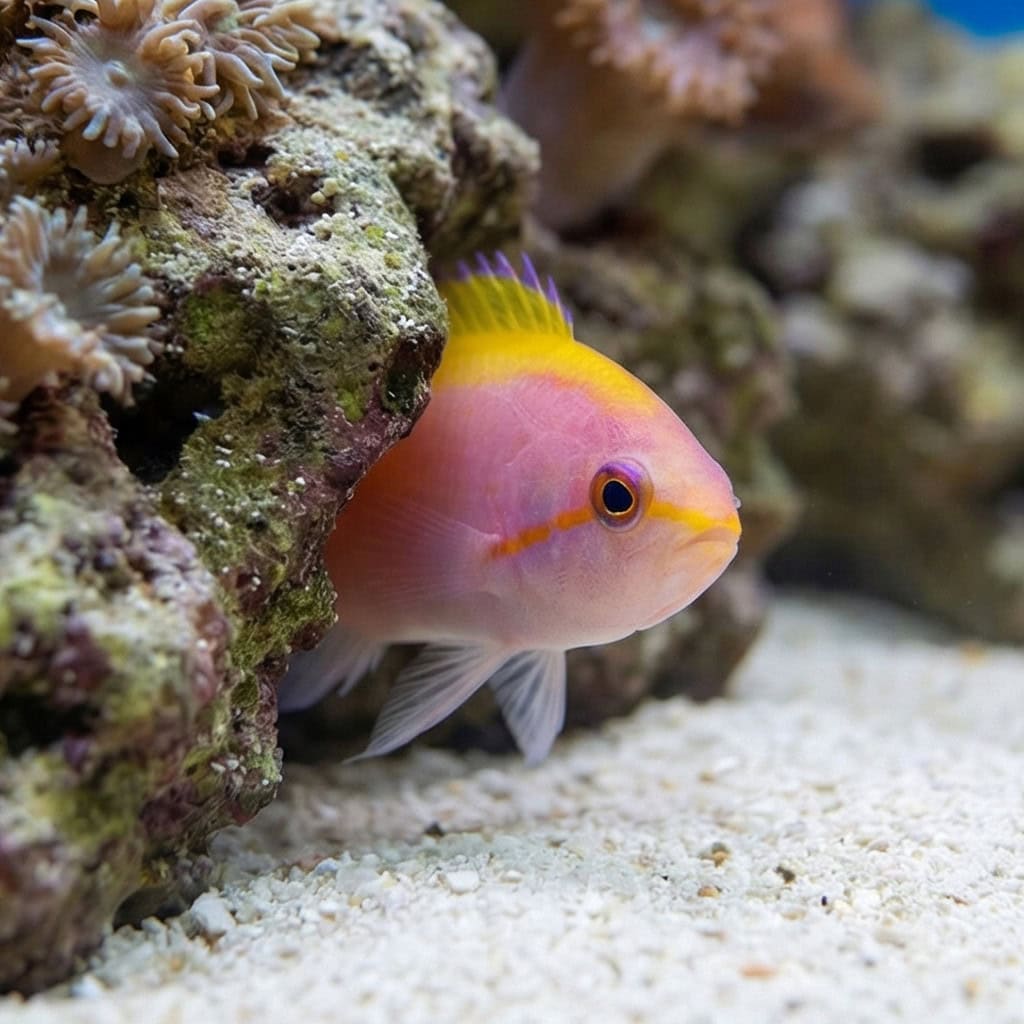
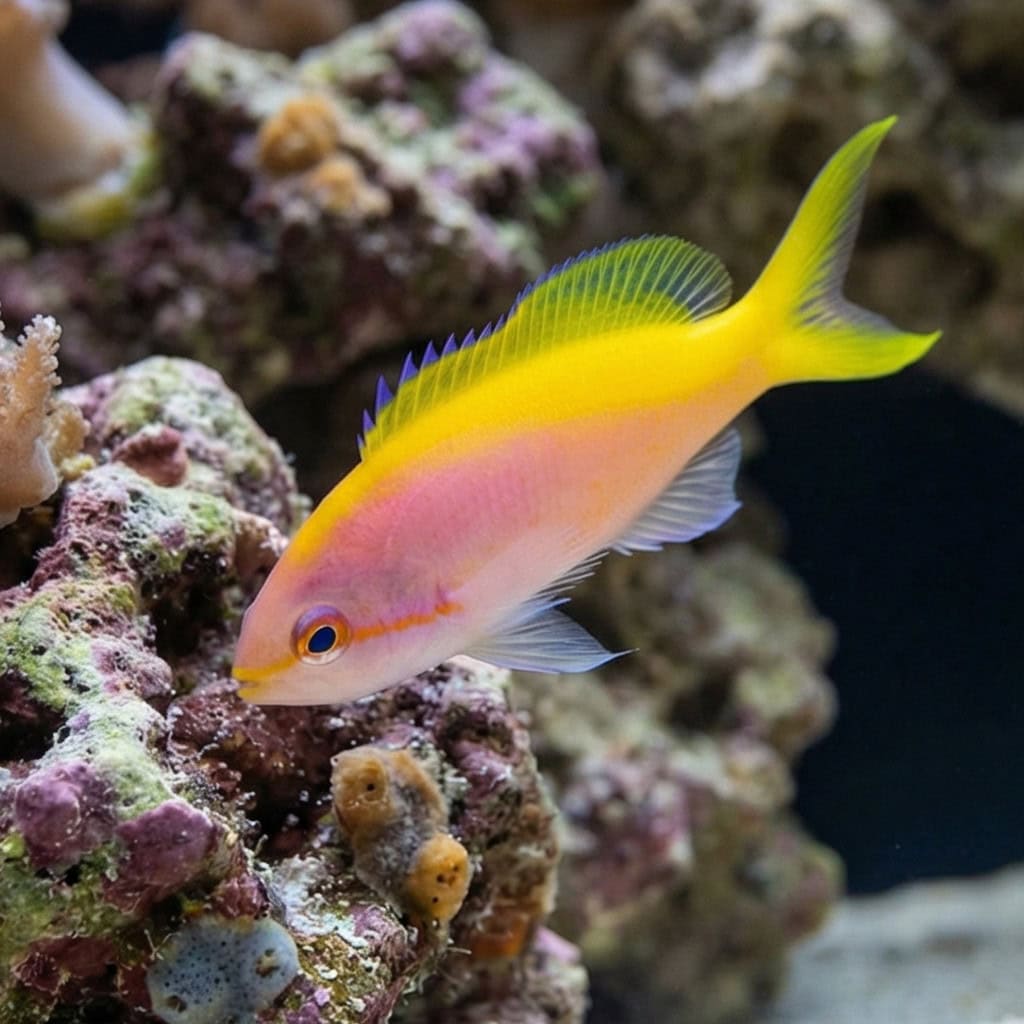
Evansi Anthias (Mirolabrichthys evansi), also called the Yellowback or Yellowtail Anthias, is a reef-compatible planktivore known for a pink-to-mauve body with a bright yellow back and yellow in the tail. In nature it’s found in the Indian Ocean and is often associated with deeper reef slopes, which translates well to aquariums with open water above rockwork.
What You’ll Observe:
- A calm, midwater swimmer that spends time hovering near ledges and then moving out into the water column
- Looser “shoaling” behavior that tightens up at feeding time
- Clear male/female social structure when kept as a small group
- More consistent daytime activity once it recognizes your feeding routine
Provide a mature reef with plenty of rock overhangs plus open swimming room so it can transition between cover and the water column. Offer small meaty planktonic foods multiple times daily and let some drift in the flow to encourage natural feeding responses. Kept as one male with several females, they settle into a stable display pattern and become a regular part of the tank’s daily motion.
Do they usually stay hidden right after introduction?
Many keepers report they spend the first days exploring ledges and choosing a “home” area, then show themselves more predictably once feeding times feel consistent.
Will they ignore food even when it drifts right past them?
It’s commonly reported that they watch food first and then begin taking bites after they associate the tank with repeated small feedings.
Do they do better in the open water or close to rockwork?
Hobbyists often describe the best viewing when there are overhangs/ledges nearby’fish hover close to structure and then move out to feed.
Can they be weaned onto pellets over time?
Some keepers report success by mixing pellets into frequent frozen feedings and gradually increasing the pellet ratio once the fish is eating confidently.
How tight is their “schooling” in a home aquarium?
They’re usually described as a loose shoal that comes together most noticeably around food and when sharing a preferred midwater zone.
Our selection process means you get robust, well-adjusted specimens that settle in quickly.
Recently viewed products