
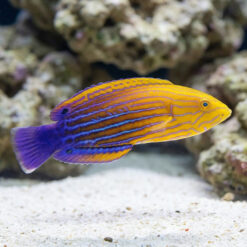
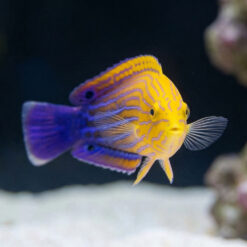
Femininus Wrasse
Anampses femininus
| Stock | Variations | Price | Quantity |
|---|
Every order ships with our standard 3-hour live arrival guarantee. Need more time? Add our 5-Day Guarantee at checkout.
Full guarantee terms →Ships Monday – Thursday for next-day arrival at your nearest FedEx Hold location — typically ready by 9 AM. We monitor every delivery.
Shipping details →
Monday – Friday 8 AM – 9 PM
Saturday 12 PM – 4 PM
Sunday 12 PM – 9 PM
Healthy, stable animals from vetted suppliers — inspected before packing, shipped overnight. Decades of experience built this model so we can deliver premium livestock at 30%+ less than you'd pay elsewhere.
| Care Level | Expert |
|---|---|
| Temperament | Peaceful |
| Reef Safe | With Caution |
| Functional Benefit | Ornamental Only |
| Diet Type | Carnivore |
| Mininum Tank Size | 120 gallons |
| Max Size | 10 inches |
| Temperature | 72–78°F |
| pH Range | 8.1–8.4 |
| Specific Gravity | 1.022–1.025 |
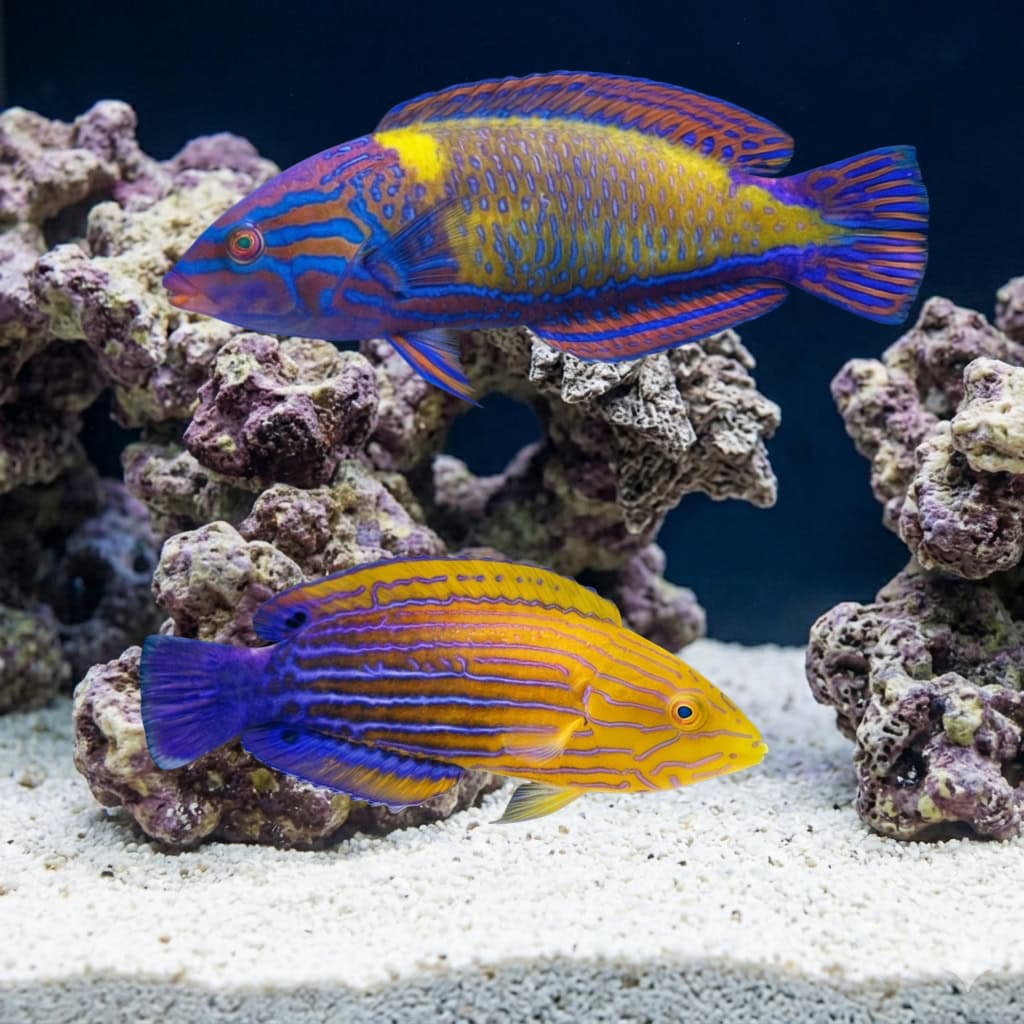
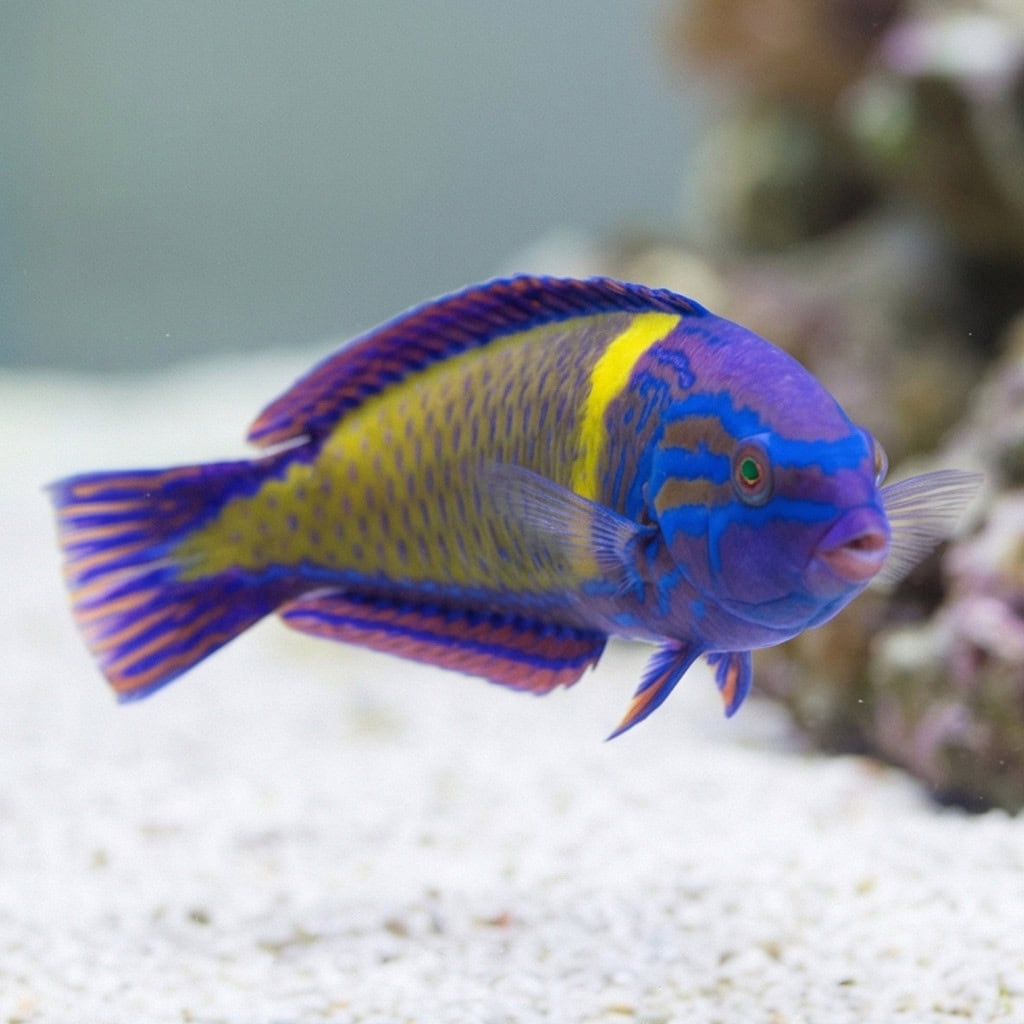
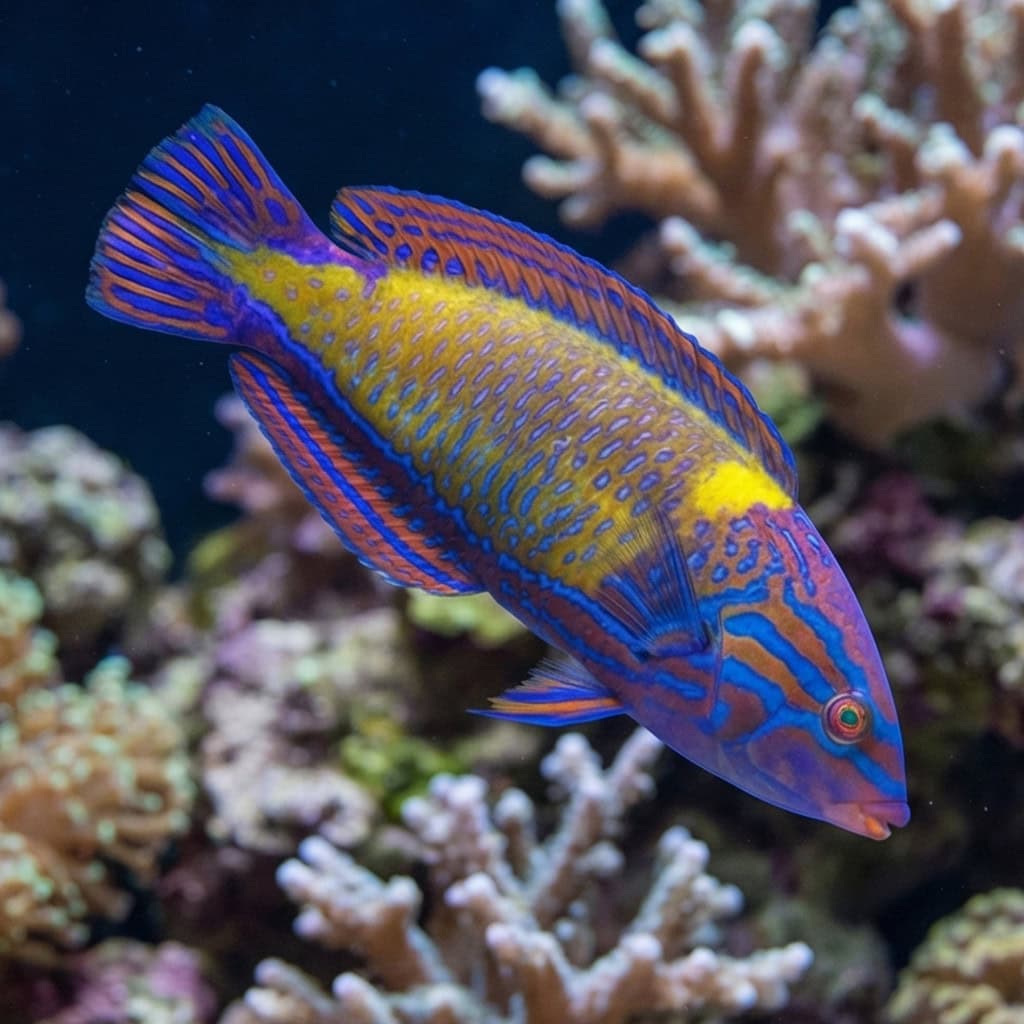
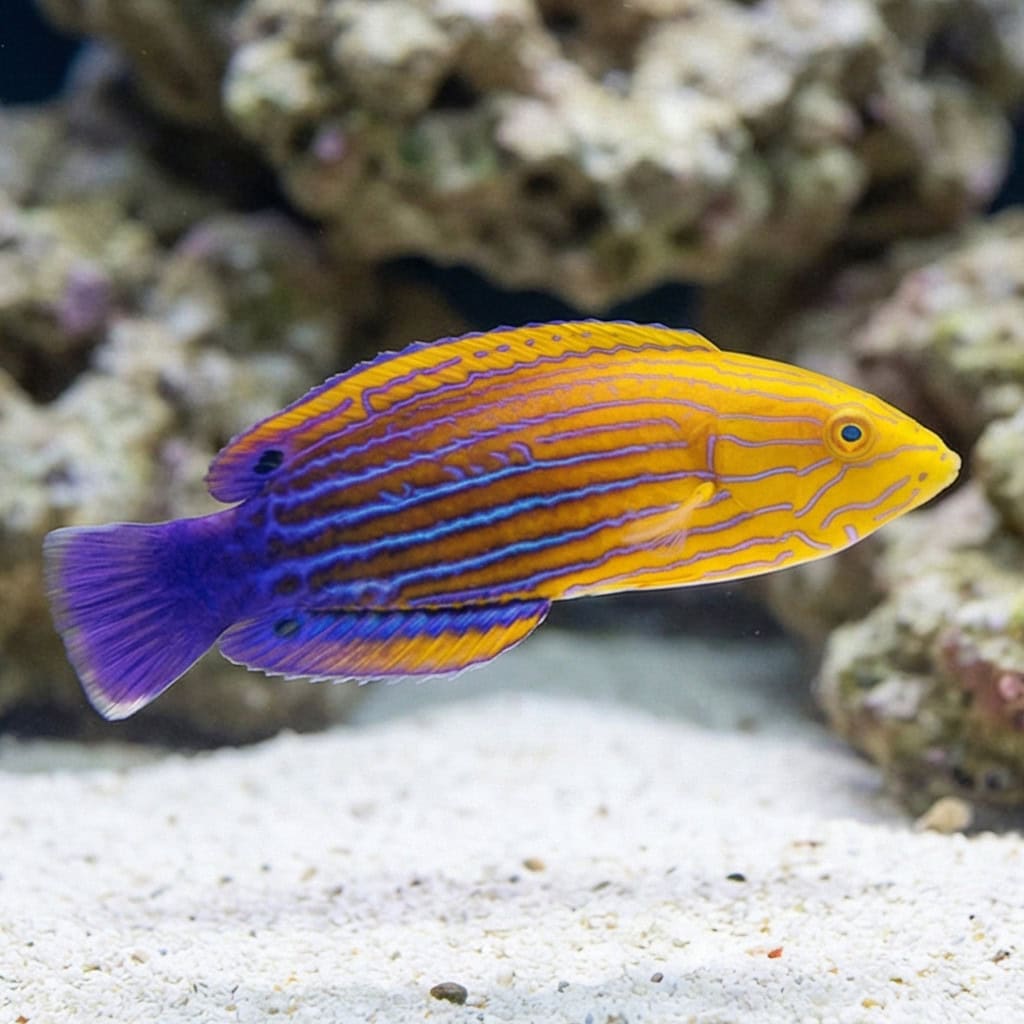
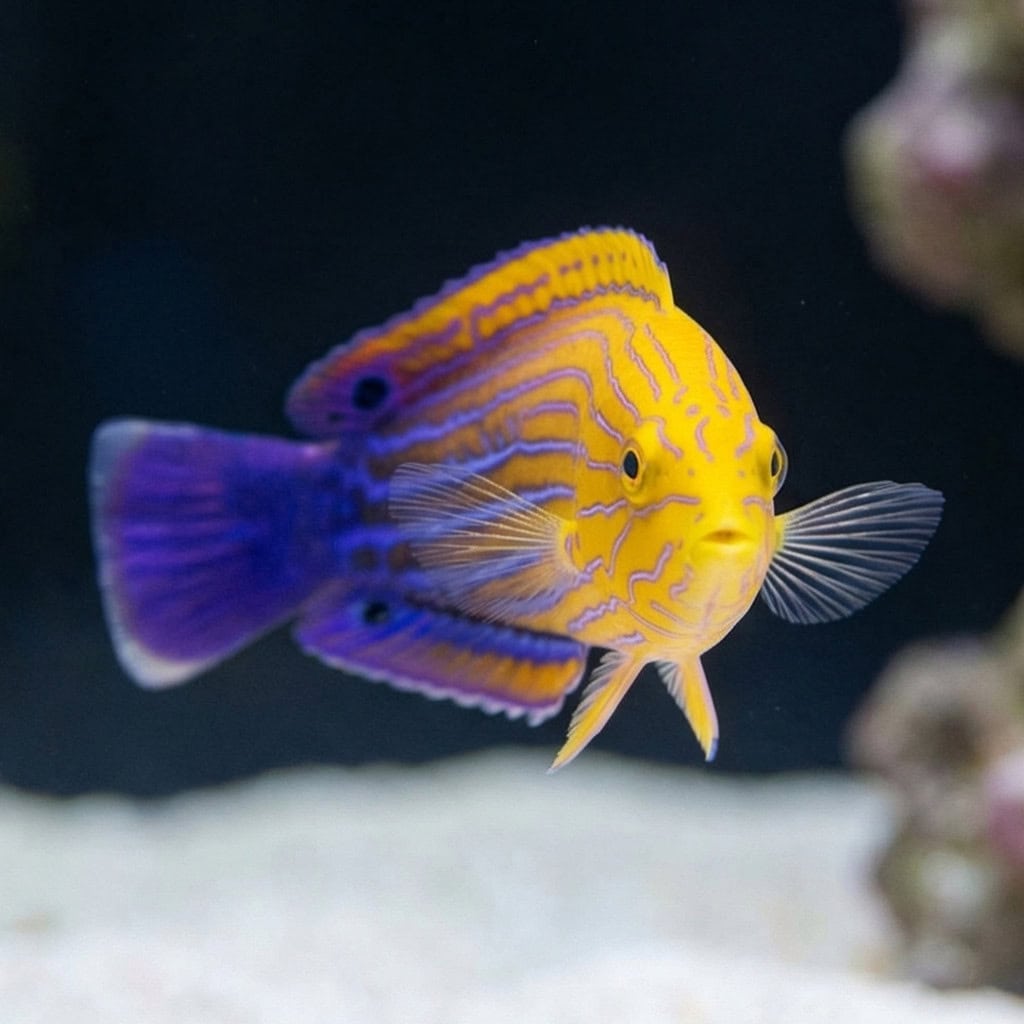
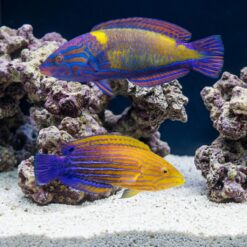
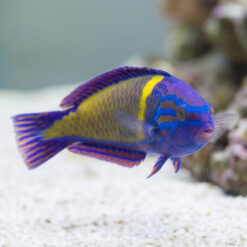
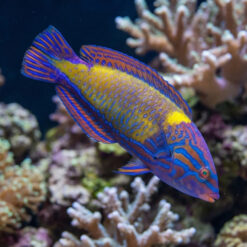
The Femininus Wrasse (Anampses femininus), often listed as a Blue-Striped Tamarin Wrasse, is a slender reef wrasse with a warm-toned base color and fine blue striping that reads as a tight pattern when it’s in motion. It comes from tropical reef zones in the Pacific, where it spends much of its day cruising rockwork and nearby sand.
What You’ll Observe:
- Patrol-style swimming along rock faces, with quick stops to inspect crevices
- A consistent “lights out” routine where it disappears into the sand to rest
- Short bursts of speed across open areas between rock structures
- Noticeable interest in small food items drifting past, especially when fed in repeated small portions
Provide a mature aquarium with open swimming lanes, stable rockwork, and a fine sandbed deep enough for nightly burrowing. A tight-fitting lid helps keep its activity contained when it makes fast, upward dashes. Offer a variety of small meaty foods (and repeat small feedings) so it can settle into a steady daily feeding pattern.
How deep should the sandbed be for normal “burrowing” behavior?
A fine, soft sandbed that allows easy burying tends to work best, and many keepers aim for a clearly “diggable” layer rather than a thin decorative coating.
Is it normal if I don’t see it much right after introduction?
Yes—many burying wrasses spend long stretches following a new schedule at first, then begin appearing more predictably once they sync to your tank’s lighting and feeding rhythm.
What’s a practical way to get it eating prepared foods consistently?
Starting with smaller, scent-rich frozen foods and then mixing in other items over time helps it recognize new foods while keeping feedings familiar.
Can it be kept with other wrasses long-term?
It often does well in a wrasse community when introductions are planned; using an acclimation box and spacing out introductions can help keep day-to-day interactions calm.
Do they mix well with other Anampses species?
Some hobbyists report success, especially in larger systems, when the new fish is introduced with a slow, controlled “see but don’t touch” period before full release.
Shipped with pure oxygen and temperature control so it arrives stress-free and ready to eat.
Recently viewed products