
Golden Angelfish
Centropyge aurantia
| Stock | Variations | Price | Quantity |
|---|
Every order ships with our standard 3-hour live arrival guarantee. Need more time? Add our 5-Day Guarantee at checkout.
Full guarantee terms →Ships Monday – Thursday for next-day arrival at your nearest FedEx Hold location — typically ready by 9 AM. We monitor every delivery.
Shipping details →
Monday – Friday 8 AM – 9 PM
Saturday 12 PM – 4 PM
Sunday 12 PM – 9 PM
Healthy, stable animals from vetted suppliers — inspected before packing, shipped overnight. Decades of experience built this model so we can deliver premium livestock at 30%+ less than you'd pay elsewhere.
| Care Level | Moderate |
|---|---|
| Temperament | Semi-Aggressive |
| Reef Safe | With Caution |
| Functional Benefit | Ornamental Only |
| Diet Type | Omnivore |
| Mininum Tank Size | 55 gallons |
| Max Size | 4 inches |
| Temperature | 72–78°F |
| pH Range | 8.1–8.4 |
| Specific Gravity | 1.022–1.025 |
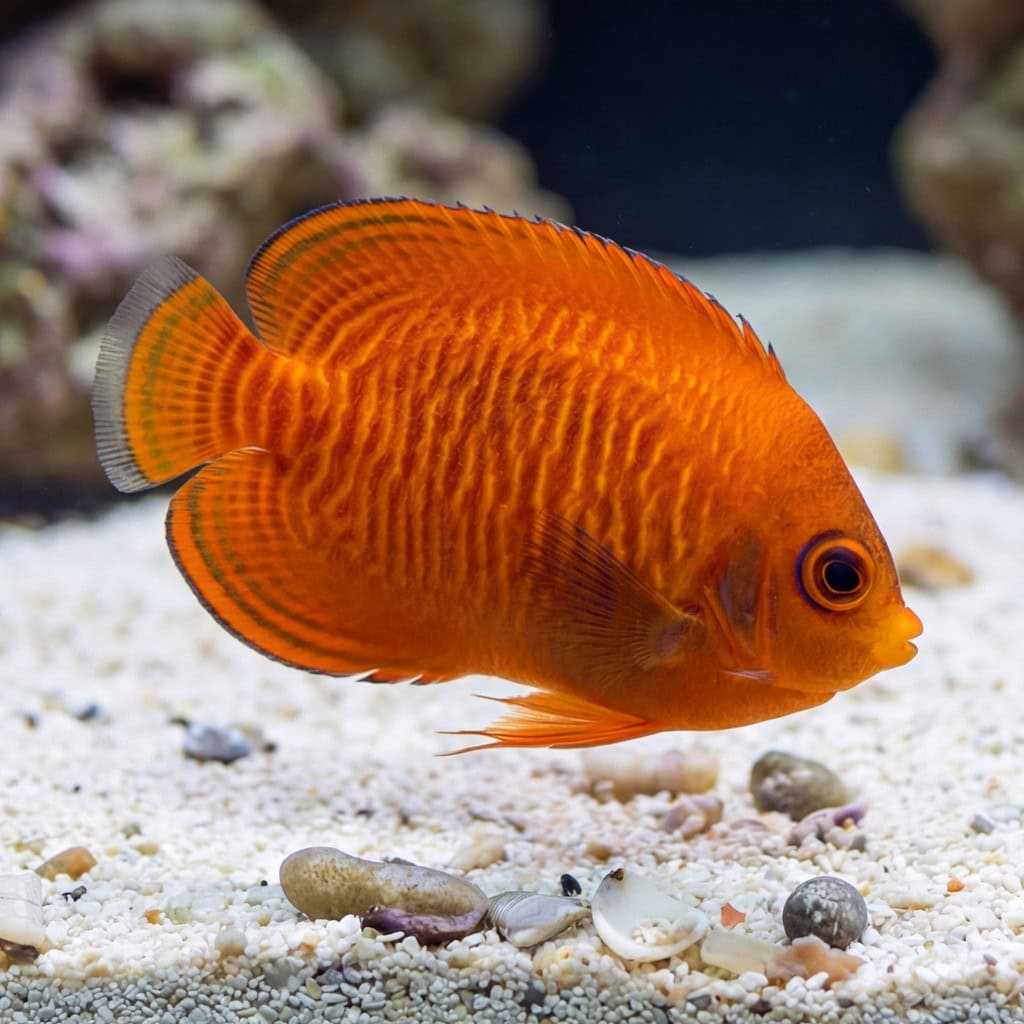
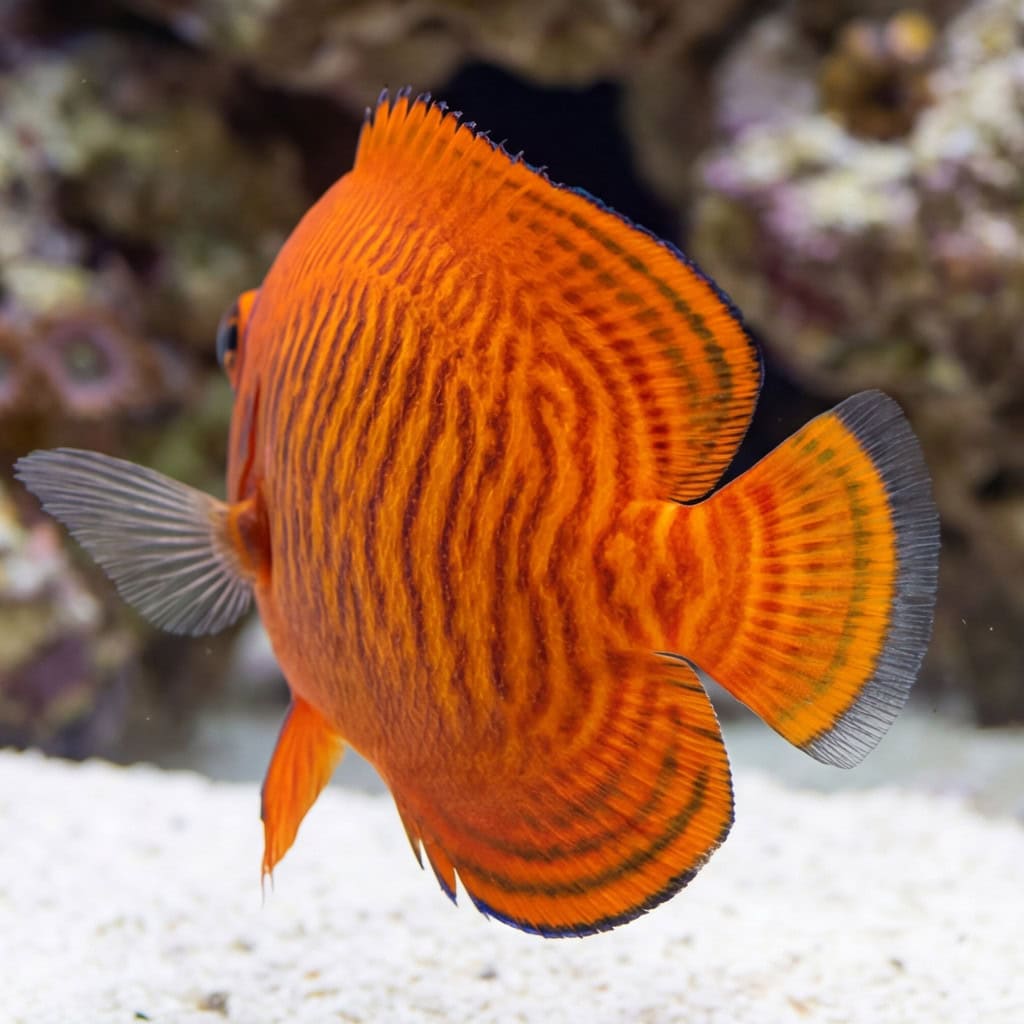
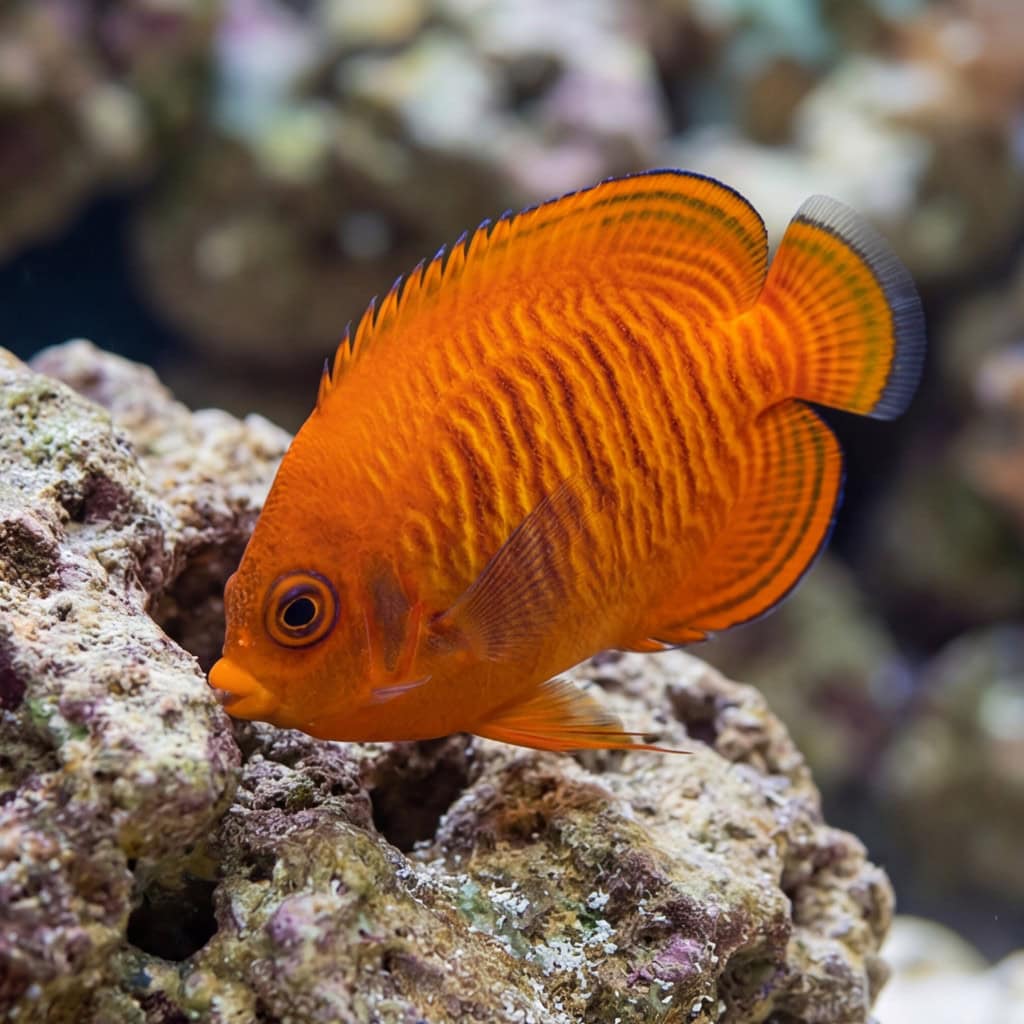
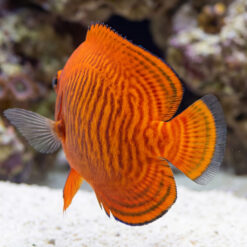
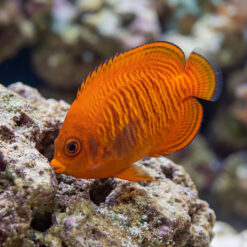
The Golden Angelfish (Centropyge aurantia), also called the golden pygmy angelfish or velvet dwarf angel, is a small Centropyge with a deep orange base color and thin, wavy golden striping. It’s a Western Pacific reef species that spends much of its time working through shaded rockwork and coral structure.
What You’ll Observe:
- Short, purposeful “loops” through caves and overhangs, with longer viewing windows often happening around feeding time
- Frequent picking at rock and reef surfaces as it searches for natural foods
- A routine that can shift toward more open swimming as it becomes familiar with your aquascape
- Clear interest in specific “home” areas, returning to the same tunnels and crevices repeatedly
Provide a mature reef with abundant live rock, multiple shaded retreats, and steady grazing surfaces so it can follow its natural foraging pattern. Offer a varied menu (quality frozen, small meaty items, and algae-based foods) in smaller portions more than once per day to keep feeding consistent. If adding around other dwarf angels, many hobbyists find introductions go smoother when rockwork is slightly reworked and the new fish is staged briefly in an acclimation box.
Why do I only see my Golden Angelfish once in a while?
Many keepers report long “out of sight” stretches in rockwork-heavy reefs, followed by short daily appearance windows once it has a preferred route and shelter.
Does it become more visible over time?
Often, yes’after it maps out the tank and learns the feeding rhythm, it may make more regular passes through open areas.
Can I keep it with another dwarf angelfish if I introduce carefully?
Some hobbyists have success when the fish are introduced with separation first (like an acclimation box) and when territories are reset by rearranging parts of the rockscape.
What foods do owners have the best consistency with long-term?
A mixed rotation tends to work best’algae-based foods plus meaty frozen options’so it can switch between grazing and targeted bites.
Is occasional coral sampling “normal” with this species?
Many discussions describe it as variable by individual fish; in mixed reefs it’s often treated as a fish that may test certain corals while still spending most of its day grazing rockwork.
We work with trusted suppliers who keep our specimens healthy and well-fed before shipping.
Recently viewed products