
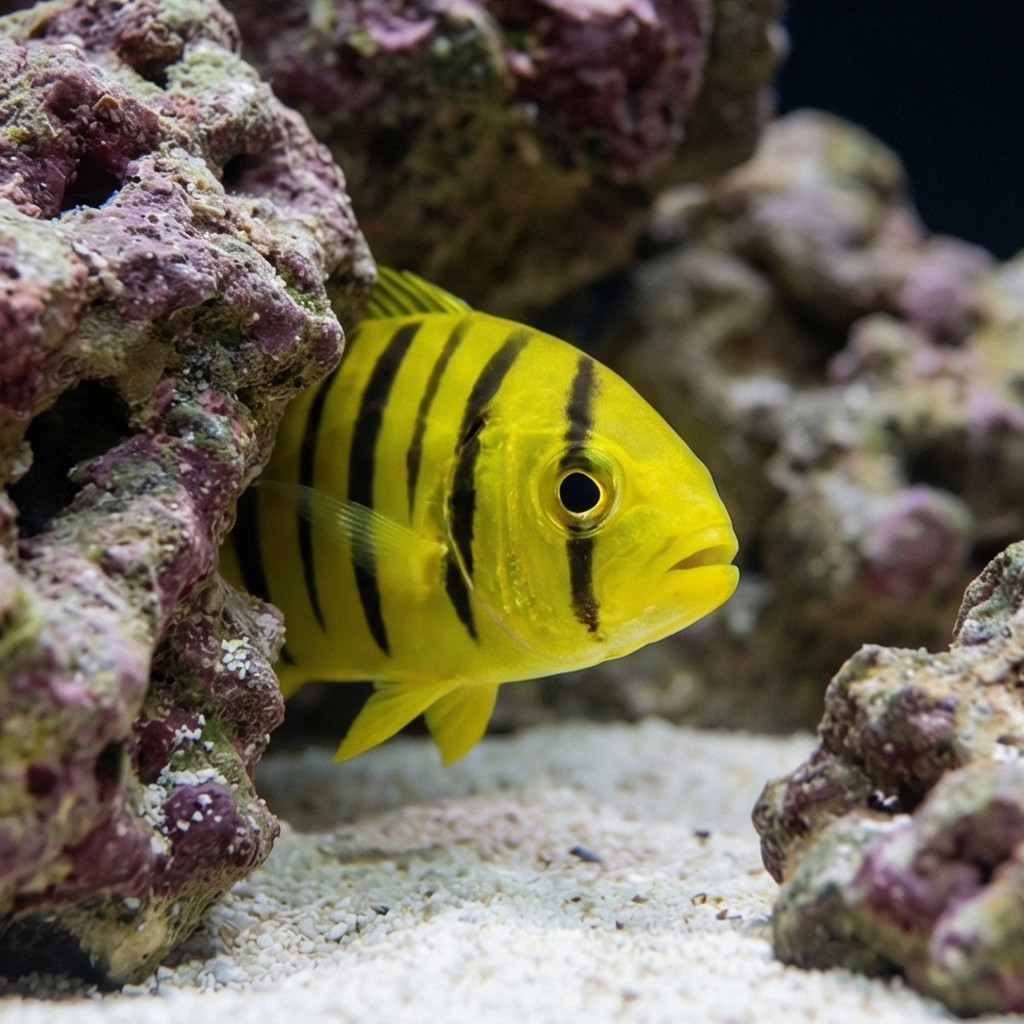
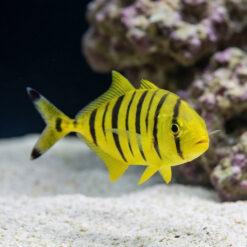
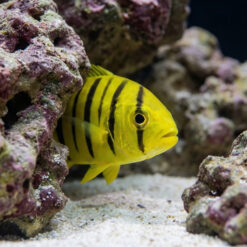
Golden Trevally Pilotfish
Gnathanodon speciosus
| Stock | Variations | Price | Quantity |
|---|
Every order ships with our standard 3-hour live arrival guarantee. Need more time? Add our 5-Day Guarantee at checkout.
Full guarantee terms →Ships Monday – Thursday for next-day arrival at your nearest FedEx Hold location — typically ready by 9 AM. We monitor every delivery.
Shipping details →
Monday – Friday 8 AM – 9 PM
Saturday 12 PM – 4 PM
Sunday 12 PM – 9 PM
Healthy, stable animals from vetted suppliers — inspected before packing, shipped overnight. Decades of experience built this model so we can deliver premium livestock at 30%+ less than you'd pay elsewhere.
| Care Level | Expert |
|---|---|
| Temperament | Peaceful |
| Reef Safe | No |
| Functional Benefit | Ornamental Only |
| Diet Type | Carnivore |
| Mininum Tank Size | 300 gallons+ |
| Max Size | 24 inches |
| Temperature | 72–78°F |
| pH Range | 8.1–8.4 |
| Specific Gravity | 1.022–1.025 |
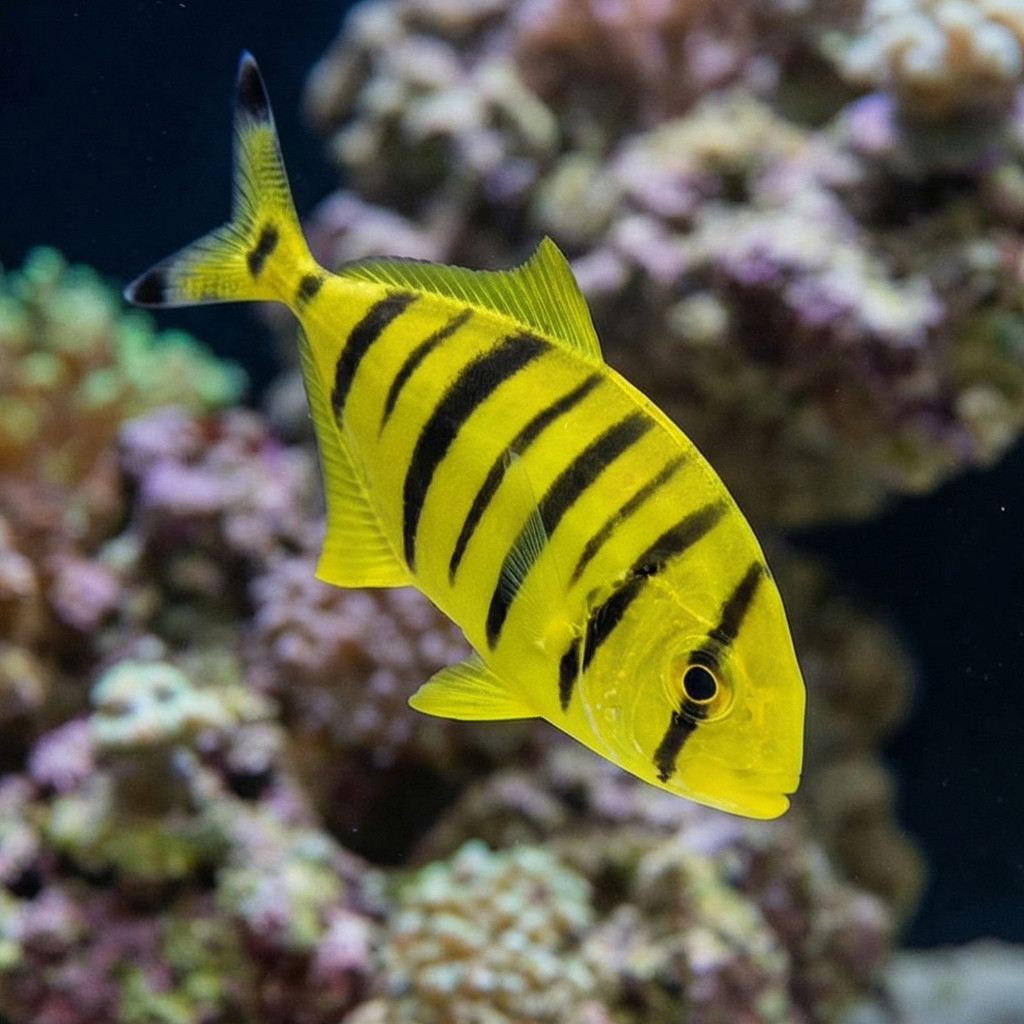
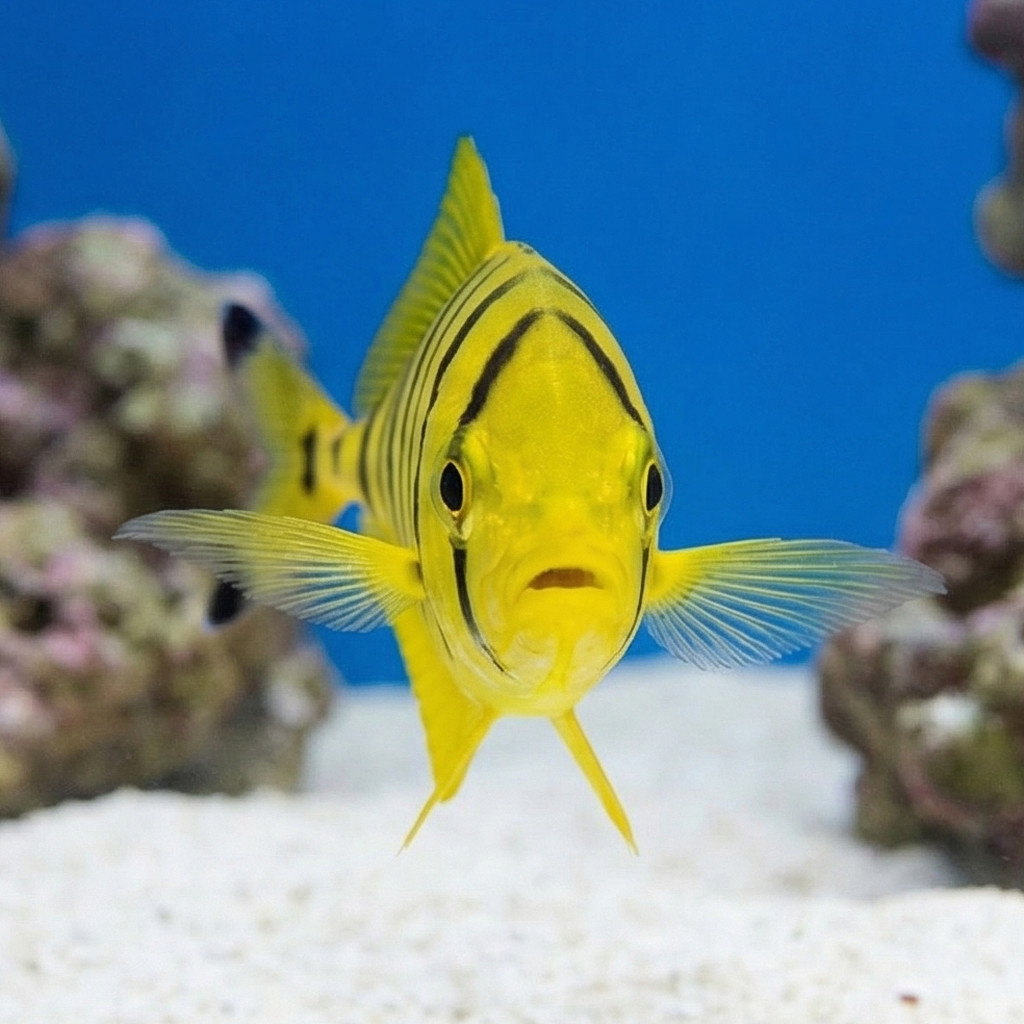
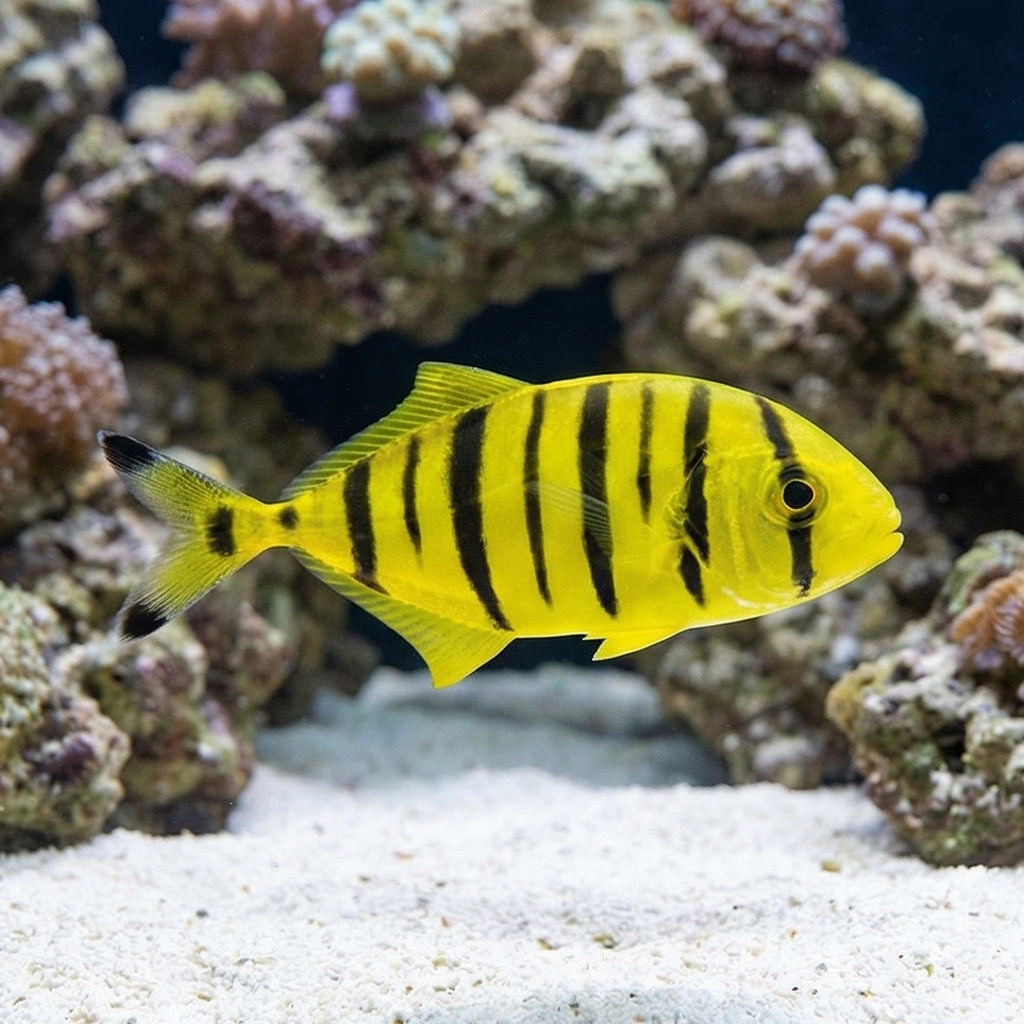
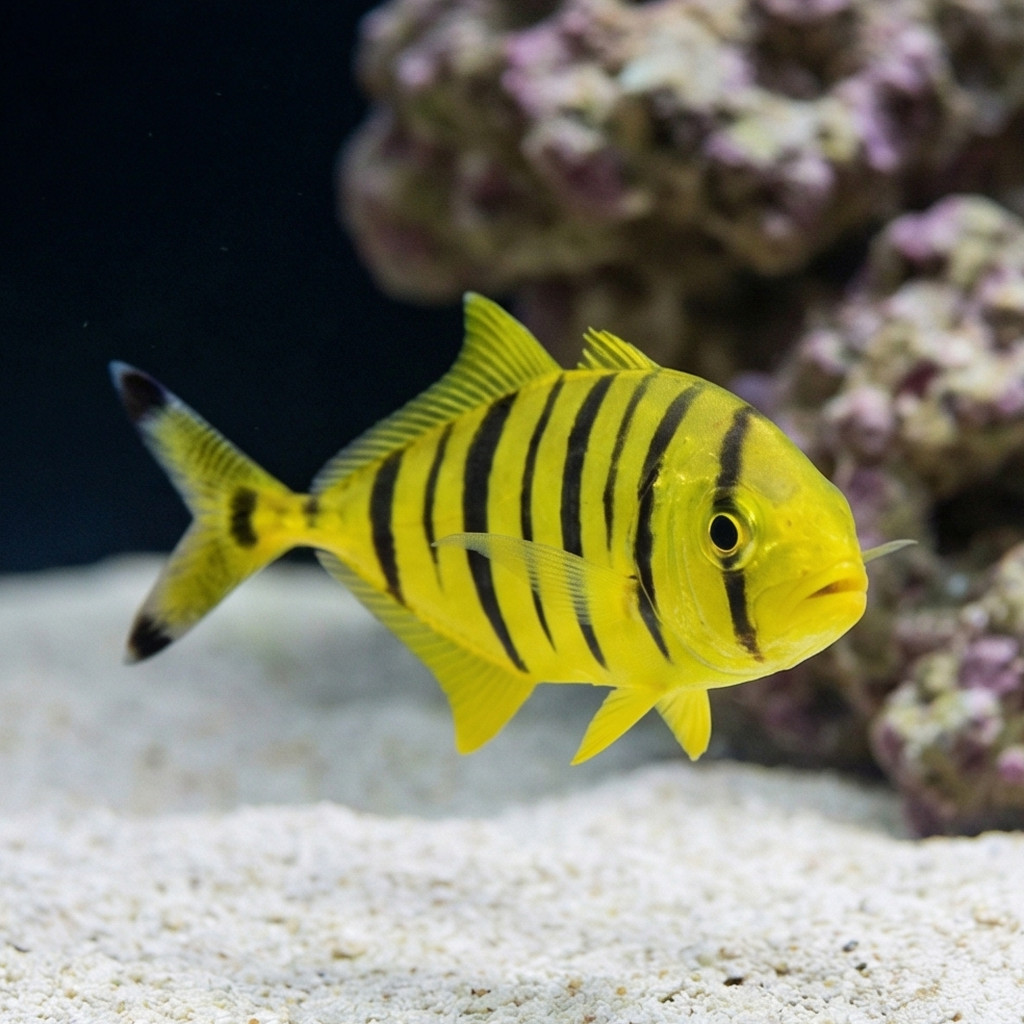
The Golden Trevally Pilotfish (Gnathanodon speciosus) is a fast-swimming jack that shows a bold gold body with dark vertical bands when young. As it matures, the pattern can soften and the body often shifts toward a more silver-gold look, while keeping that classic “trevally” shape built for open water.
What You’ll Observe:
- Patrols open lanes in the tank and makes quick, confident turns around rockwork
- Often stays close to larger fish and may “shadow” them around the aquarium
- Strong feeding response once settled, especially when food is offered in the water column
- A more noticeable, “on the move” presence compared to perch-and-wait fish
Provide a very large, highly oxygenated system with strong, steady flow and plenty of uninterrupted swim space. Offer meaty marine foods (chunked shrimp, clam, squid, and quality frozen blends) in multiple smaller feedings, especially for juveniles that burn energy quickly. House with similarly sized tankmates that won’t be outcompeted or mistaken for food.
Is this the same “pilotfish” that follows sharks in the wild?
This species is commonly sold as “pilotfish,” but hobbyists often note the true Pilotfish is Naucrates ductor; this one is the Golden Trevally (Gnathanodon speciosus).
Why does mine follow other fish (or even my hand at the glass)?
Keepers regularly describe a “shadowing” behavior where juveniles track larger animals closely, which matches the well-known piloting behavior people also report while snorkeling/diving.
Will the gold-and-black banding stay that bright forever?
Many hobbyists report the strongest gold and band contrast is seen in juveniles, with coloration becoming less dramatic as the fish grows.
Do they do better alone or in a small group?
Aquarists often describe them as more natural-looking in groups, but this only works well when the tank is built for multiple large, fast swimmers with ample swim lanes.
What’s a realistic long-term plan as it grows?
Forum discussions commonly center on planning ahead early—treat it like a “grow-out” fish only if you already have a clear upgrade/rehoming path to a public-scale system.
Each fish is checked for strong appetite and activity before we approve it for your tank.
Recently viewed products