
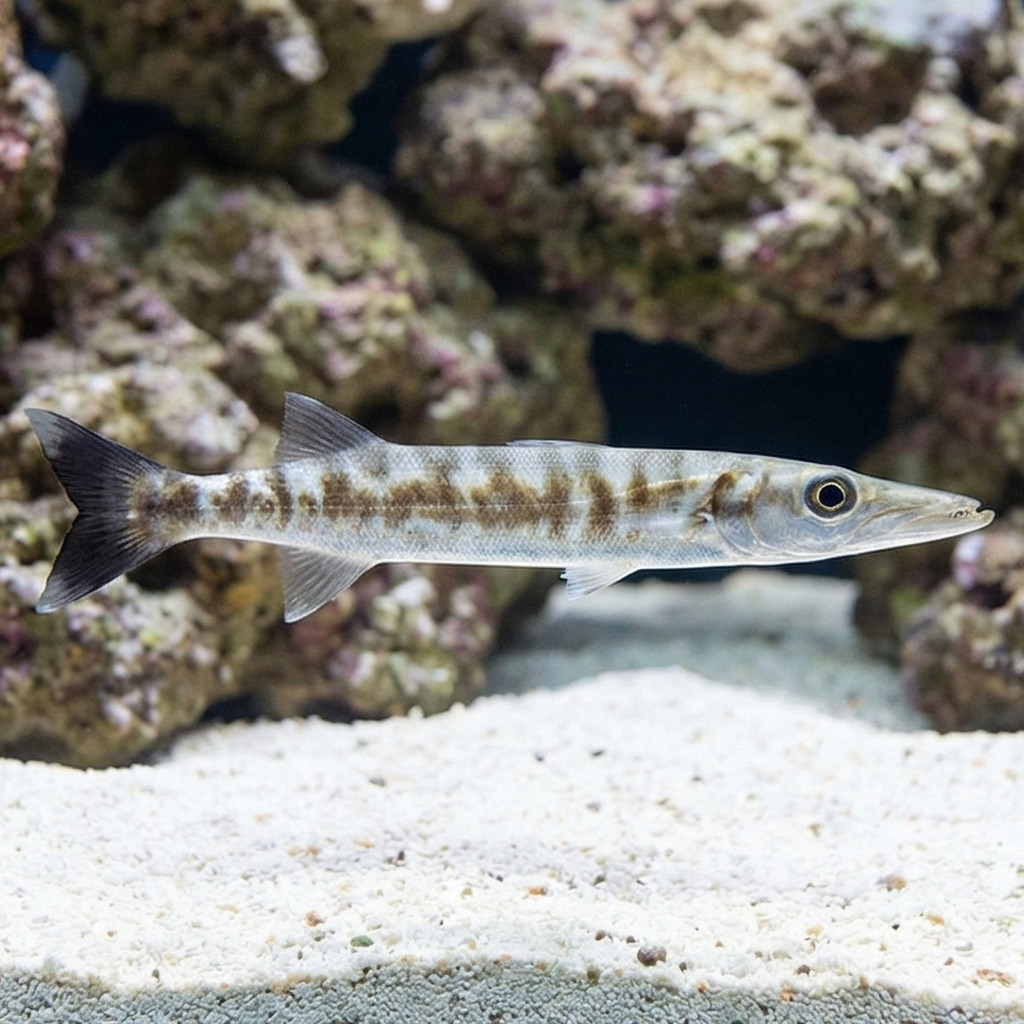
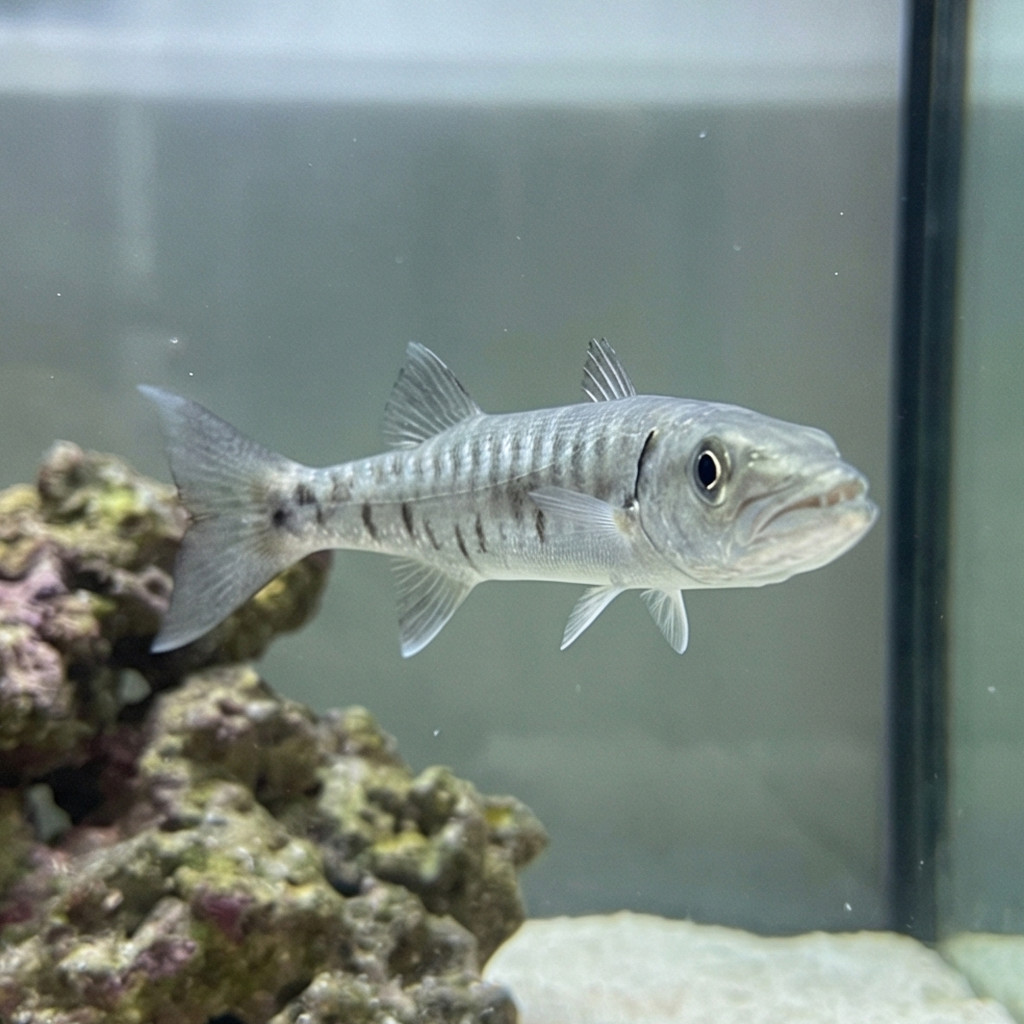
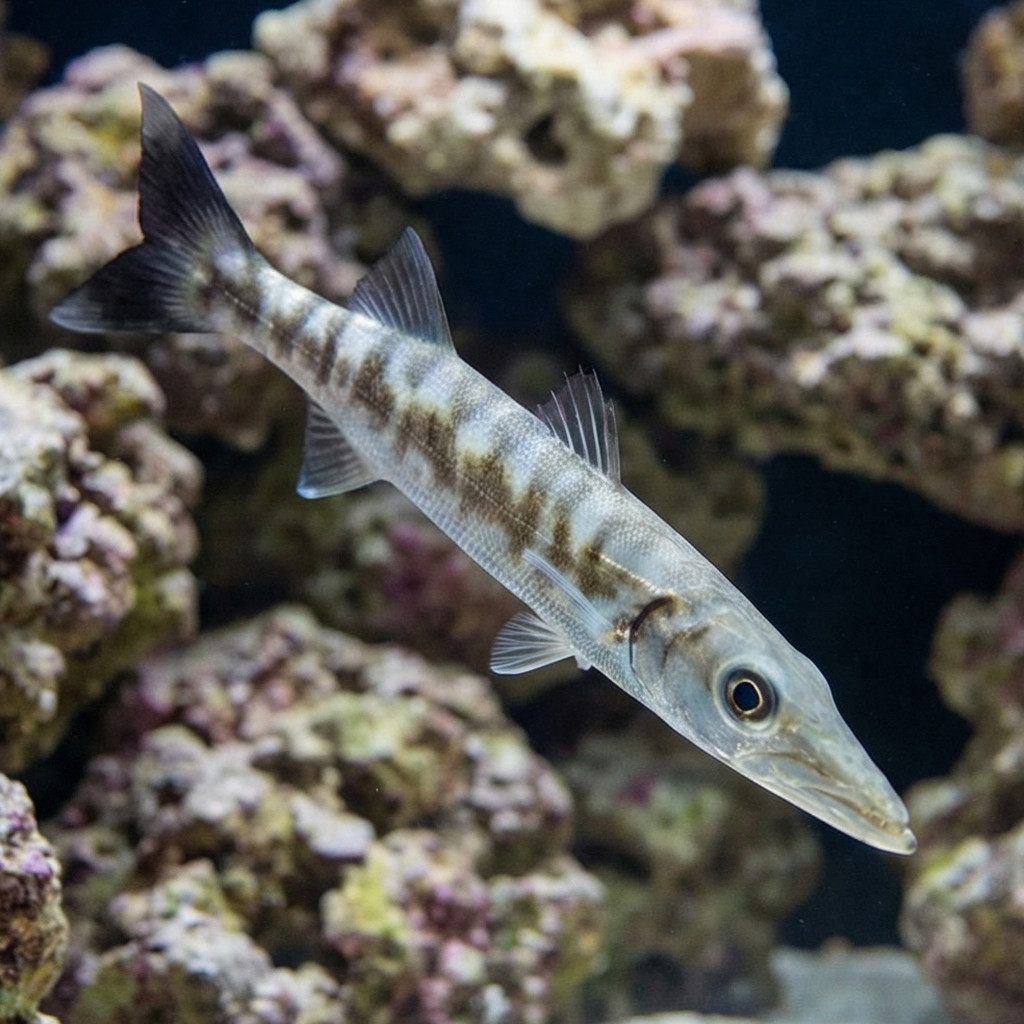
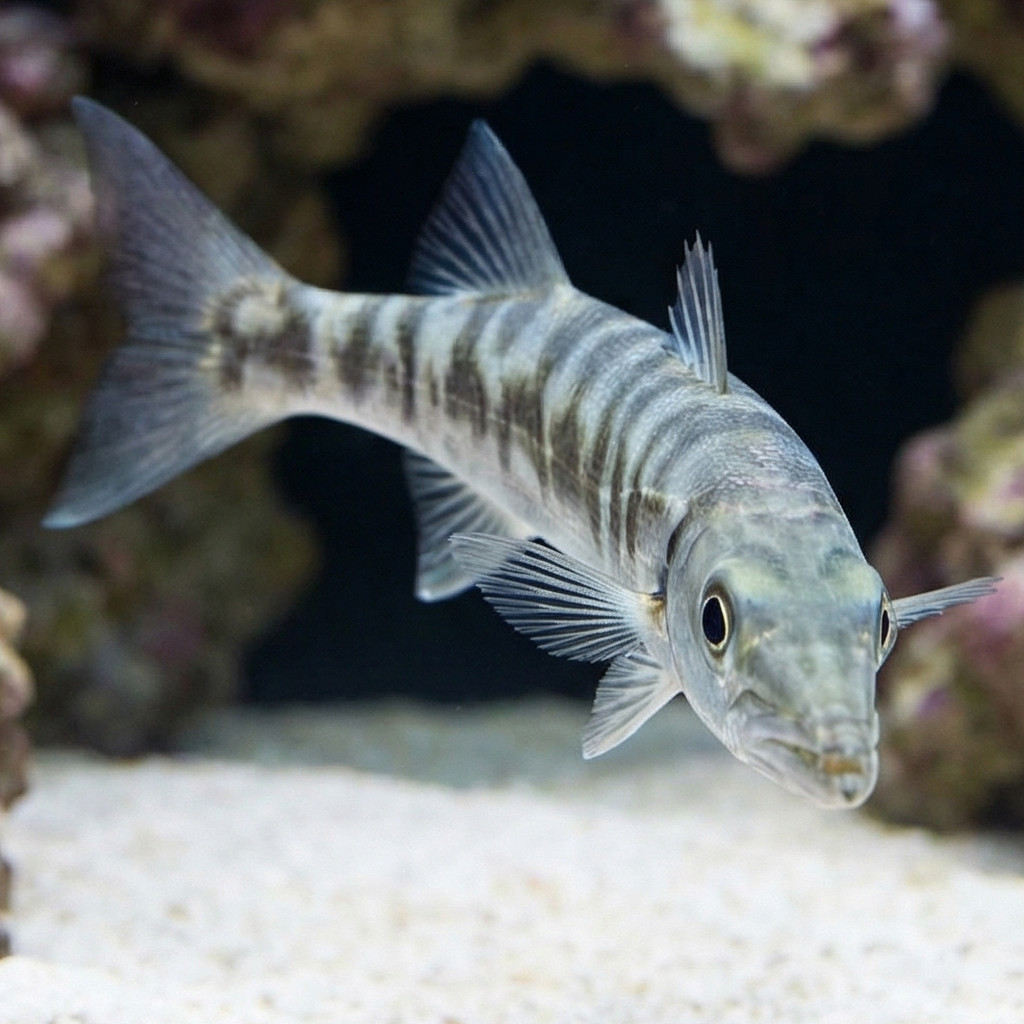
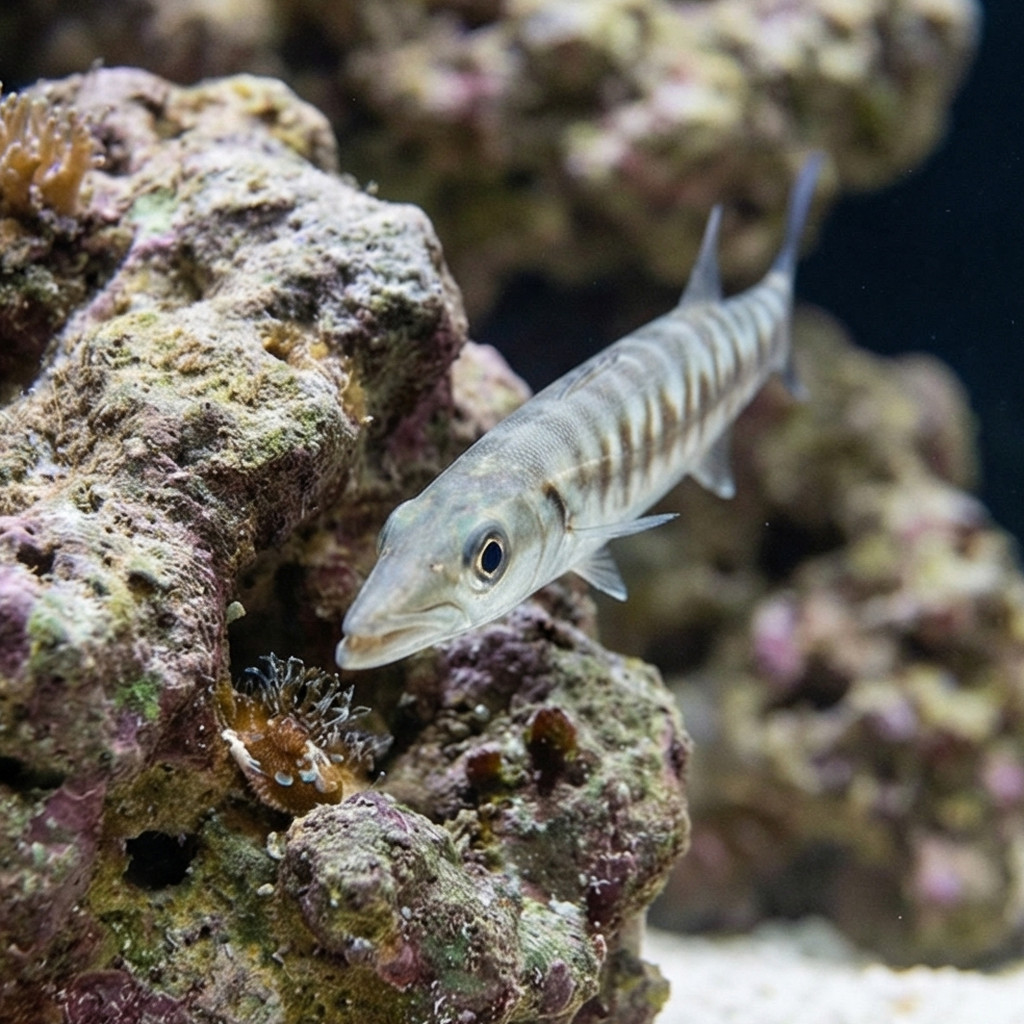
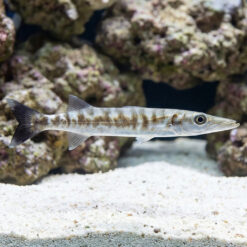
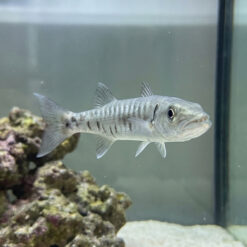
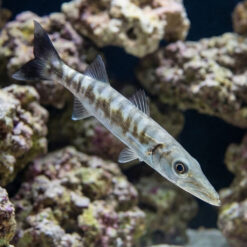
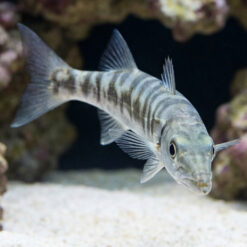
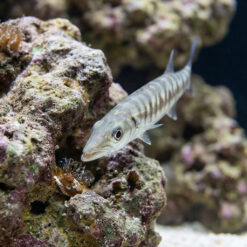
Great Barracuda
Sphyraena barracuda (juv)
| Stock | Variations | Price | Quantity | |
|---|---|---|---|---|
| Out of Stock | 2.25 - 4.25" - Indo-Pacific | Original price was: $318.99.$167.99Current price is: $167.99. | Email me |
Every order ships with our standard 3-hour live arrival guarantee. Need more time? Add our 5-Day Guarantee at checkout.
Full guarantee terms →Ships Monday – Thursday for next-day arrival at your nearest FedEx Hold location — typically ready by 9 AM. We monitor every delivery.
Shipping details →
Monday – Friday 8 AM – 9 PM
Saturday 12 PM – 4 PM
Sunday 12 PM – 9 PM
Healthy, stable animals from vetted suppliers — inspected before packing, shipped overnight. Decades of experience built this model so we can deliver premium livestock at 30%+ less than you'd pay elsewhere.
| Care Level | Expert |
|---|---|
| Temperament | Aggressive |
| Reef Safe | No |
| Functional Benefit | Ornamental Only |
| Diet Type | Carnivore |
| Mininum Tank Size | 300 gallons+ |
| Max Size | 24 inches |
| Temperature | 72–78°F |
| pH Range | 8.1–8.4 |
| Specific Gravity | 1.022–1.025 |
The juvenile Great Barracuda (Sphyraena barracuda) is a long, torpedo-shaped predator with a bright silver body and darker bars/blotches that stand out most when young. It’s a surface-oriented, open-water hunter seen across warm Atlantic and Indo-Pacific regions, and it’s best suited to large, fish-only displays where you can appreciate its fast, direct swimming style.
What You’ll Observe:
- Cruising and hovering in open water, often spending time near the surface
- Sudden, straight-line bursts of speed, especially around feeding time
- A “tracking” behavior where it watches movement across the tank before moving in
- Solo, patrol-like routines rather than pairing or schooling
For best results, provide a long tank footprint with clear swimming lanes and strong oxygenation. Offer meaty marine foods (chunked seafood, shrimp, squid, and fish-based frozen options) and use consistent feeding cues so it learns where food arrives. In large systems, it’s typically kept as a single showcase predator alongside similarly sized, robust fish.
Can a juvenile Great Barracuda be kept long-term in a home aquarium?
Most keepers treat juveniles as temporary show fish; long-term success depends on having a truly large, long footprint system as the fish matures.
Will it accept frozen/prepared foods, or does it “need” live feeders?
Many predators transition well when offered marine-based frozen foods on tongs or a feeding stick, especially if you keep feeding location and timing consistent.
What tank layout works best—lots of rock, or open water?
An open layout with clear “runways” tends to match how they move, with rockwork kept to the sides so the fish can cruise without tight turns.
Is it normal for a barracuda to hover and barely move for long periods?
Yes—many keepers describe long pauses and hovering, followed by quick, purposeful bursts when something catches its attention.
What kinds of tankmates are people most successful with?
Discussions commonly point toward large, sturdy fish that hold their own in open water, rather than slow or small species that trigger chase-and-strike behavior.
We source from vetted suppliers known for healthy, long-lived specimens.
Recently viewed products