
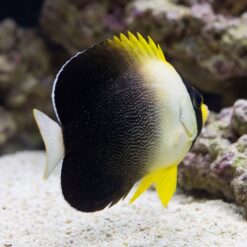
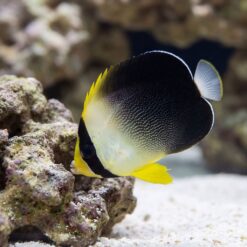
Grey Tail Angelfish
Chaetodontoplus poliourus
| Stock | Variations | Price | Quantity |
|---|
Every order ships with our standard 3-hour live arrival guarantee. Need more time? Add our 5-Day Guarantee at checkout.
Full guarantee terms →Ships Monday – Thursday for next-day arrival at your nearest FedEx Hold location — typically ready by 9 AM. We monitor every delivery.
Shipping details →
Monday – Friday 8 AM – 9 PM
Saturday 12 PM – 4 PM
Sunday 12 PM – 9 PM
Healthy, stable animals from vetted suppliers — inspected before packing, shipped overnight. Decades of experience built this model so we can deliver premium livestock at 30%+ less than you'd pay elsewhere.
| Care Level | Expert |
|---|---|
| Temperament | Semi-Aggressive |
| Reef Safe | No |
| Functional Benefit | Ornamental Only |
| Diet Type | Omnivore |
| Mininum Tank Size | 120 gallons |
| Max Size | 6 inches |
| Temperature | 72–78°F |
| pH Range | 8.1–8.4 |
| Specific Gravity | 1.022–1.025 |
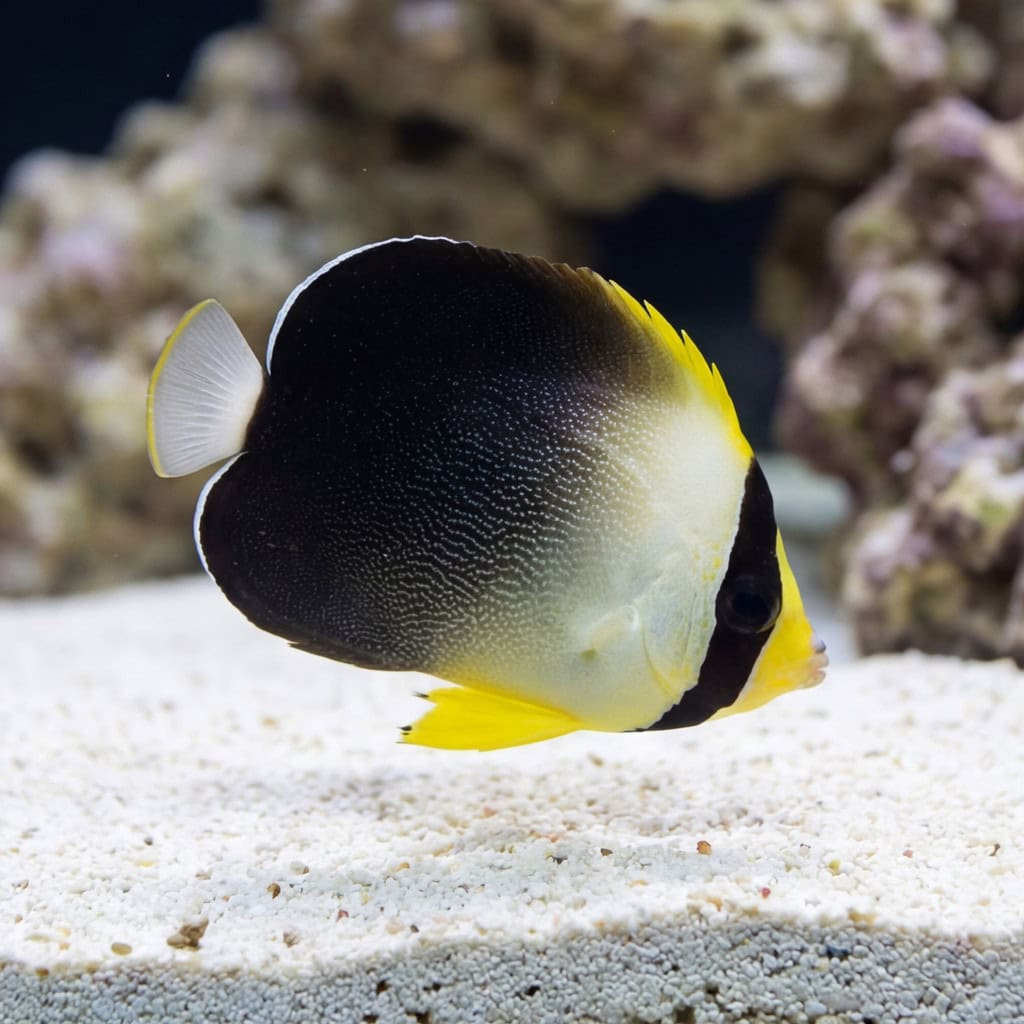
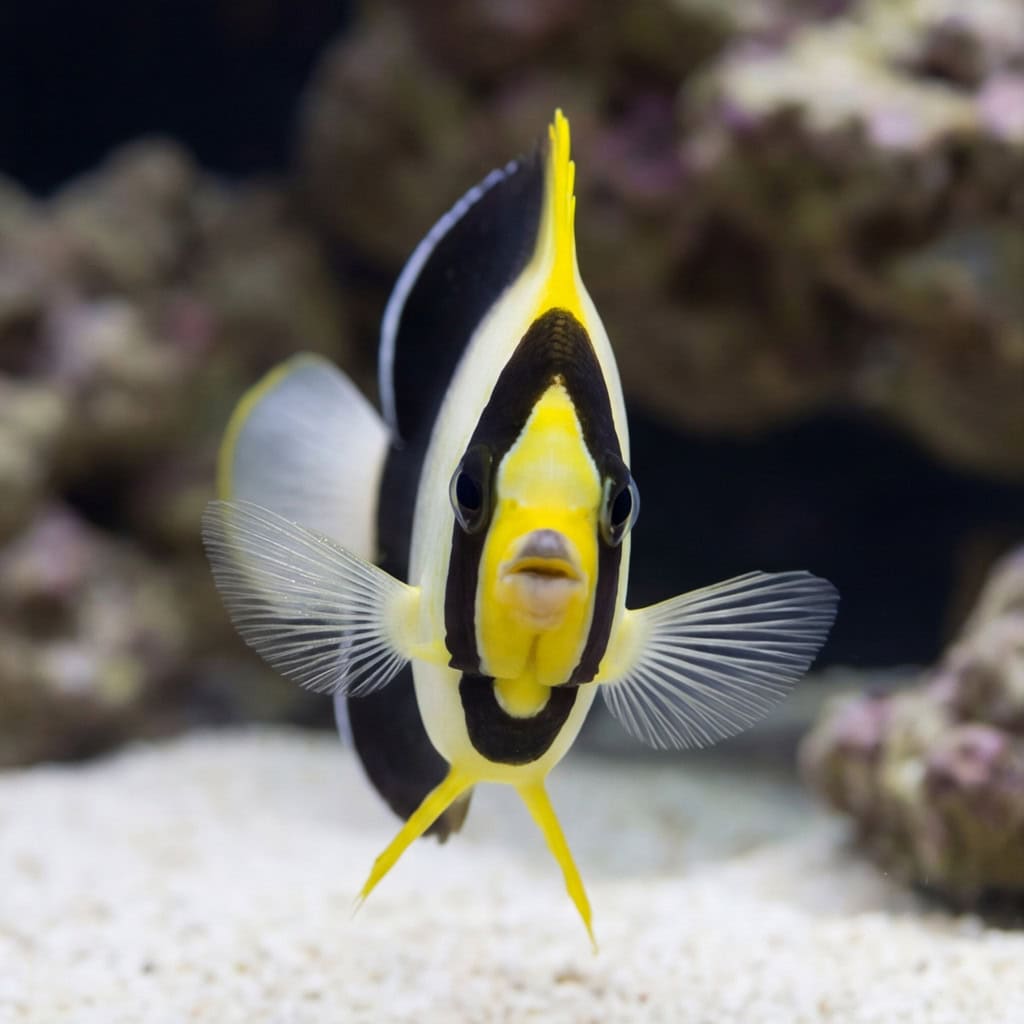
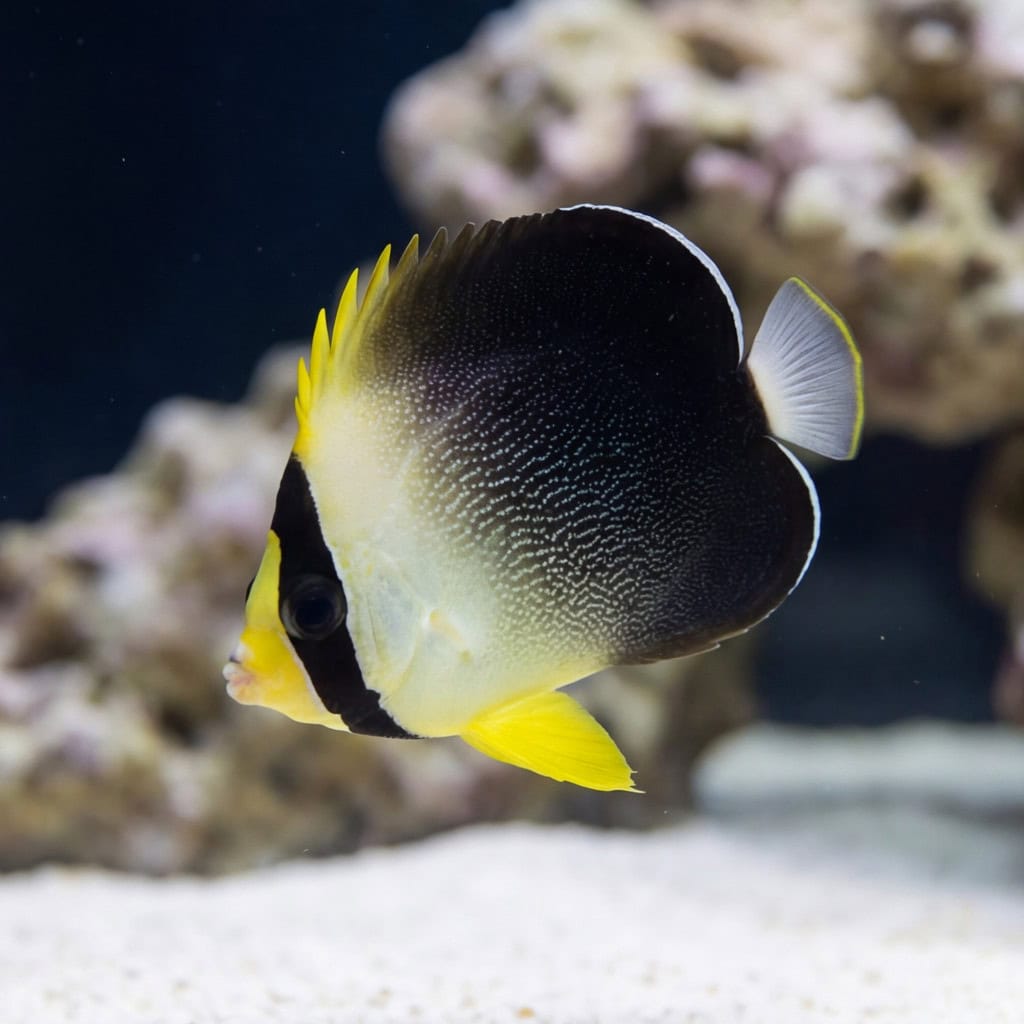
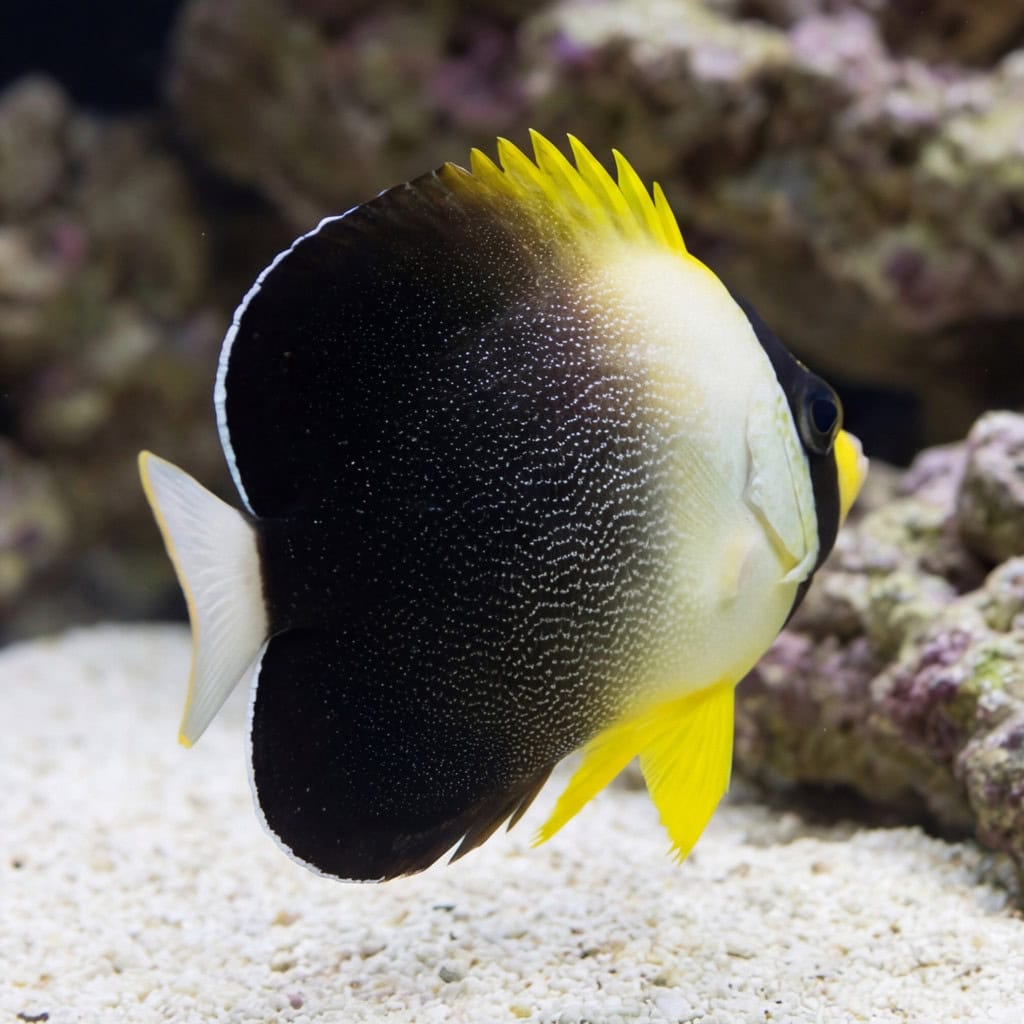
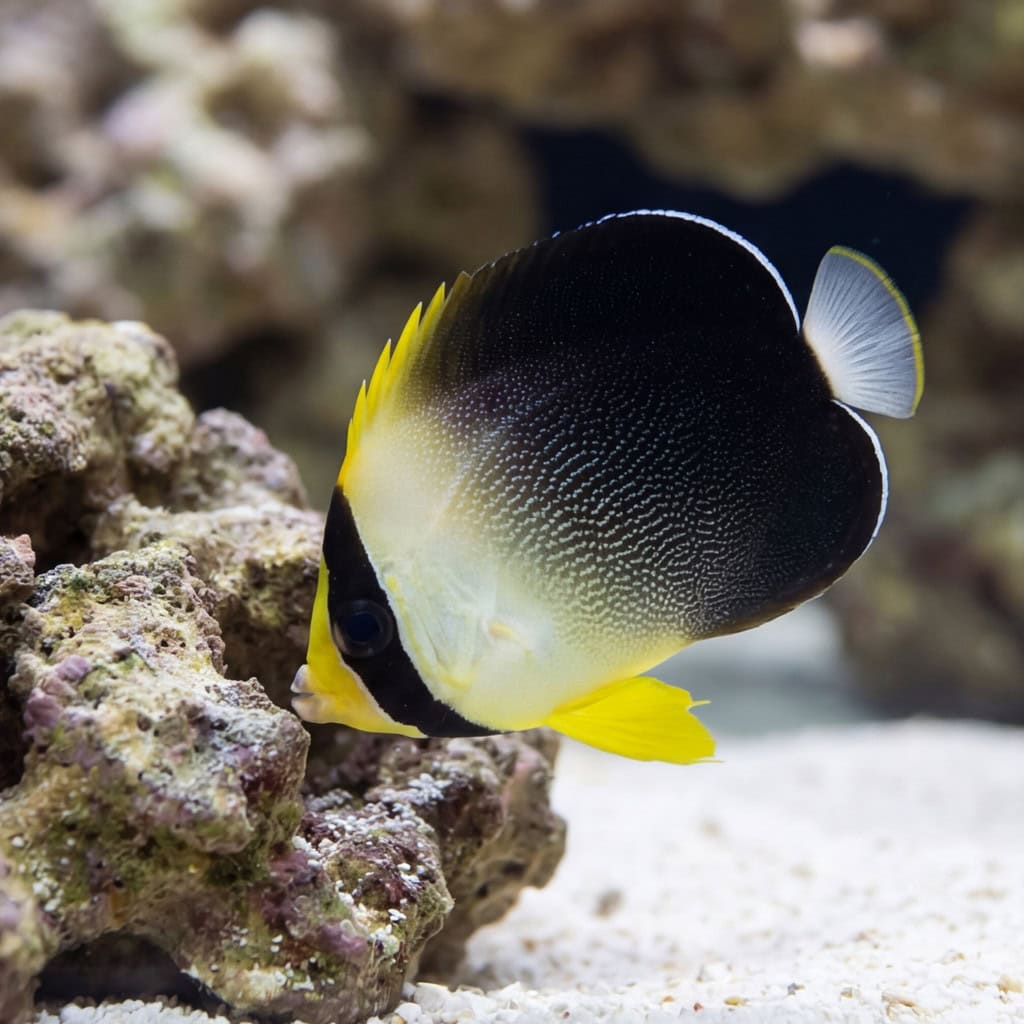
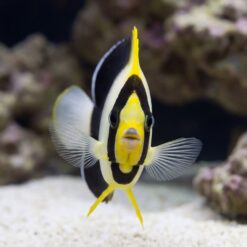
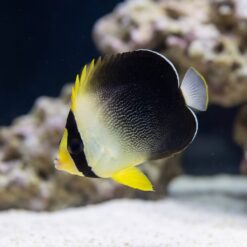
The Grey Tail Angelfish (Chaetodontoplus poliourus) is a western Pacific marine angelfish with a yellow face, blue-tinged lips, a dark eye bar, and a gray tail edged in yellow. As it matures, fine pale spotting develops toward the rear half of the body.
What You’ll Observe:
- Cruises rockwork and pauses often to pick surfaces
- Claims a favorite cave and returns between laps
- Becomes more visible at regular feeding times
Provide mature live rock with caves and broad grazing surfaces. Offer small, frequent meals of angelfish blends (including sponge) plus quality frozen foods and marine algae so it stays active in the open.
How do you tell it from a Singapore Angelfish?
Look for the gray tail with a yellow edge.
Does it stay hidden at first?
Many settle in by choosing one main cave.
Will it take pellets or prepared foods?
Keepers often start with frozen, then add pellets.
Does it show a “pairing” behavior?
Some individuals tolerate a partner in larger displays.
Which corals does it sample first?
Reports often mention zoas and some LPS first.
Our selection process means you get robust, well-adjusted specimens that settle in quickly.
Recently viewed products