
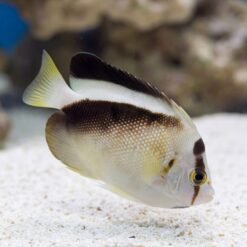
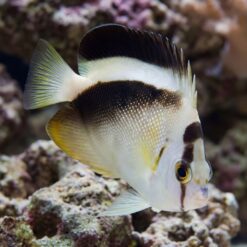
Griffis Angelfish
Apolemichthys griffisi
| Stock | Variations | Price | Quantity |
|---|
Every order ships with our standard 3-hour live arrival guarantee. Need more time? Add our 5-Day Guarantee at checkout.
Full guarantee terms →Ships Monday – Thursday for next-day arrival at your nearest FedEx Hold location — typically ready by 9 AM. We monitor every delivery.
Shipping details →
Monday – Friday 8 AM – 9 PM
Saturday 12 PM – 4 PM
Sunday 12 PM – 9 PM
Healthy, stable animals from vetted suppliers — inspected before packing, shipped overnight. Decades of experience built this model so we can deliver premium livestock at 30%+ less than you'd pay elsewhere.
| Care Level | Expert |
|---|---|
| Temperament | Semi-Aggressive |
| Reef Safe | With Caution |
| Functional Benefit | Ornamental Only |
| Diet Type | Omnivore |
| Mininum Tank Size | 180 gallons |
| Max Size | 12 inches |
| Temperature | 72–78°F |
| pH Range | 8.1–8.4 |
| Specific Gravity | 1.022–1.025 |
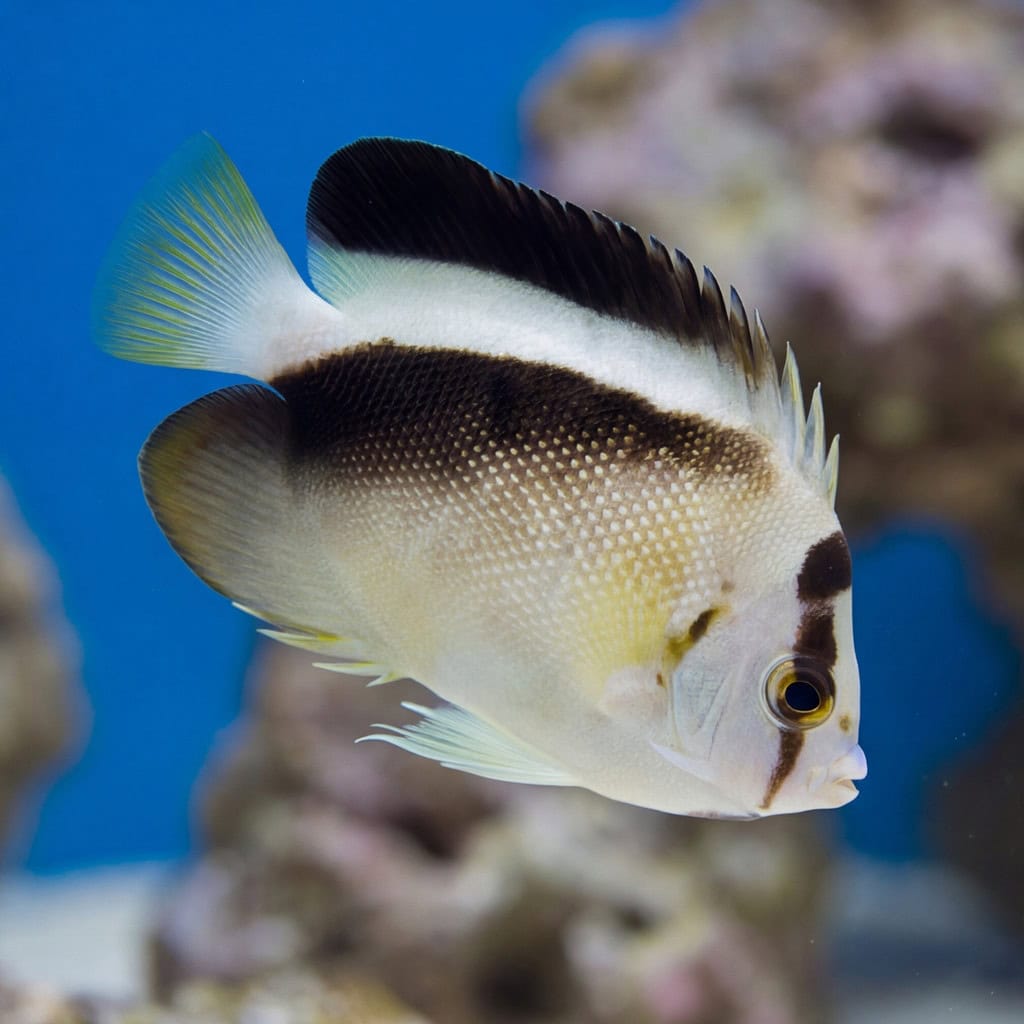
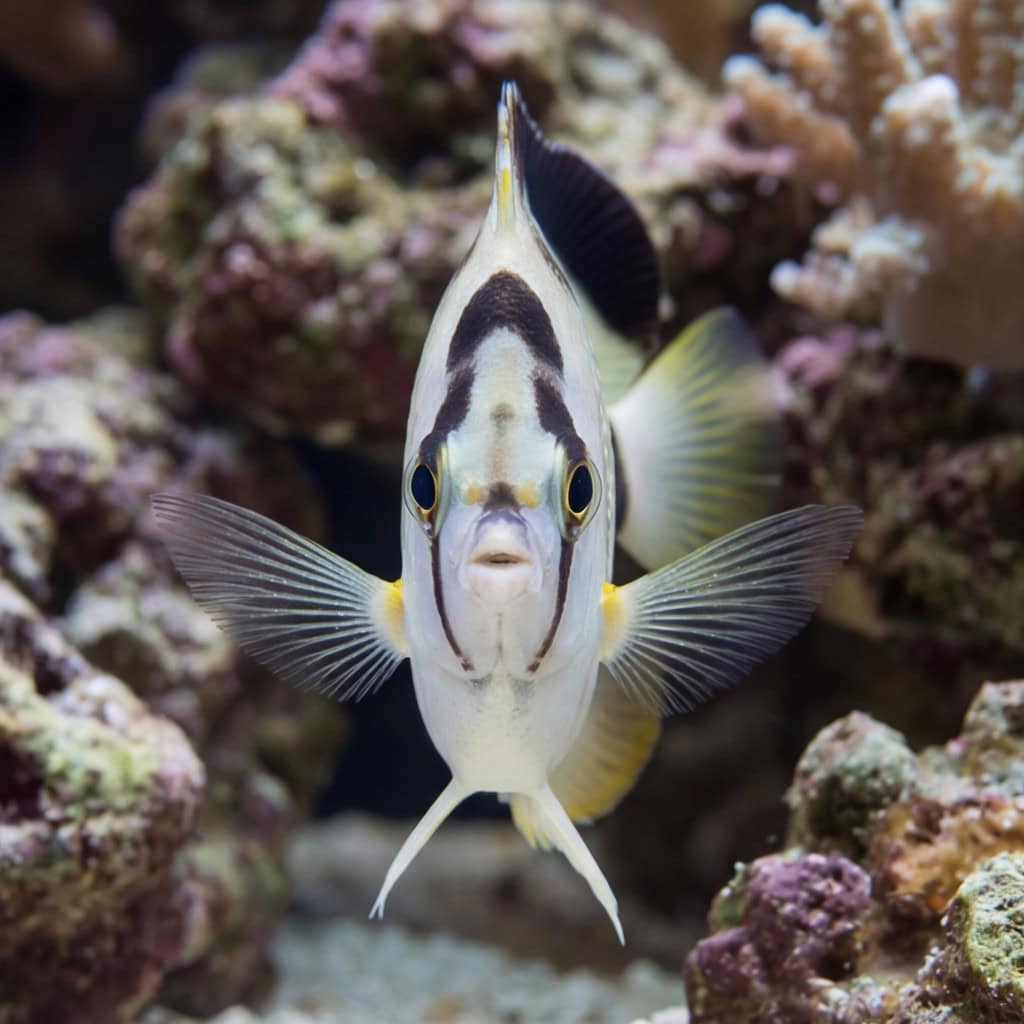
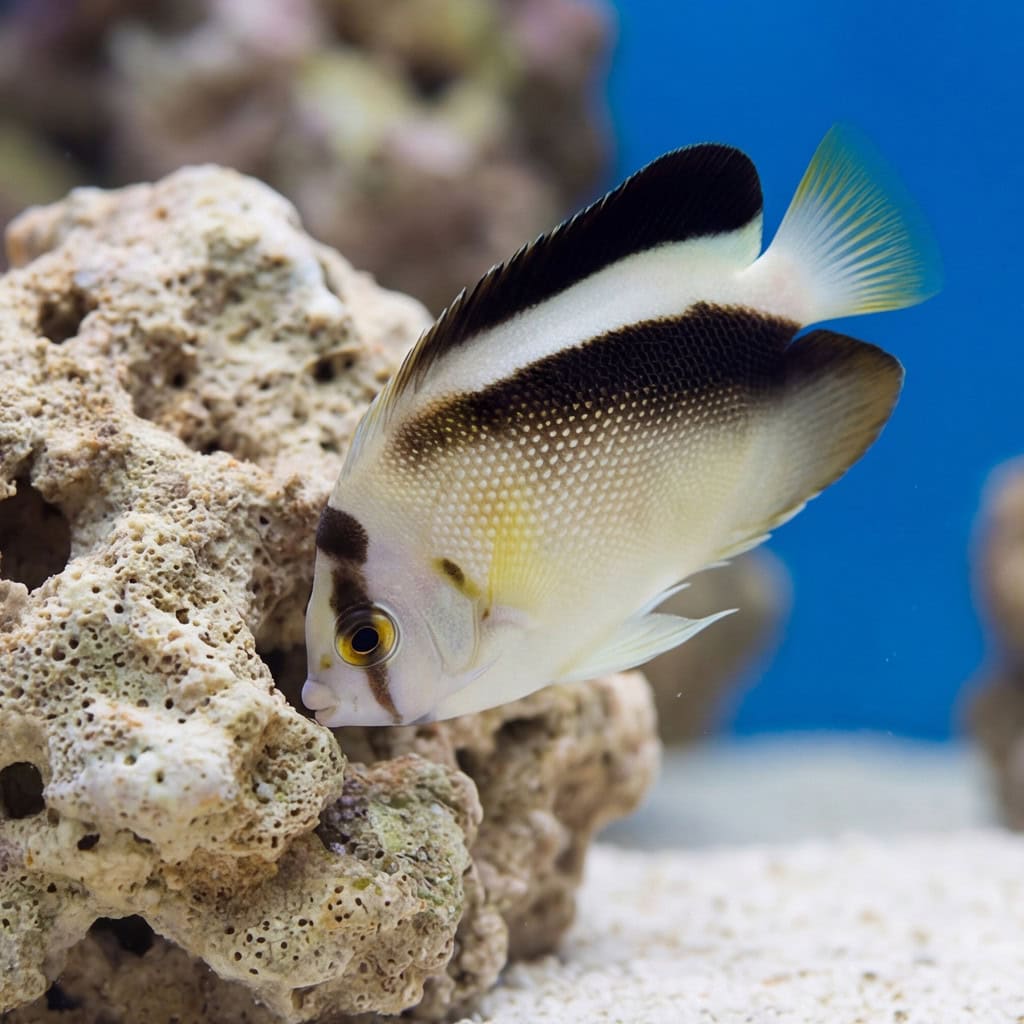
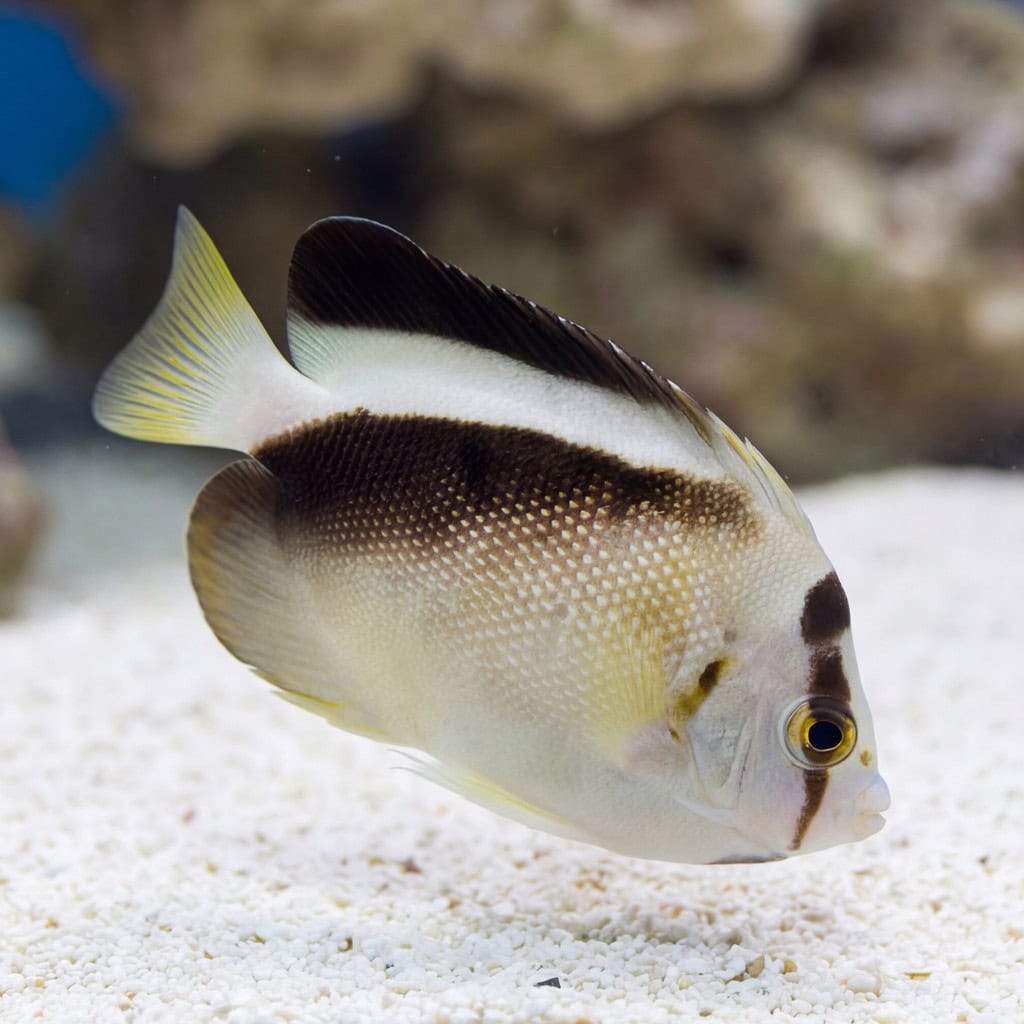
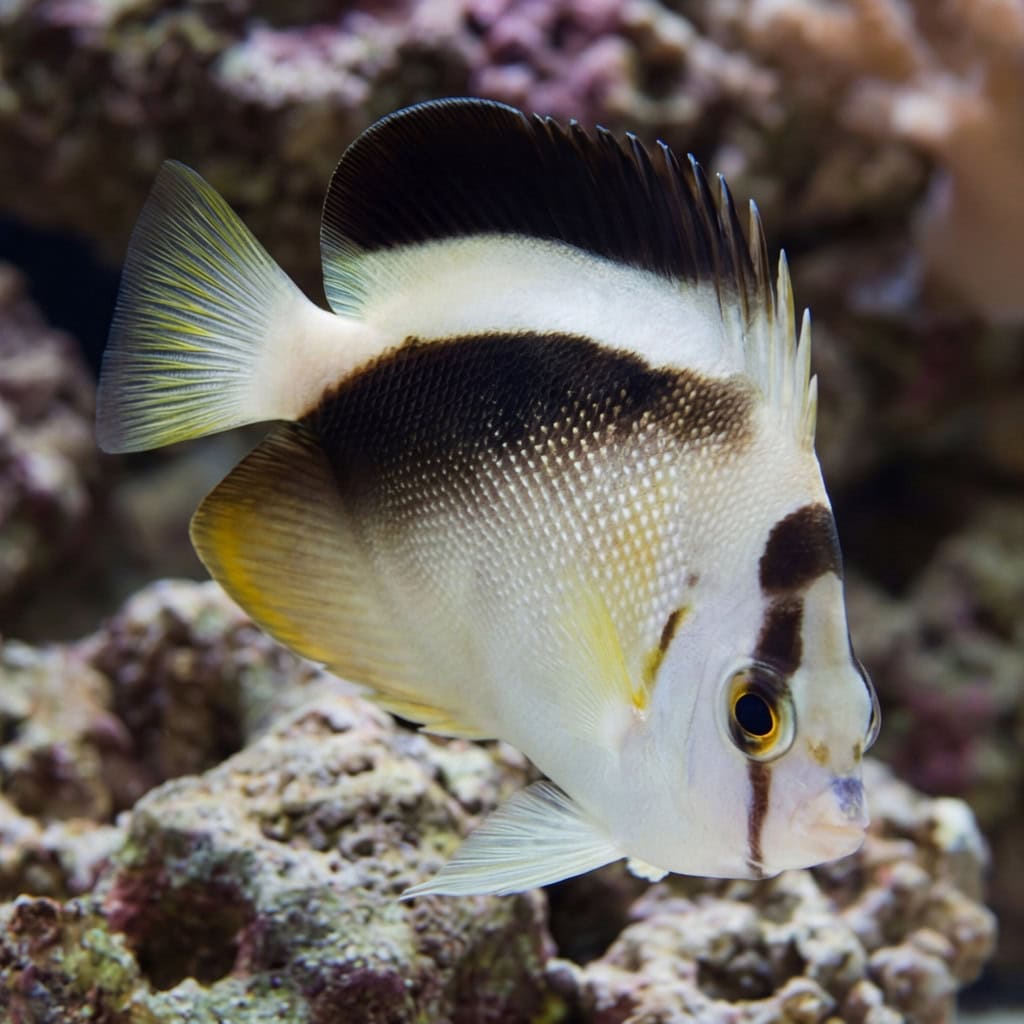
The Griffis Angelfish (Apolemichthys griffisi) is a rare Apolemichthys angelfish with a pale gray-to-white body, a bold black side band with a contrasting white stripe, and a dark mark above the eye. It comes from outer reef slopes and drop-offs across parts of the Pacific and is most at home in a mature aquarium with ample rockwork to inspect.
What You’ll Observe:
- Steady “patrol” laps around rock ledges, then short passes into open water before returning to the rockwork
- Frequent grazing and pecking at the live rock surface as it searches for natural foods
- A consistent preference for cruising along caves, overhangs, and vertical structure
- Color intensity that can look different from tank to tank depending on lighting and the fish’s comfort level
To help this species settle in, provide a well-established system with plentiful live rock, multiple retreat options, and open swimming lanes between structures. Offer a varied menu several times daily, including angelfish-focused foods that include sponge plus algae-based options to mirror how many large angels feed in nature.
Do Griffis Angelfish change pattern as they mature?
Juveniles can show a simpler pattern, and the crisp white stripe within the darker body band is more defined as the fish matures.
Why do some Griffis Angelfish look much darker or lighter than others?
Keepers often notice the black-and-white contrast looks different under various lighting and in different photo conditions, and overall tone can shift with the fish’s environment.
What “angel foods” are hobbyists using most right now for sponge-eating species?
A common theme is choosing diets that truly contain sponge (since some formulas change over time) and rotating that with quality frozen foods, pellets, and nori-based feeding.
Is it normal for this fish to spend most of its time near rockwork instead of midwater?
Yes’many Apolemichthys angels tend to stay close to ledges, caves, and structure, using open water mainly to move between rock zones.
Can a Griffis Angelfish be kept with other angelfish if introduced carefully?
In larger, well-structured systems, hobbyists most often plan around spacing and “separate zones,” with extra rockwork breaks to reduce constant face-to-face interactions.
Our selection process means you get robust, well-adjusted specimens that settle in quickly.
Recently viewed products