
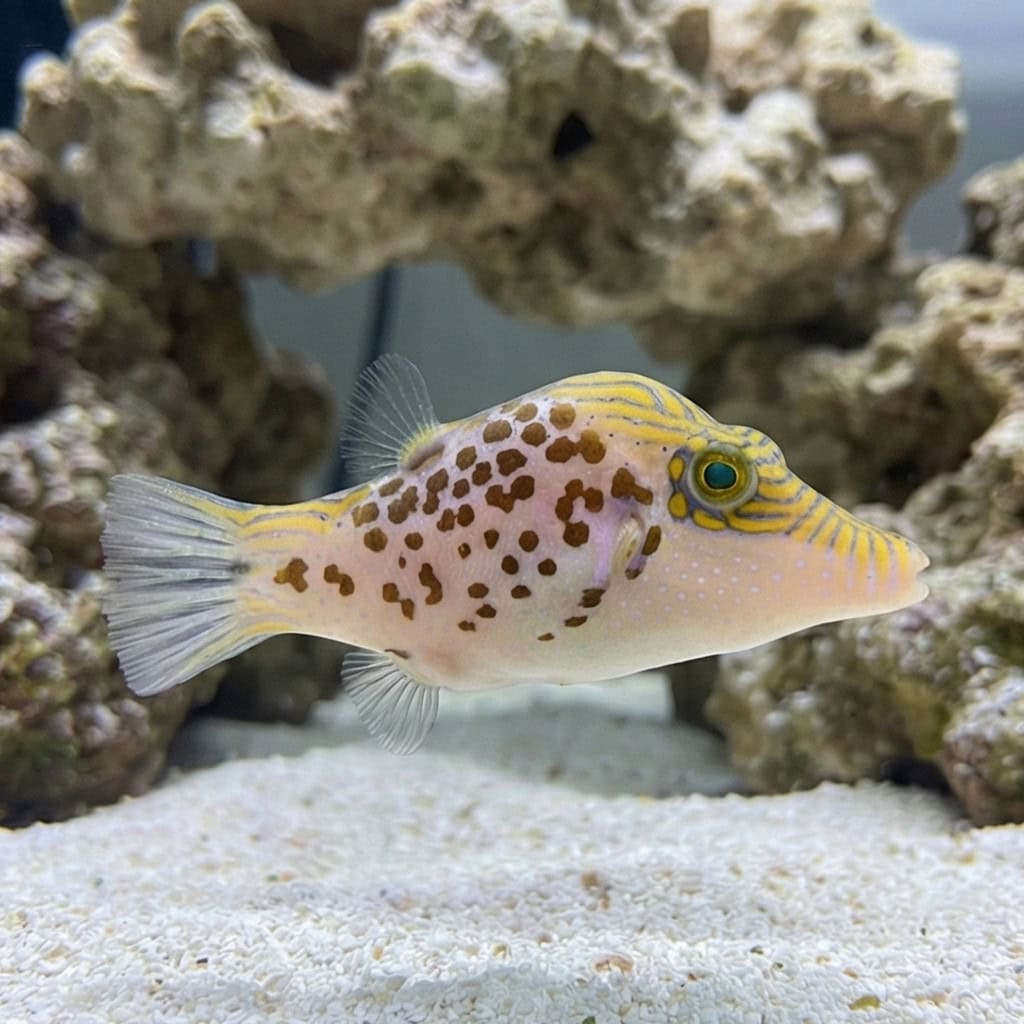
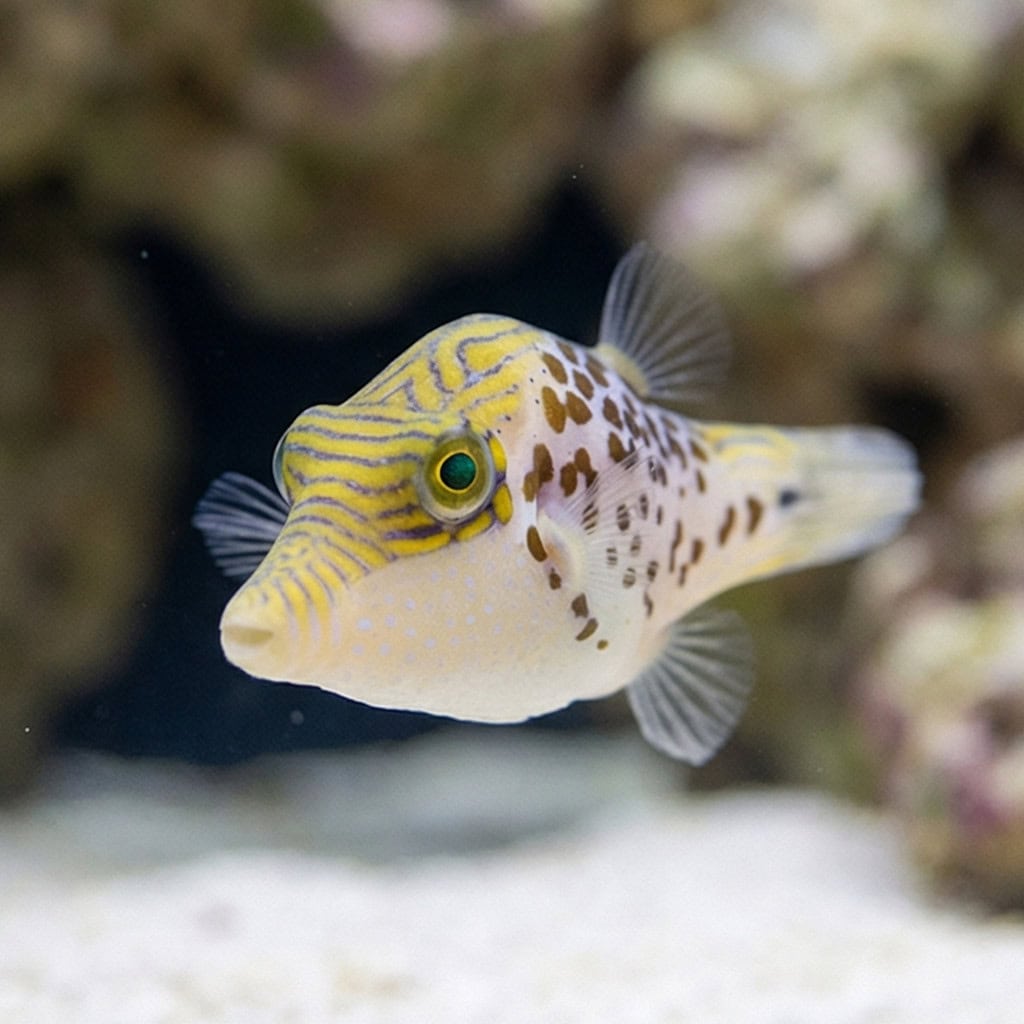
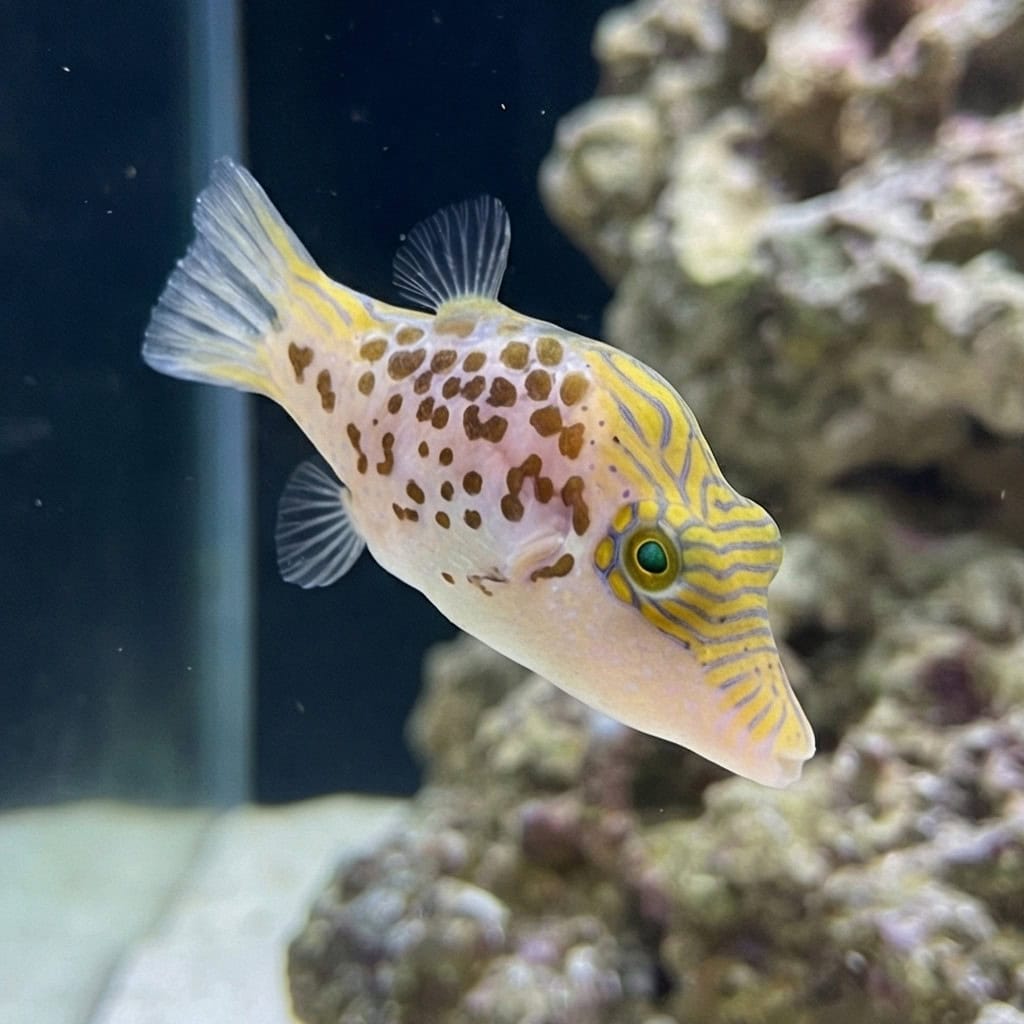
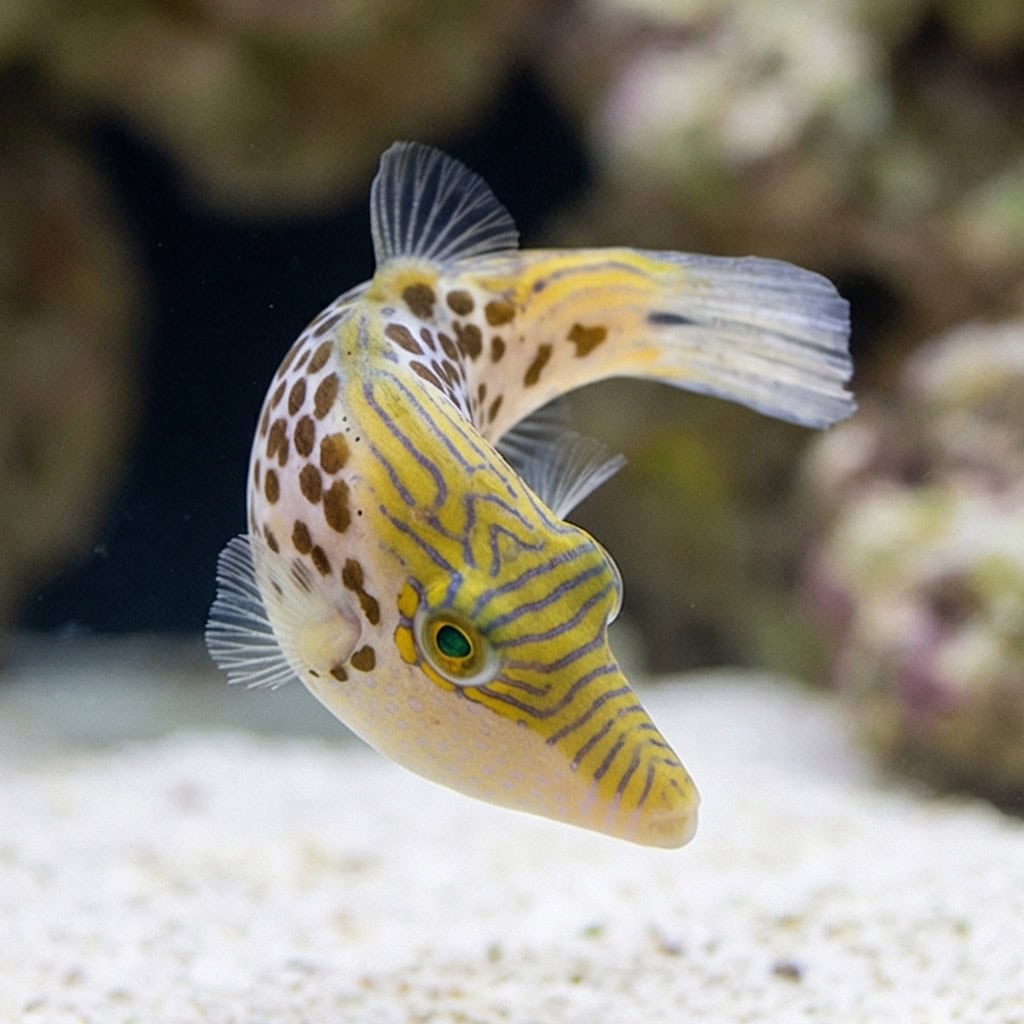
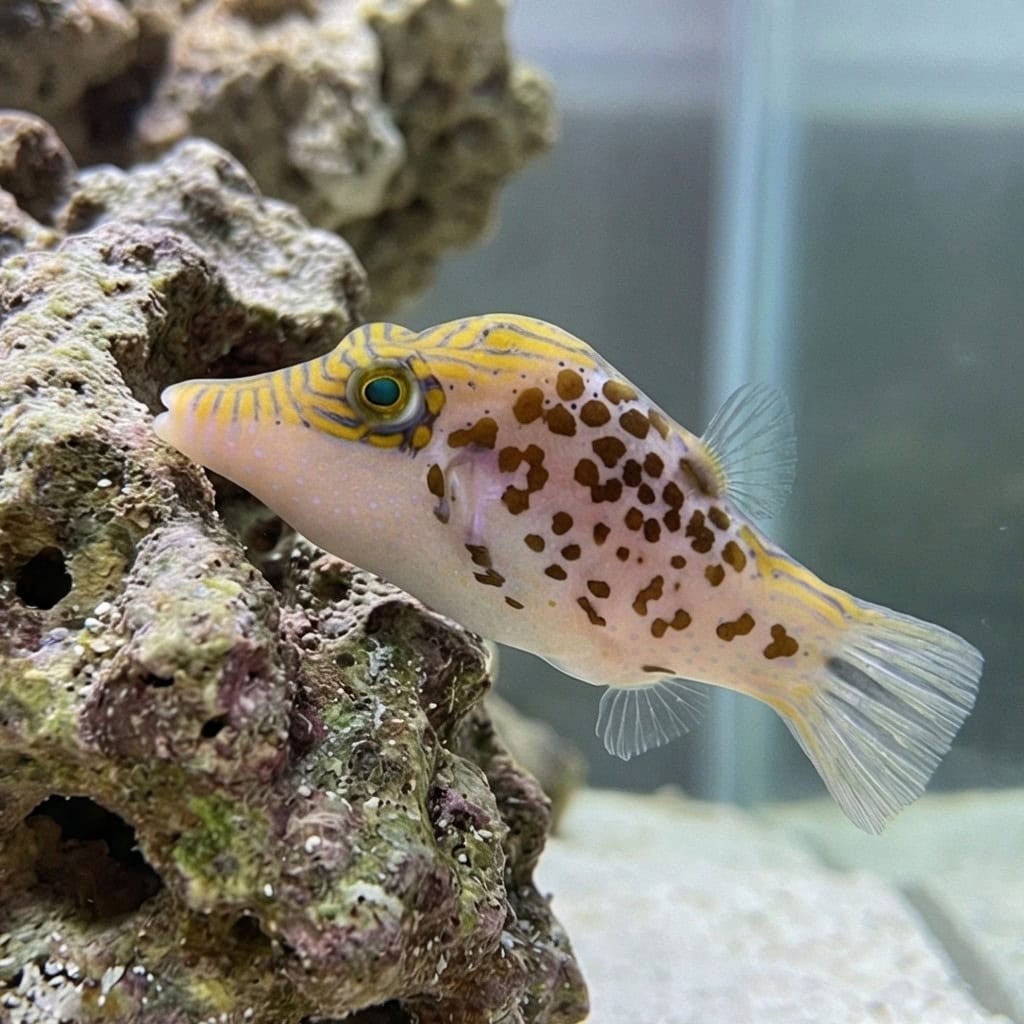
Leopard Puffer
Canthigaster leoparda
Original price was: $122.99.$64.99Current price is: $64.99.
| Stock | Variations | Price | Quantity | |
|---|---|---|---|---|
| Only 2 left | 2" or smaller - Indo-Pacific | Original price was: $122.99.$64.99Current price is: $64.99. |
-
+
|
Every order ships with our standard 3-hour live arrival guarantee. Need more time? Add our 5-Day Guarantee at checkout.
Full guarantee terms →Ships Monday – Thursday for next-day arrival at your nearest FedEx Hold location — typically ready by 9 AM. We monitor every delivery.
Shipping details →
Monday – Friday 8 AM – 9 PM
Saturday 12 PM – 4 PM
Sunday 12 PM – 9 PM
Healthy, stable animals from vetted suppliers — inspected before packing, shipped overnight. Decades of experience built this model so we can deliver premium livestock at 30%+ less than you'd pay elsewhere.
| Care Level | Moderate |
|---|---|
| Temperament | Semi-Aggressive |
| Reef Safe | With Caution |
| Functional Benefit | Ornamental Only |
| Diet Type | Omnivore |
| Mininum Tank Size | 30 gallons |
| Max Size | 3 inches |
| Temperature | 72–78°F |
| pH Range | 8.1–8.4 |
| Specific Gravity | 1.022–1.025 |
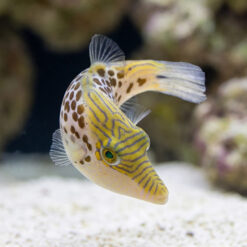
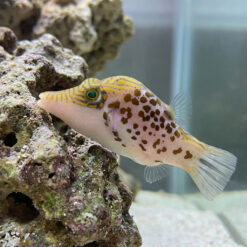
The Leopard Puffer (Canthigaster leoparda) is a small toby puffer with a tight, spotted “leopard” pattern and a pointed snout built for picking through rockwork. Its compact adult size makes it a good fit for reefers who want puffer personality in a smaller footprint.
What You’ll Observe:
- Short laps around the rockwork, stopping often to inspect ledges and seams
- Frequent “picking” behavior as it searches for bite-sized foods on hard surfaces
- A clear home-base area (often a cave or overhang) that it returns to between laps
- Quick recognition of feeding time and active response when food hits the water
Provide mature live rock with caves and shaded areas so it can cruise and retreat naturally. Offer a varied menu of frozen meaty foods along with some algae-based options, and rotate in shell-on foods (like clam or mussel on the half shell) to encourage natural beak wear.
Will it go after ornamental shrimp or small crabs?
Many keepers find it becomes very interested in small shrimp and easy-to-catch crustaceans; invert-free setups are the most consistent long-term match.
Does it bother corals even if it’s eating well?
Some individuals “test bite” new additions first; placing new frags where you can observe early behavior helps you decide what placement works best.
Why does it pick at rocks all day?
That foraging is normal toby puffer behavior and is part of how it stays engaged in the tank between feedings.
Is it normal to see it stay tucked in the rockwork at first?
Yes—new arrivals often spend the first few days close to cover, then become more visible as they learn your tank’s routine.
Can I keep more than one toby puffer together?
Most hobbyists keep one per tank; if pairing is attempted, success is higher in larger, rock-rich systems with multiple distinct “home” areas.
Each fish is checked for strong appetite and activity before we approve it for your tank.
Recently viewed products