
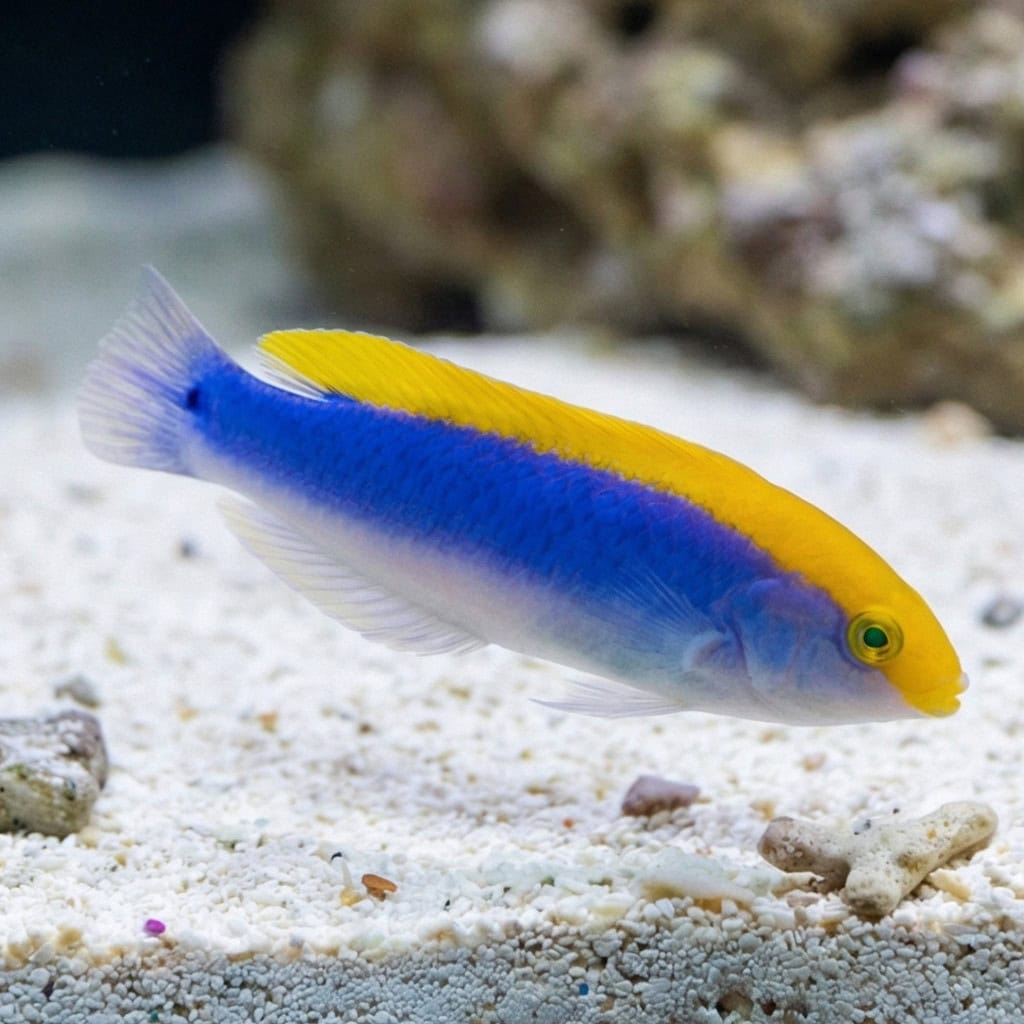
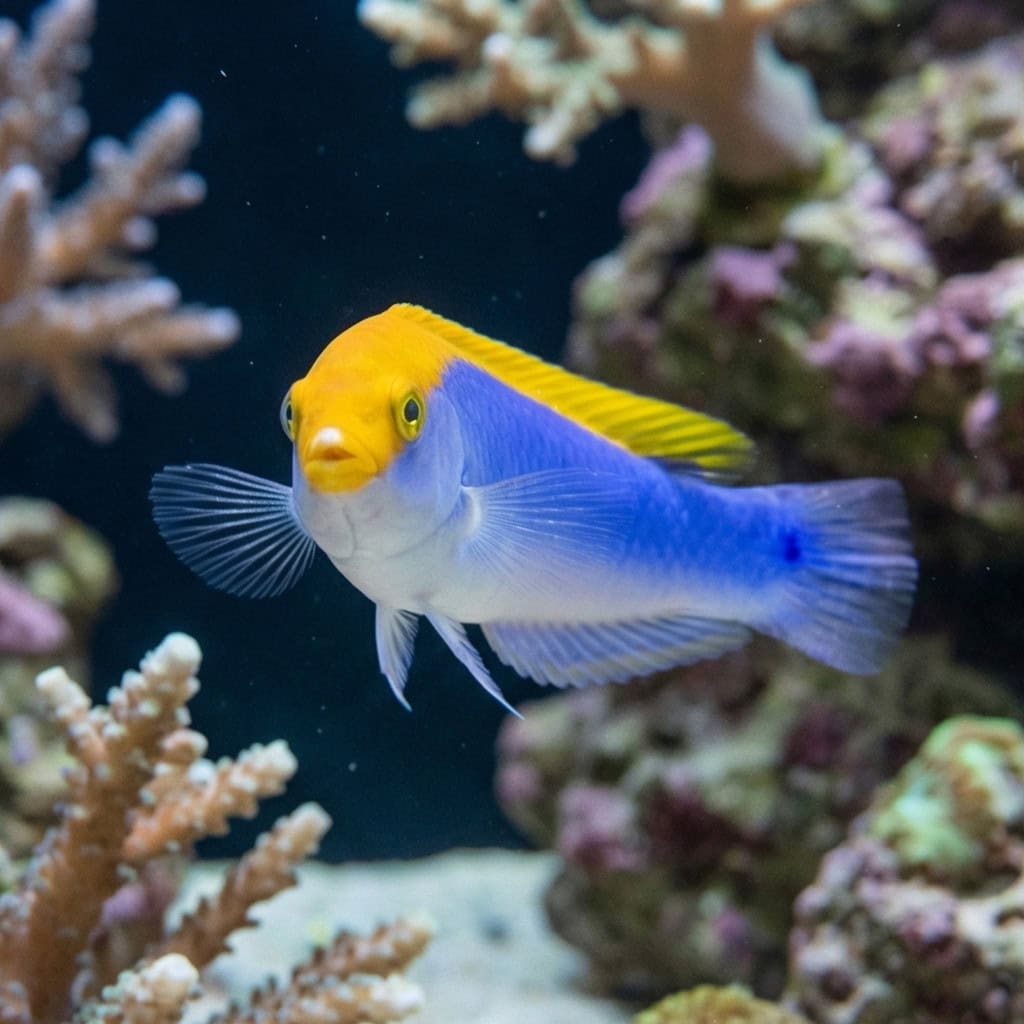
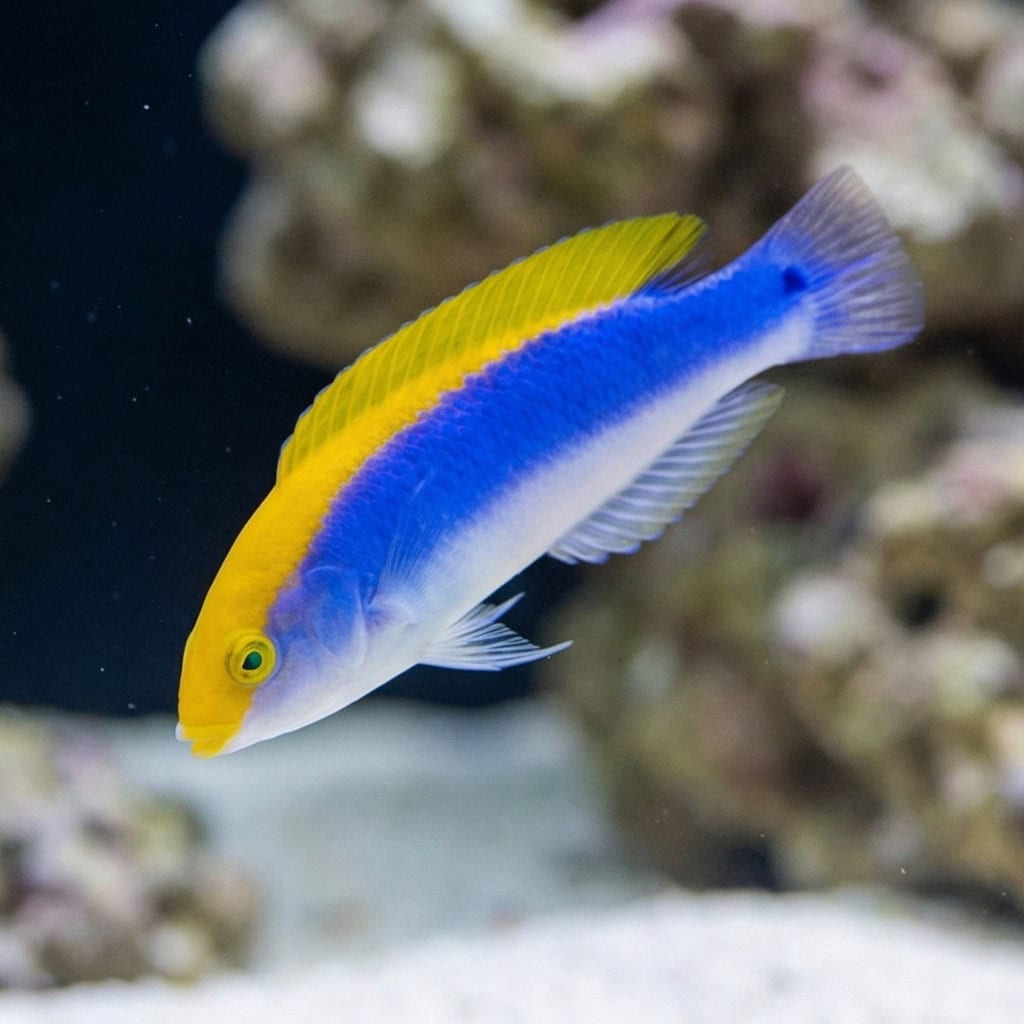
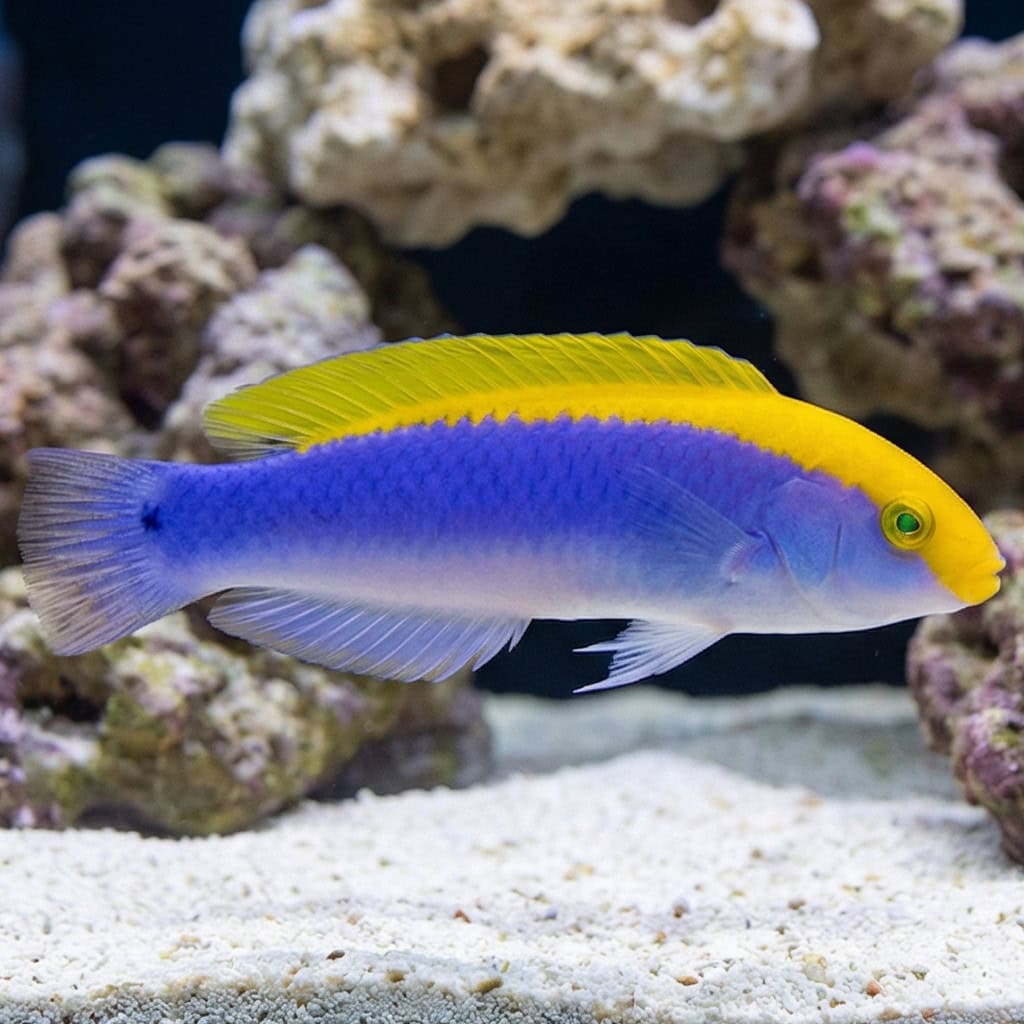
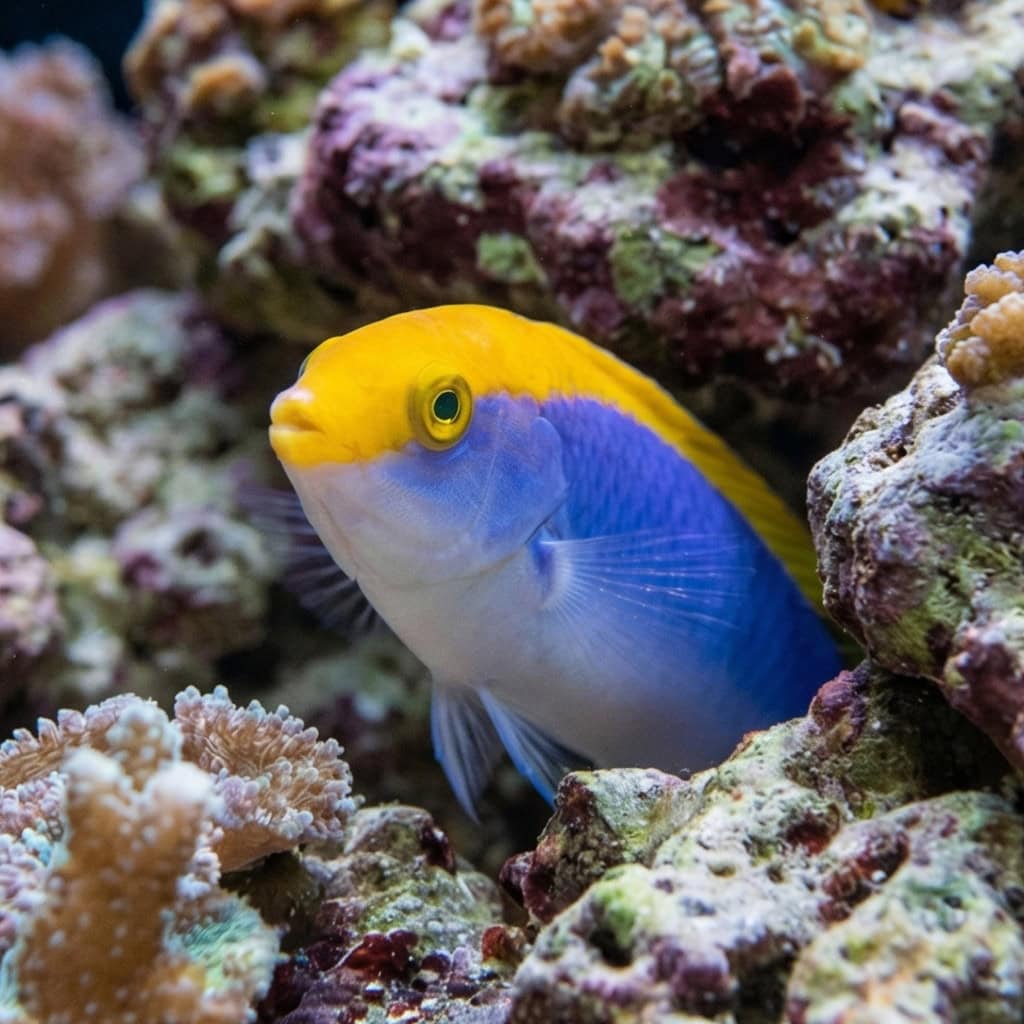
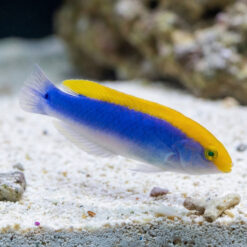
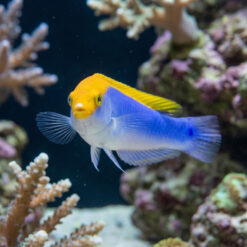
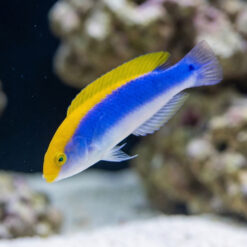
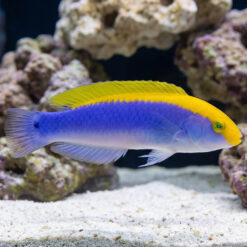
Lightning Wrasse
Halichoeres cyanocephalus
| Stock | Variations | Price | Quantity |
|---|
Every order ships with our standard 3-hour live arrival guarantee. Need more time? Add our 5-Day Guarantee at checkout.
Full guarantee terms →Ships Monday – Thursday for next-day arrival at your nearest FedEx Hold location — typically ready by 9 AM. We monitor every delivery.
Shipping details →
Monday – Friday 8 AM – 9 PM
Saturday 12 PM – 4 PM
Sunday 12 PM – 9 PM
Healthy, stable animals from vetted suppliers — inspected before packing, shipped overnight. Decades of experience built this model so we can deliver premium livestock at 30%+ less than you'd pay elsewhere.
| Care Level | Moderate |
|---|---|
| Temperament | Semi-Aggressive |
| Reef Safe | With Caution |
| Functional Benefit | Pest Control |
| Diet Type | Carnivore |
| Mininum Tank Size | 90 gallons |
| Max Size | 6 inches |
| Temperature | 72–78°F |
| pH Range | 8.1–8.4 |
| Specific Gravity | 1.022–1.025 |
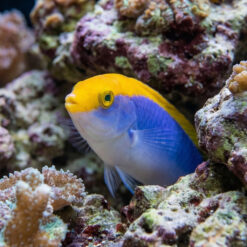
The Lightning Wrasse (Halichoeres cyanocephalus) is an active Halichoeres wrasse from the Western Atlantic (Florida through Brazil) with a blue-toned head and contrasting yellow facial coloration that stands out while it cruises the rockwork. It is often chosen as a “pest-control wrasse” because it naturally spends the day hunting tiny meaty bites from the sand and rock surfaces.
What You’ll Observe:
- Fast, purposeful laps around the tank with frequent stops to inspect rock and sand for edible microfauna
- A consistent “sand-sleeping” routine, diving into the substrate at lights-out and reappearing later
- Periods of “disappearing” after introduction that can last days (and sometimes longer) before it becomes a regular daytime swimmer
- Opportunistic hunting behavior that looks like constant foraging rather than waiting at the surface for food
Provide a mature, covered reef tank with ample rockwork and a sandbed the fish can comfortably bury into at night (fine, smooth sand helps this routine). Offer a variety of meaty foods and let it graze naturally between feedings as it patrols the tank. Plan tankmates and clean-up crew with its hunting instincts in mind, especially with small shrimp, crabs, and snails.
Is it normal for a Lightning Wrasse to vanish into the sand right after you add it?
Yes—sand-sleeping wrasses commonly disappear for days while they settle in, then start showing up more consistently as they learn the tank’s routine.
Why does it throw sand onto corals or frags?
Some individuals kick up sand when they dive in for the night and when they “launch” out in the morning, especially if their preferred sleeping spot is near rock or coral bases.
Can rough substrate cause scrapes or “sores” on sand-sleeping wrasses?
It can—some keepers report abrasions that improve after switching to smoother sand or creating a small “fine-sand” sleeping area.
Will it go after my clean-up crew even if it leaves corals alone?
It may—hobbyists commonly connect missing small invertebrates (especially shrimp/crabs/snails) with Halichoeres wrasses that have fully settled in and started hunting confidently.
Do Lightning Wrasses jump, even with a lid?
They can still find surprisingly small openings (feeding doors and cable gaps are common), so tight coverage matters as much as having a lid at all.
We source from vetted suppliers known for healthy, long-lived specimens.
Recently viewed products