
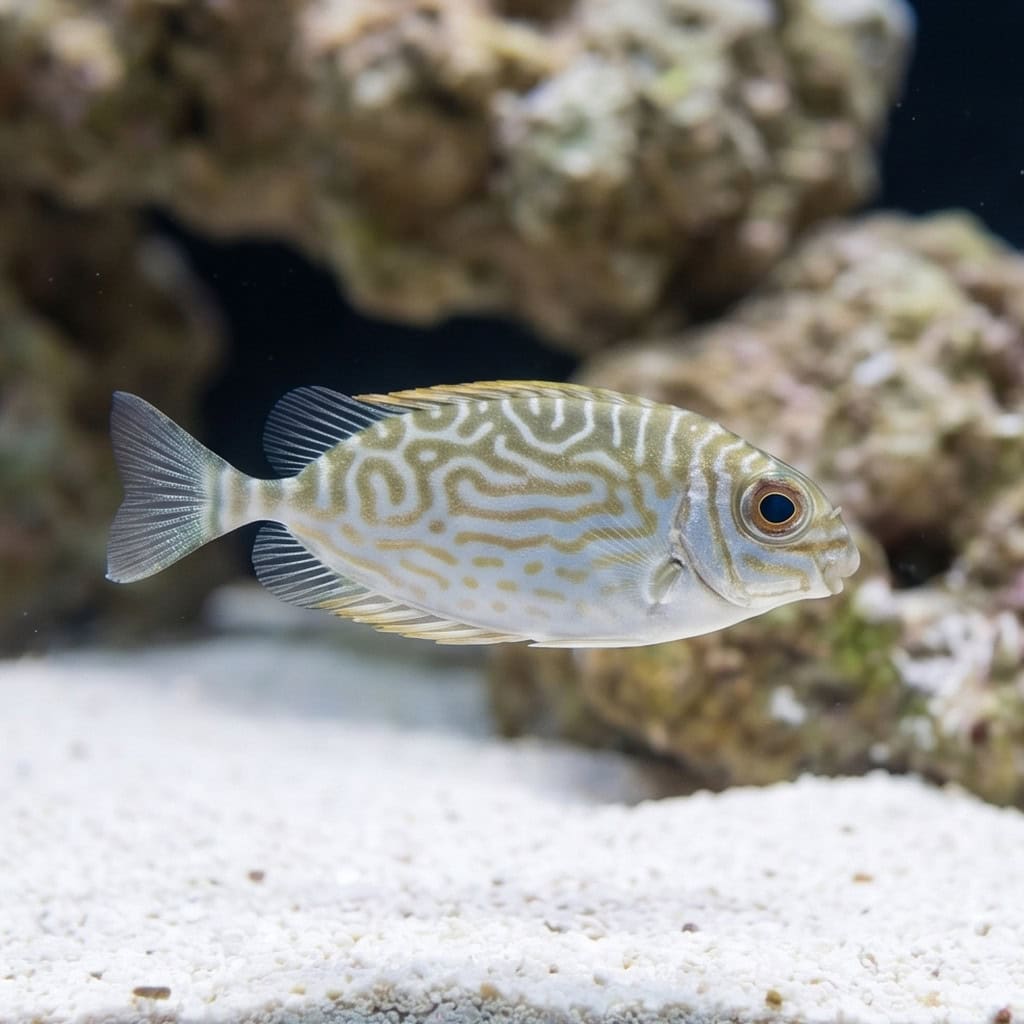
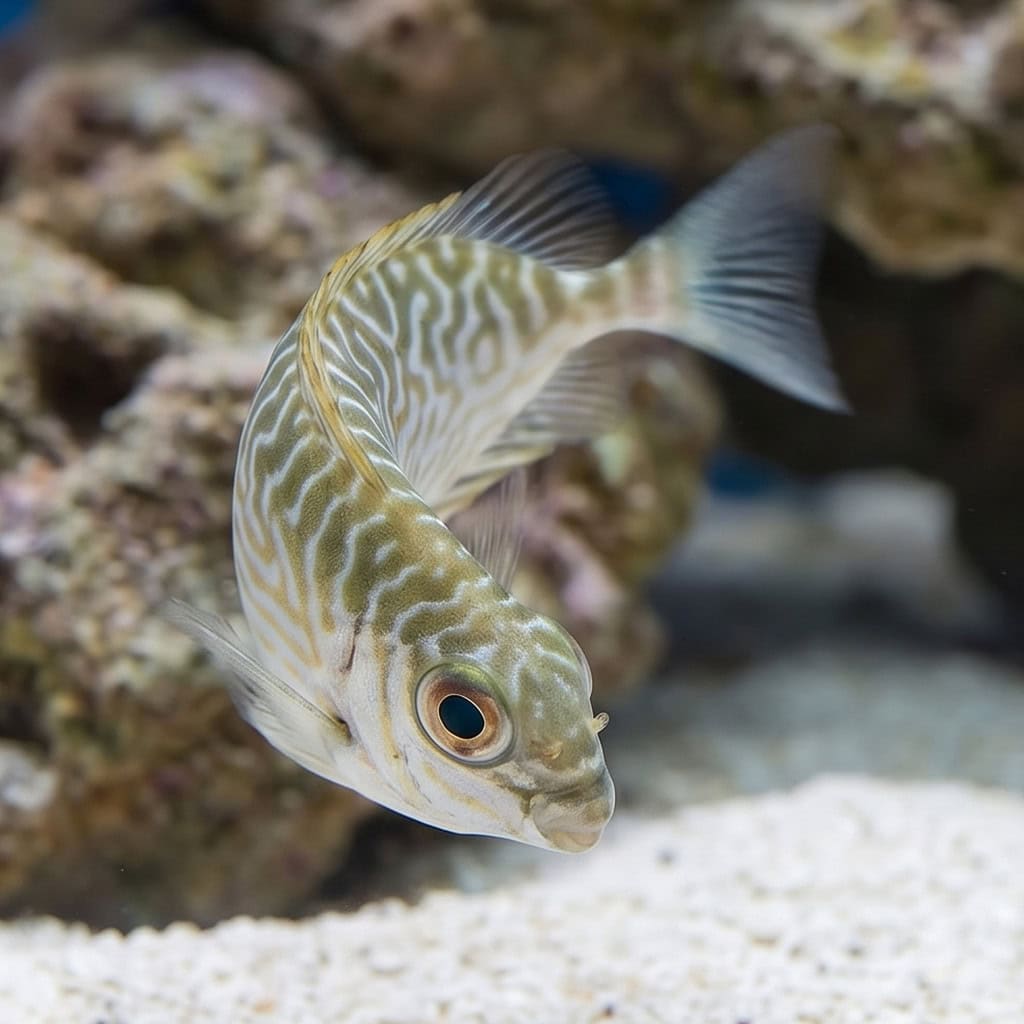
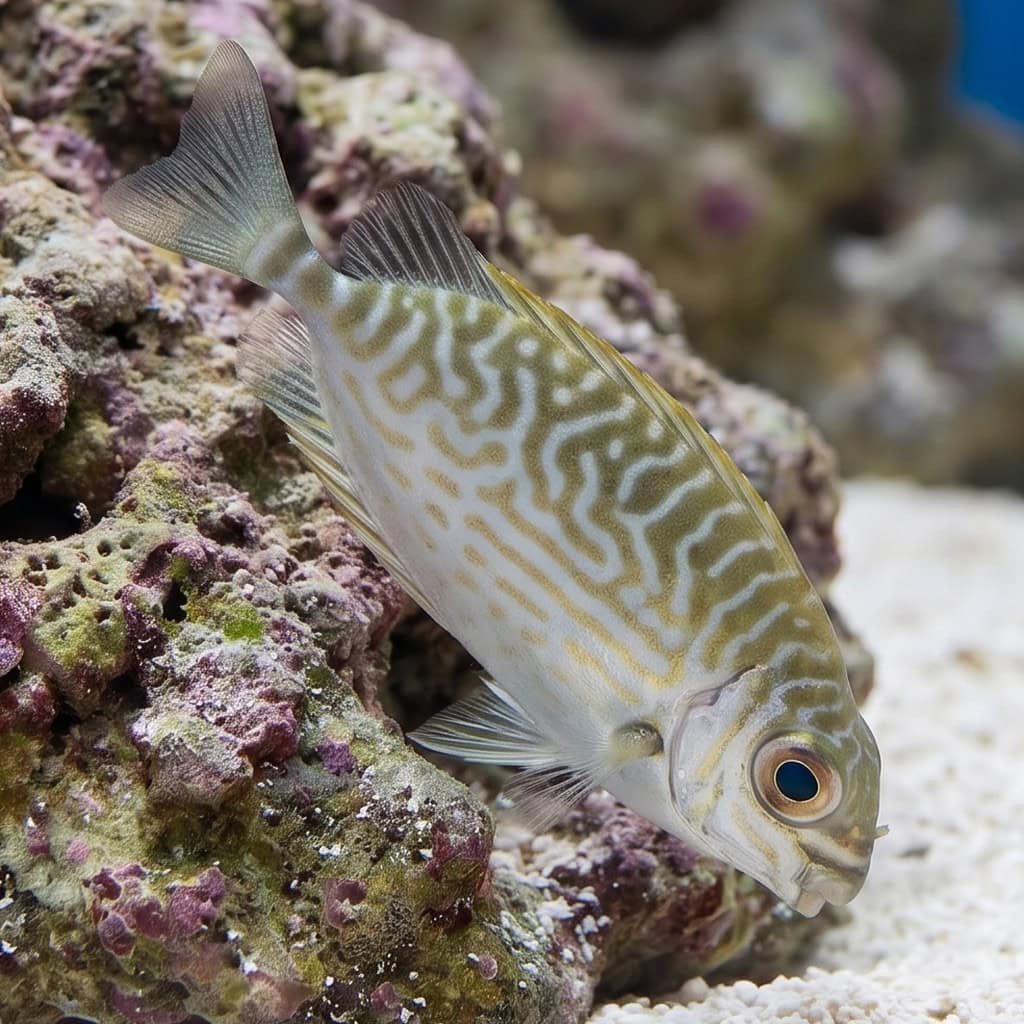
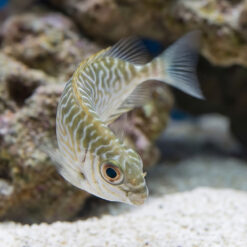
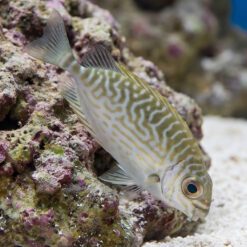
Little Spinefoot Rabbitfish
Siganus spinus
| Stock | Variations | Price | Quantity | |
|---|---|---|---|---|
| Out of Stock | 2.25 - 4.25" - Central Pacific | Original price was: $97.99.$51.99Current price is: $51.99. | Email me |
Every order ships with our standard 3-hour live arrival guarantee. Need more time? Add our 5-Day Guarantee at checkout.
Full guarantee terms →Ships Monday – Thursday for next-day arrival at your nearest FedEx Hold location — typically ready by 9 AM. We monitor every delivery.
Shipping details →
Monday – Friday 8 AM – 9 PM
Saturday 12 PM – 4 PM
Sunday 12 PM – 9 PM
Healthy, stable animals from vetted suppliers — inspected before packing, shipped overnight. Decades of experience built this model so we can deliver premium livestock at 30%+ less than you'd pay elsewhere.
| Care Level | Moderate |
|---|---|
| Temperament | Peaceful |
| Reef Safe | With Caution |
| Functional Benefit | Algae Control |
| Diet Type | Herbivore |
| Mininum Tank Size | 120 gallons |
| Max Size | 8 inches |
| Temperature | 72–78°F |
| pH Range | 8.1–8.4 |
| Specific Gravity | 1.022–1.025 |
The Little Spinefoot Rabbitfish (Siganus spinus) is a tan-to-gold spinefoot with fine, maze-like markings that blend well into reef rock and macroalgae zones. It’s a diurnal grazer that spends the day cruising and picking at film algae and nuisance growth, making it a practical choice when you want steady algae control from a larger, open-water herbivore.
What You’ll Observe:
- Regular “patrol laps” around rockwork and along the glass, with frequent stops to graze
- Color and pattern shifts that change subtly with lighting and activity
- A predictable daily routine—active through the photoperiod, then settling into a preferred area
- Increasing interaction at feeding time as it learns your schedule
To succeed long-term, provide a mix of open swimming room and rockwork it can weave through while grazing. Offer algae-based foods (like nori and spirulina-rich options) consistently so it always has a dependable vegetable-heavy menu. With calm tankmates and stable reef parameters, it settles in and becomes a dependable, active grazer.
Will my Little Spinefoot change pattern or “fade” at night?
Yes—many spinefoots lighten/darken or shift their pattern with lighting, rest, and activity. As long as it’s swimming and feeding normally, this is typically just normal coloration change.
What if it ignores nori/algae sheets at first?
Some take time to recognize clipped seaweed as food. Try rubber-banding a small piece to a rock, offering different algae types, and keeping portions small so it can “discover” it during grazing.
Does it do better alone, in a pair, or in a small group?
Keepers often report the smoothest results when multiples are introduced together rather than adding a second later. Provide multiple grazing paths and hiding routes so each fish can settle into its own routine.
Why is it picking at certain corals even when there’s algae in the tank?
Often it’s grazing for film/algae growing on the coral surface or “sampling” as it learns the tank. Maintaining regular algae-based feeding and easy-to-find grazing options usually reduces this behavior, but individuals can vary.
What’s the easiest way to move it between tanks without a stressful chase?
Use a clear specimen container and gently guide it in rather than netting. Dimming the lights for a few minutes beforehand also helps it settle and makes capture calmer.
Each fish is checked for strong appetite and activity before we approve it for your tank.
Only logged in customers who have purchased this product may leave a review.
Recently viewed products
Reviews
There are no reviews yet.