
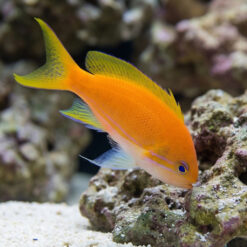
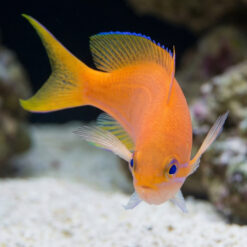
Pink Square Anthias
Pseudanthias pleurotaenia
| Stock | Variations | Price | Quantity | |
|---|---|---|---|---|
| Out of Stock | 2.75 - 3.75" - Female - Indo-Pacific | Original price was: $117.99.$61.99Current price is: $61.99. | Email me | |
| Out of Stock | 1.75 - 2.75" - Female - Indo-Pacific | Original price was: $103.99.$54.99Current price is: $54.99. | Email me | |
| Out of Stock | 3.5 - 4.75" - Male - Indo-Pacific | Original price was: $245.99.$128.99Current price is: $128.99. | Email me |
Every order ships with our standard 3-hour live arrival guarantee. Need more time? Add our 5-Day Guarantee at checkout.
Full guarantee terms →Ships Monday – Thursday for next-day arrival at your nearest FedEx Hold location — typically ready by 9 AM. We monitor every delivery.
Shipping details →
Monday – Friday 8 AM – 9 PM
Saturday 12 PM – 4 PM
Sunday 12 PM – 9 PM
Healthy, stable animals from vetted suppliers — inspected before packing, shipped overnight. Decades of experience built this model so we can deliver premium livestock at 30%+ less than you'd pay elsewhere.
| Care Level | Moderate |
|---|---|
| Temperament | Semi-Aggressive |
| Reef Safe | Yes |
| Functional Benefit | Ornamental Only |
| Diet Type | Planktivore |
| Mininum Tank Size | 120 gallons |
| Max Size | 8 inches |
| Temperature | 72–78°F |
| pH Range | 8.1–8.4 |
| Specific Gravity | 1.022–1.025 |
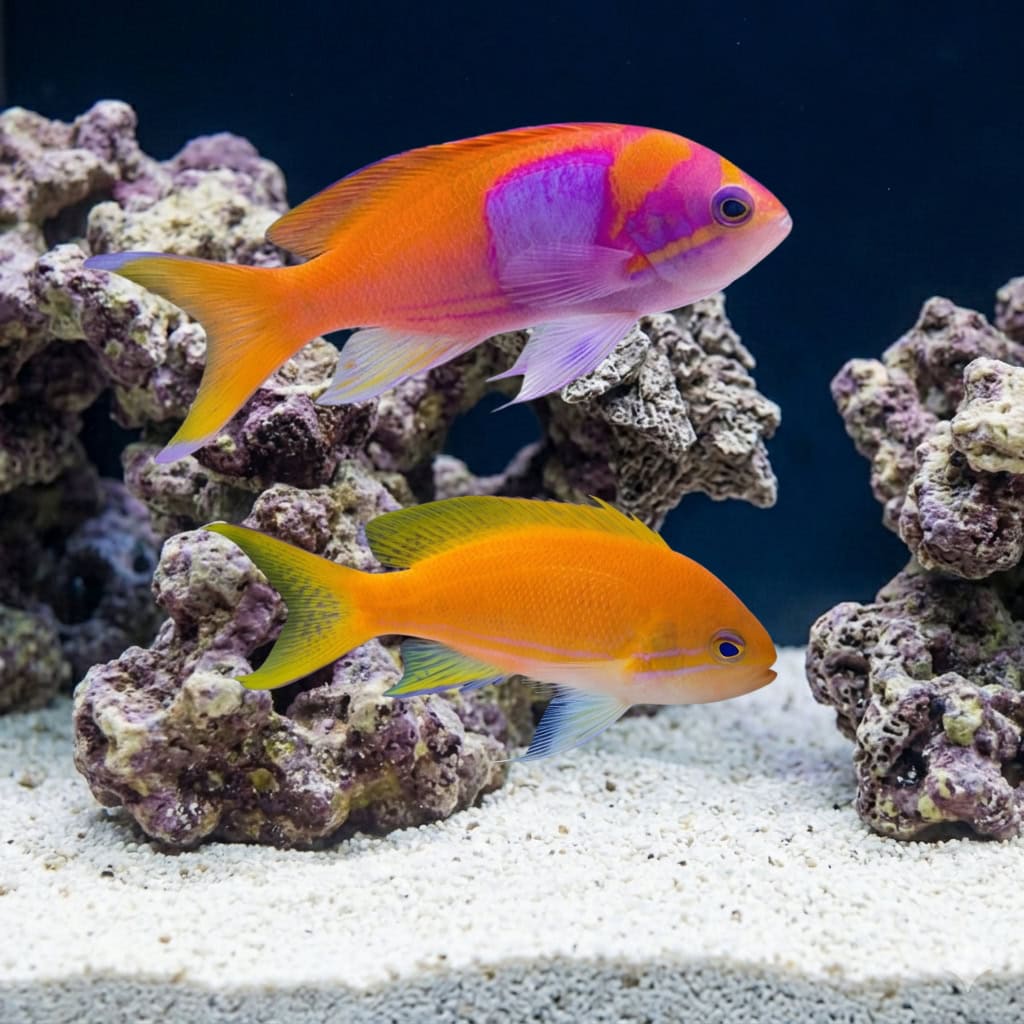
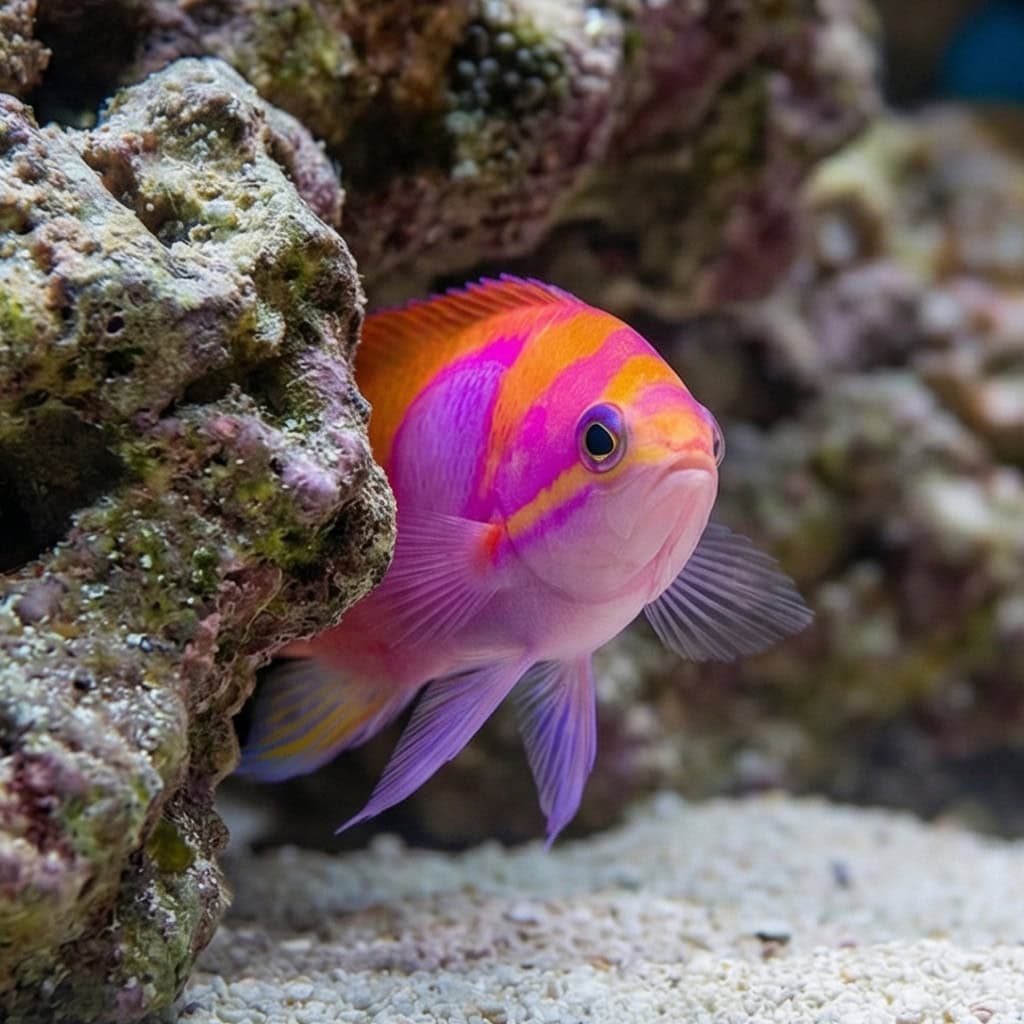
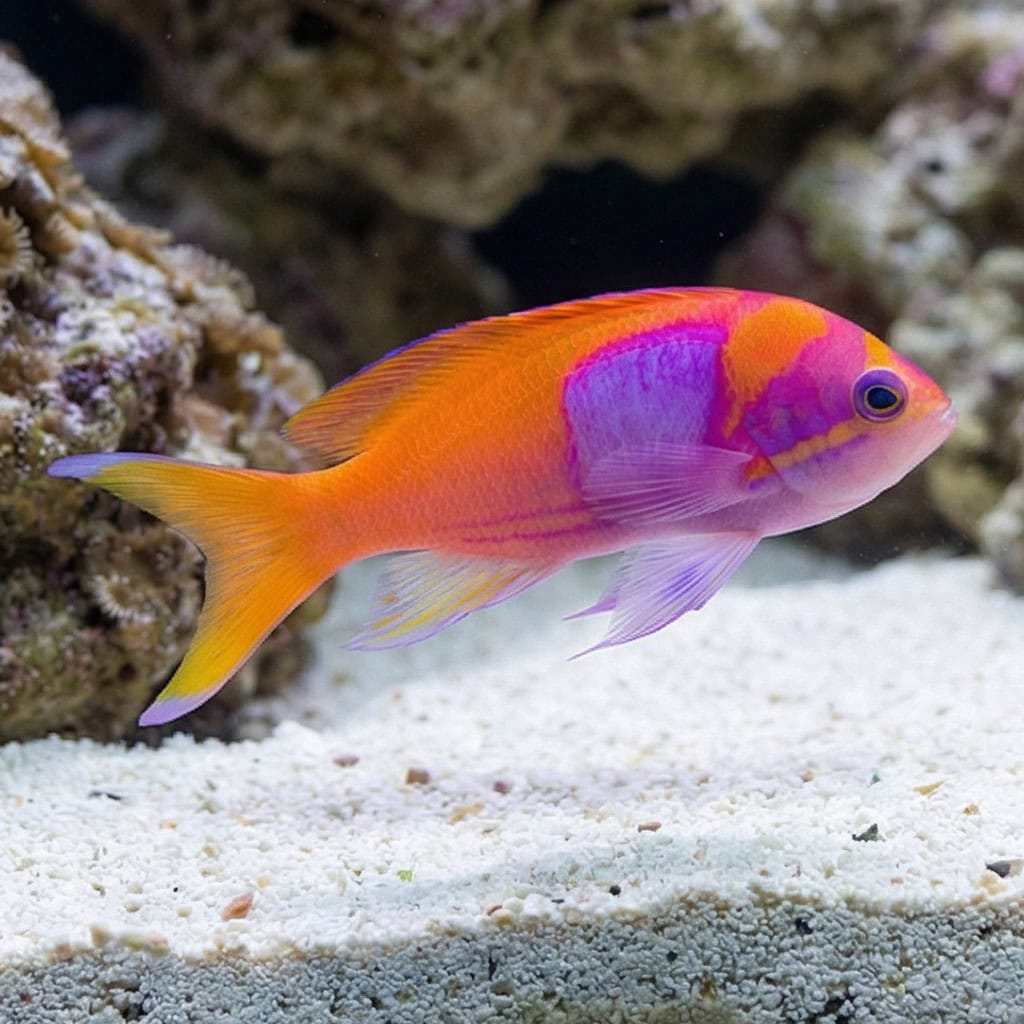
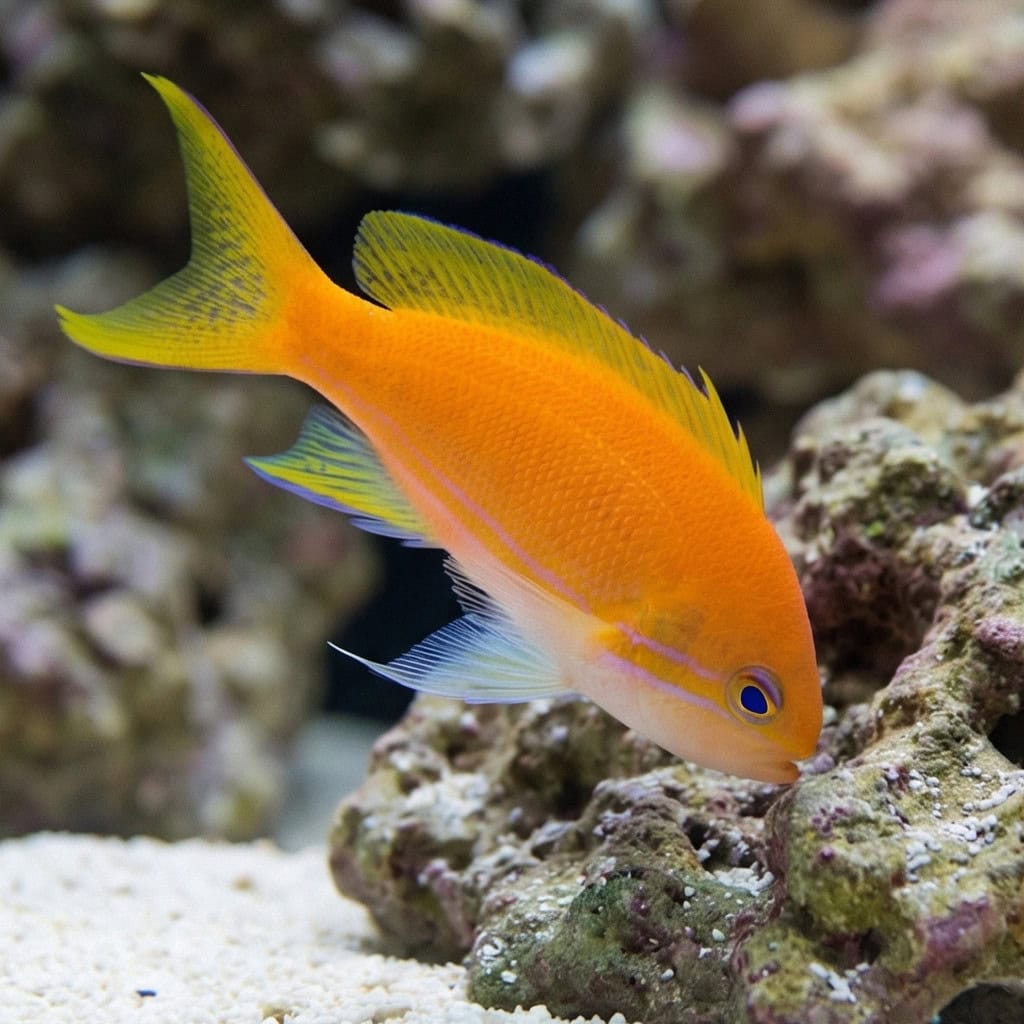
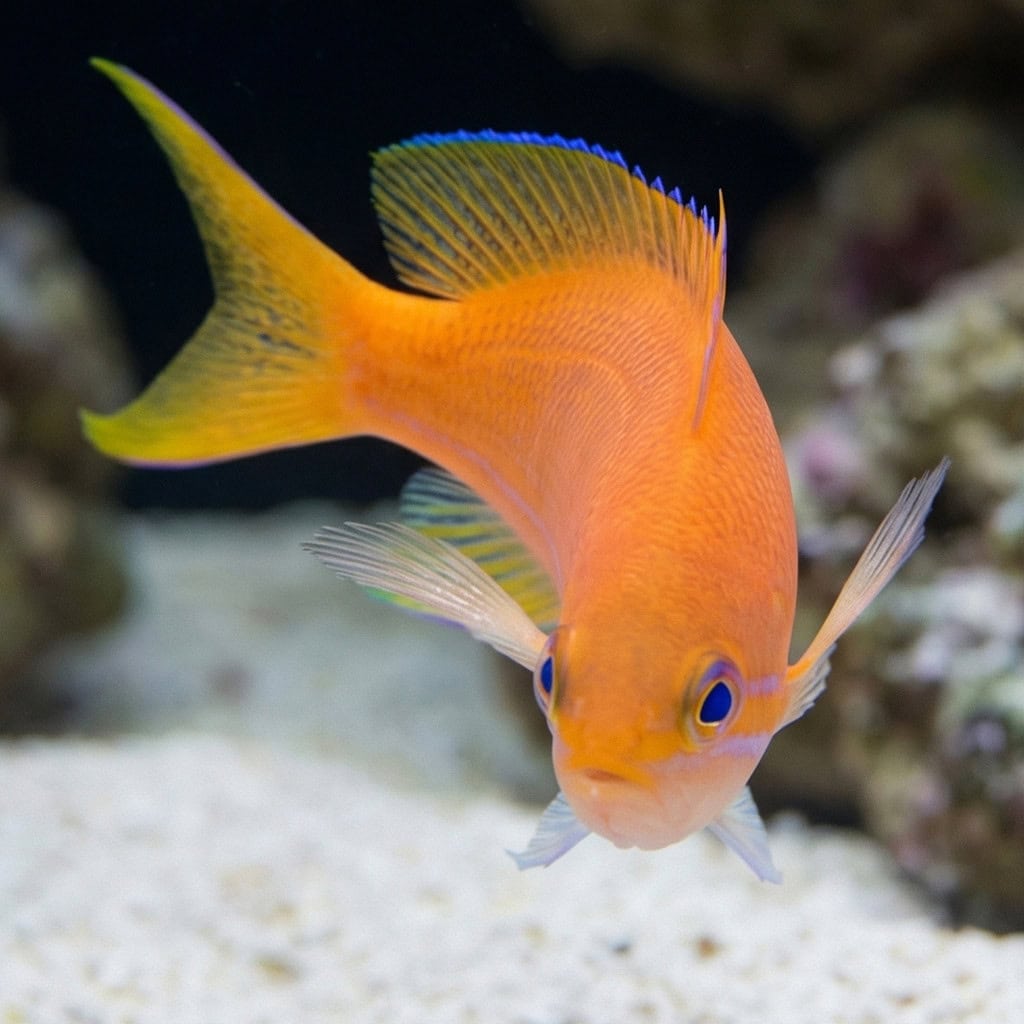
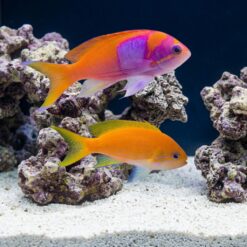
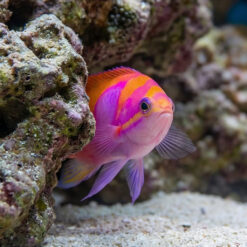
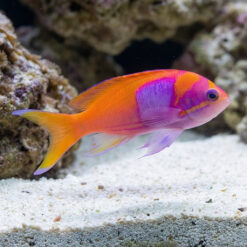
The Pink Square Anthias (Pseudanthias pleurotaenia), also sold as the squarespot, squareback, or mirror anthias, is a midwater reef fish best known for adult males that show a pink body with a bold, square-like purple blotch on the side. Females and juveniles trend more yellow with softer lavender accents, which makes mixed groups easy to tell apart.
What You’ll Observe:
- Mid-tank hovering and cruising, especially along rock edges and drop-off style aquascapes
- Fast, focused dashes into the water column at feeding time, often turning tightly back to a preferred “home” area
- Short display and posturing moments as it establishes a pecking order
- More consistent open-water swimming once it learns your tank’s daily rhythm
For best results, provide open swimming room with rock ledges/overhangs and a zone of low, indirect lighting to help maintain strong coloration. Offer small meaty foods in multiple small feedings through the day (mysis, enriched brine, and other fine plankton-sized options), and a refugium that grows pods can be a helpful add-on. In groups, it’s typically kept as one dominant fish with several smaller companions so the social structure stays stable.
Do Pink Square Anthias “school” tightly like chromis?
They usually hover and gather in the same general area rather than moving as a tight, synchronized school, especially once territories are established.
Why did one of my females start looking more like a male over time?
This species is a sequential hermaphrodite, so shifts in the group’s social hierarchy can trigger the dominant individual to transition.
Is it normal for a new male to hang back while others are out front?
It can be normal during the settling-in phase; consistent feeding cues and multiple rock “lanes” to move through often brings them into open water more reliably.
My anthias keeps cruising at the surface in quarantine’what is it doing?
Some keepers describe this as “sharking,” and it often lines up with surface-oriented food searching and/or a desire for higher-oxygen water near surface agitation.
I’m seeing faint pale lines on both sides’should I panic?
If the markings are symmetrical and the fish is eating and swimming normally, they can simply be visible lateral-line anatomy that stands out under certain lighting.
Each fish is checked for strong appetite and activity before we approve it for your tank.
Recently viewed products