
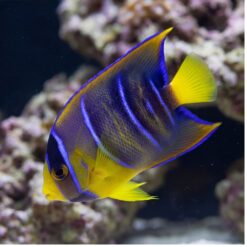
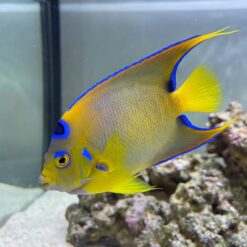
Queen Angelfish
Holacanthus ciliaris
| Stock | Variations | Price | Quantity |
|---|
Every order ships with our standard 3-hour live arrival guarantee. Need more time? Add our 5-Day Guarantee at checkout.
Full guarantee terms →Ships Monday – Thursday for next-day arrival at your nearest FedEx Hold location — typically ready by 9 AM. We monitor every delivery.
Shipping details →
Monday – Friday 8 AM – 9 PM
Saturday 12 PM – 4 PM
Sunday 12 PM – 9 PM
Healthy, stable animals from vetted suppliers — inspected before packing, shipped overnight. Decades of experience built this model so we can deliver premium livestock at 30%+ less than you'd pay elsewhere.
| Care Level | Expert |
|---|---|
| Temperament | Semi-Aggressive |
| Reef Safe | With Caution |
| Functional Benefit | Ornamental Only |
| Diet Type | Omnivore |
| Mininum Tank Size | 250 gallons |
| Max Size | 18 inches |
| Temperature | 72–78°F |
| pH Range | 8.1–8.4 |
| Specific Gravity | 1.022–1.025 |
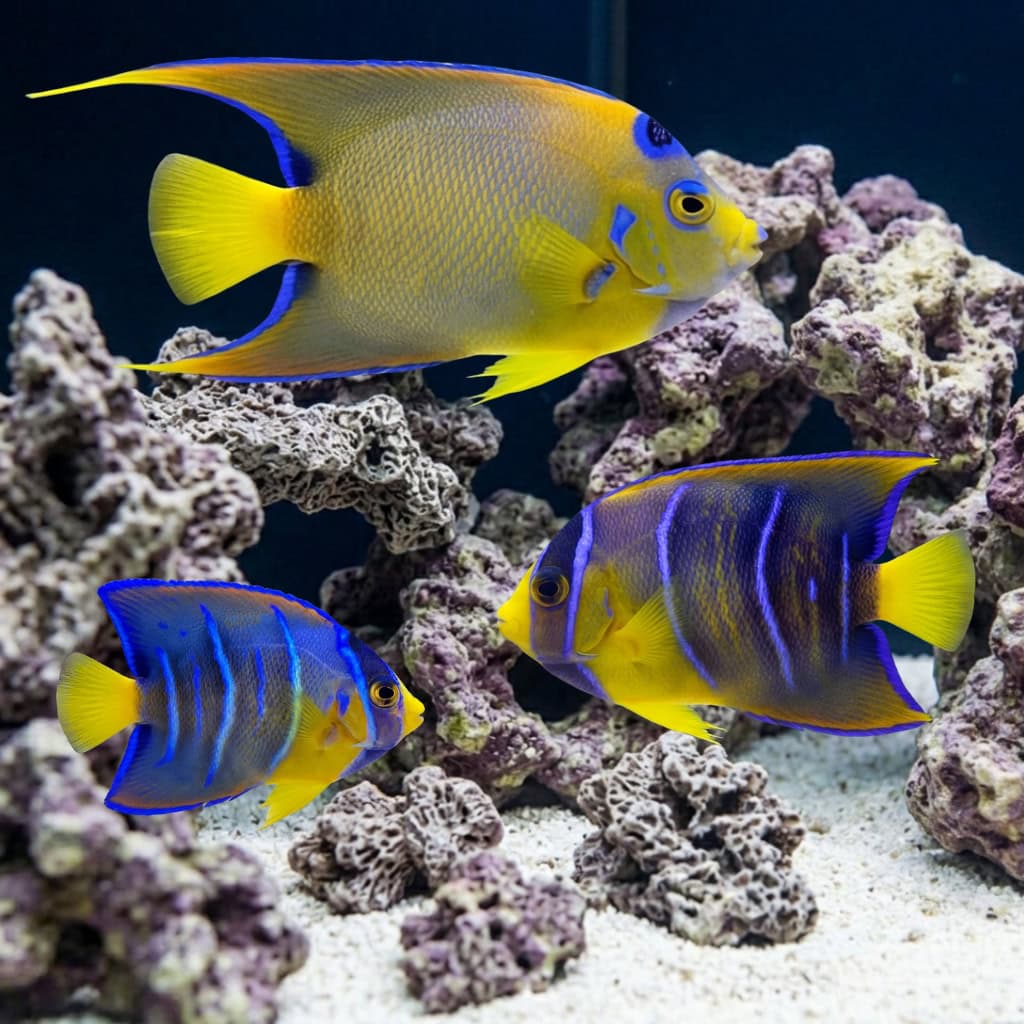
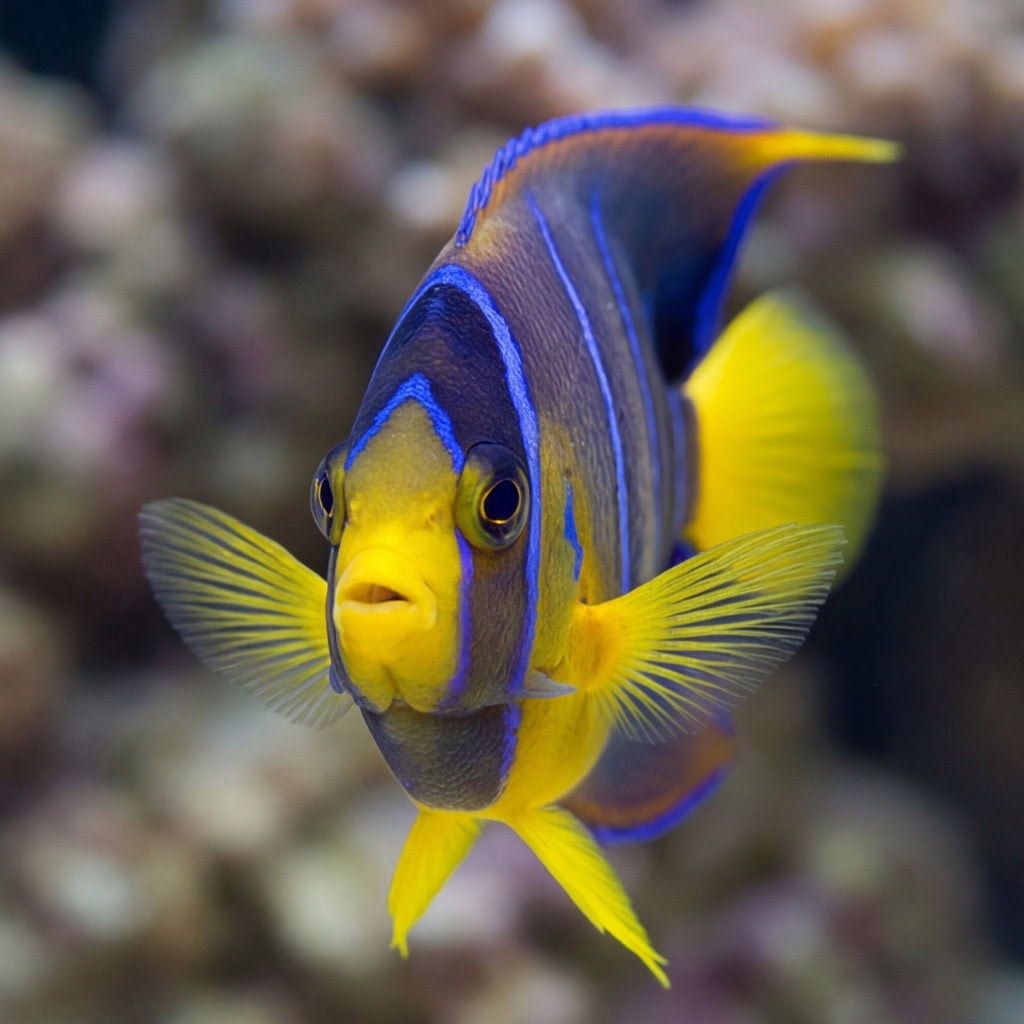
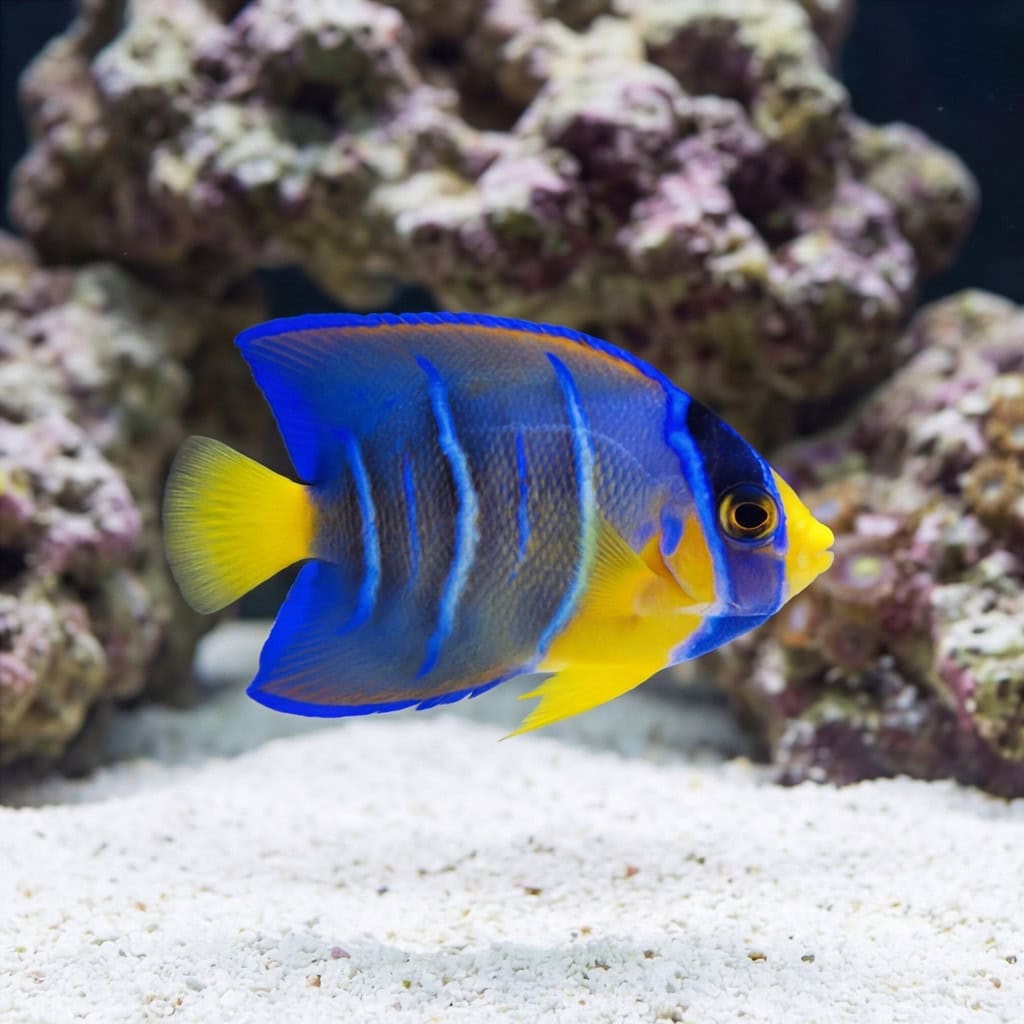
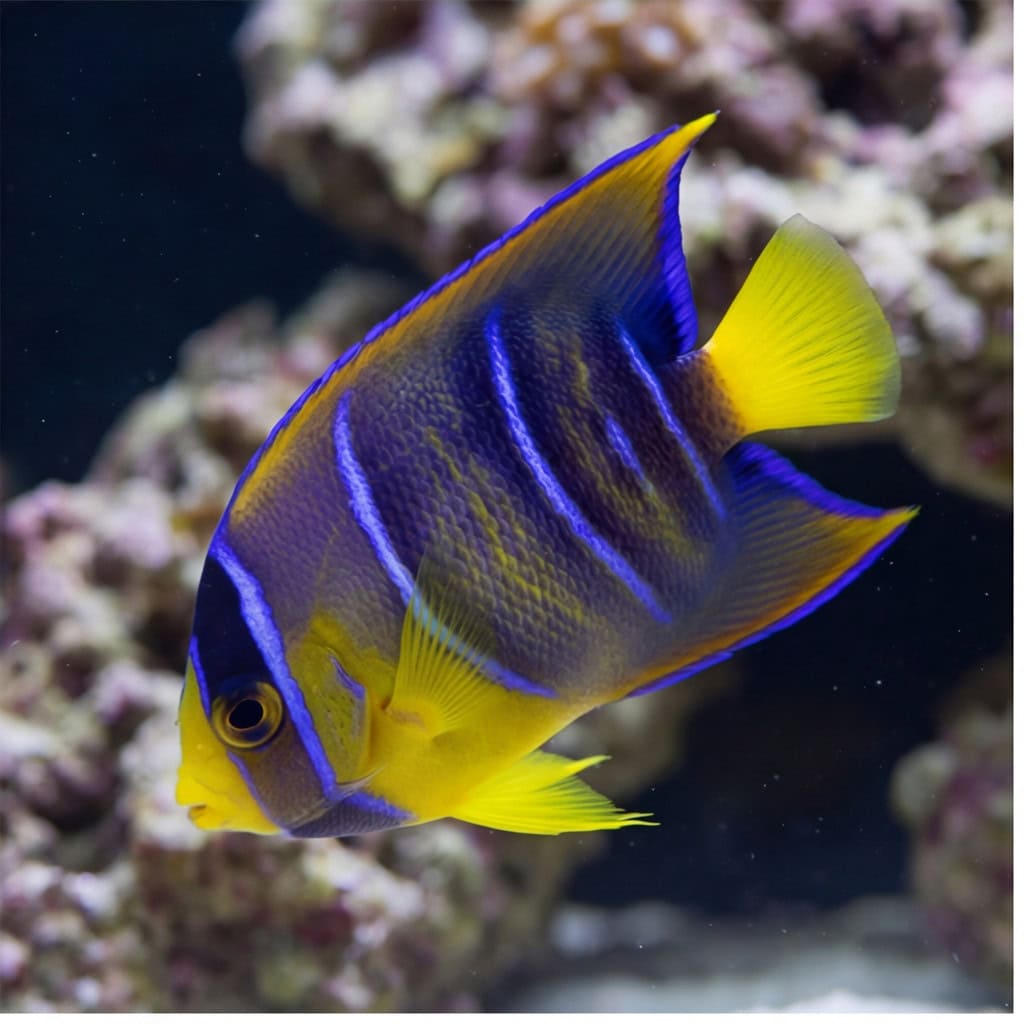
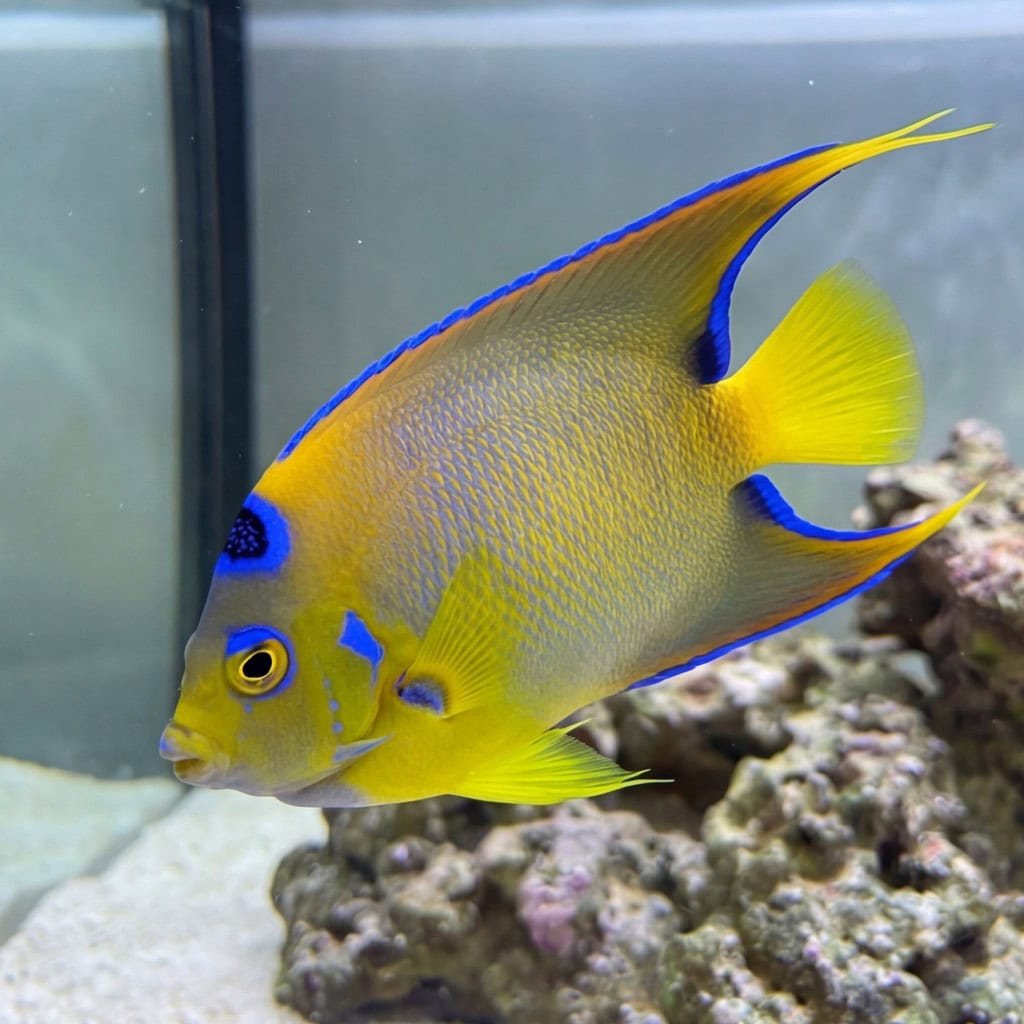
The Queen Angelfish (Holacanthus ciliaris) is a large Caribbean angelfish known for its blue-green body, bright yellow tail, and the blue “crown” spot on the forehead. Adults develop trailing fin streamers, and juveniles often show higher contrast that gradually shifts as the fish grows.
What You’ll Observe:
- Cruising the rockwork and open water in steady loops, then pausing to graze
- Regular picking at live rock and surfaces between feedings
- Learning the feeding routine and coming to the front glass when you approach
- A consistent “patrol route” that becomes more predictable as it settles in
Provide an established aquarium with plenty of live rock arches and a few roomy caves so it can graze and retreat without being boxed in. Offer a varied menu that includes sponge-based angelfish foods plus nori and meaty frozen options in several smaller feedings. With similarly sized tankmates and consistent feeding, it typically becomes a steady, active centerpiece fish.
Will my Queen Angelfish keep its juvenile pattern?
Most individuals gradually transition as they grow, and the change is usually uneven at first (patches and mixed patterning) before it becomes more uniform.
Why does my Queen Angelfish look more yellow (or less blue) in captivity than photos from the ocean?
Keepers often report coloration shifts over time; strong nutrition variety and long-term stability tend to help maintain richer contrast as the fish matures.
What foods are hobbyists having the most success with long-term?
A mix tends to work best: sponge-containing angelfish preparations, nori/seaweed, and meaty items like mysis or clam offered in rotation.
Can I keep a Queen Angelfish with other large angelfish?
Some aquarists do, but results are best when the system is planned around multiple large fish, with ample space and introduction timing that prevents one fish from “owning” the whole layout.
Is it normal for a Queen Angelfish to “test bite” corals even if it’s well-fed?
Many owners observe occasional sampling behavior; keeping it busy grazing (rockwork) and offering frequent variety tends to reduce repeated attention on the same spots.
We work with trusted suppliers who keep our specimens healthy and well-fed before shipping.
Recently viewed products