
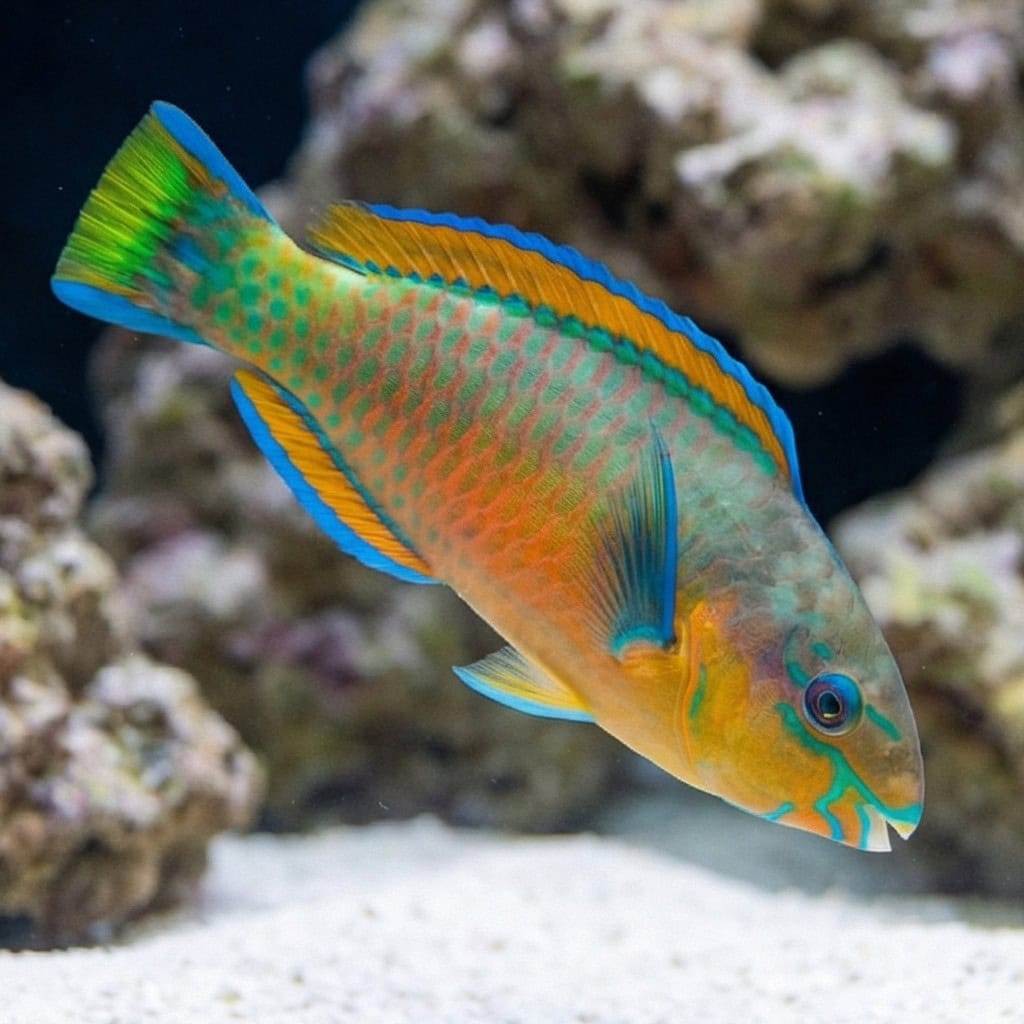
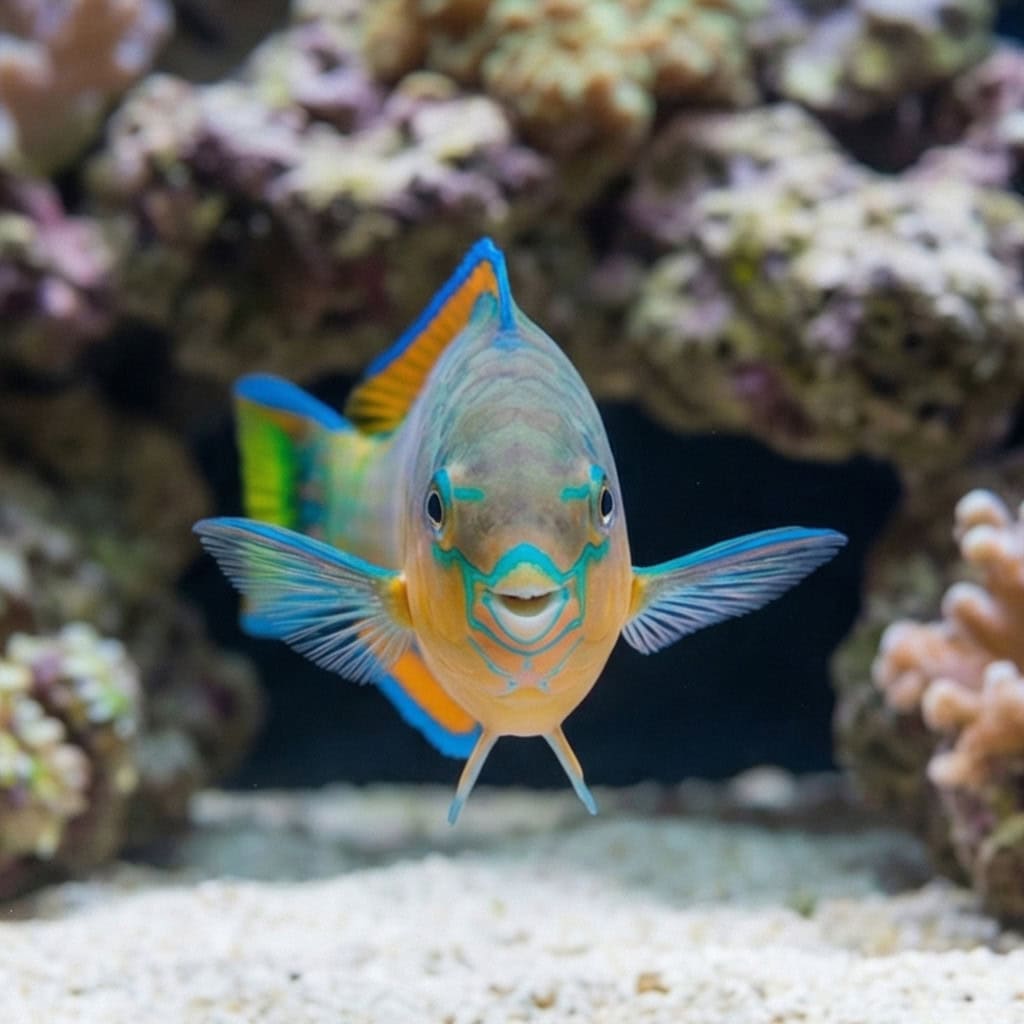
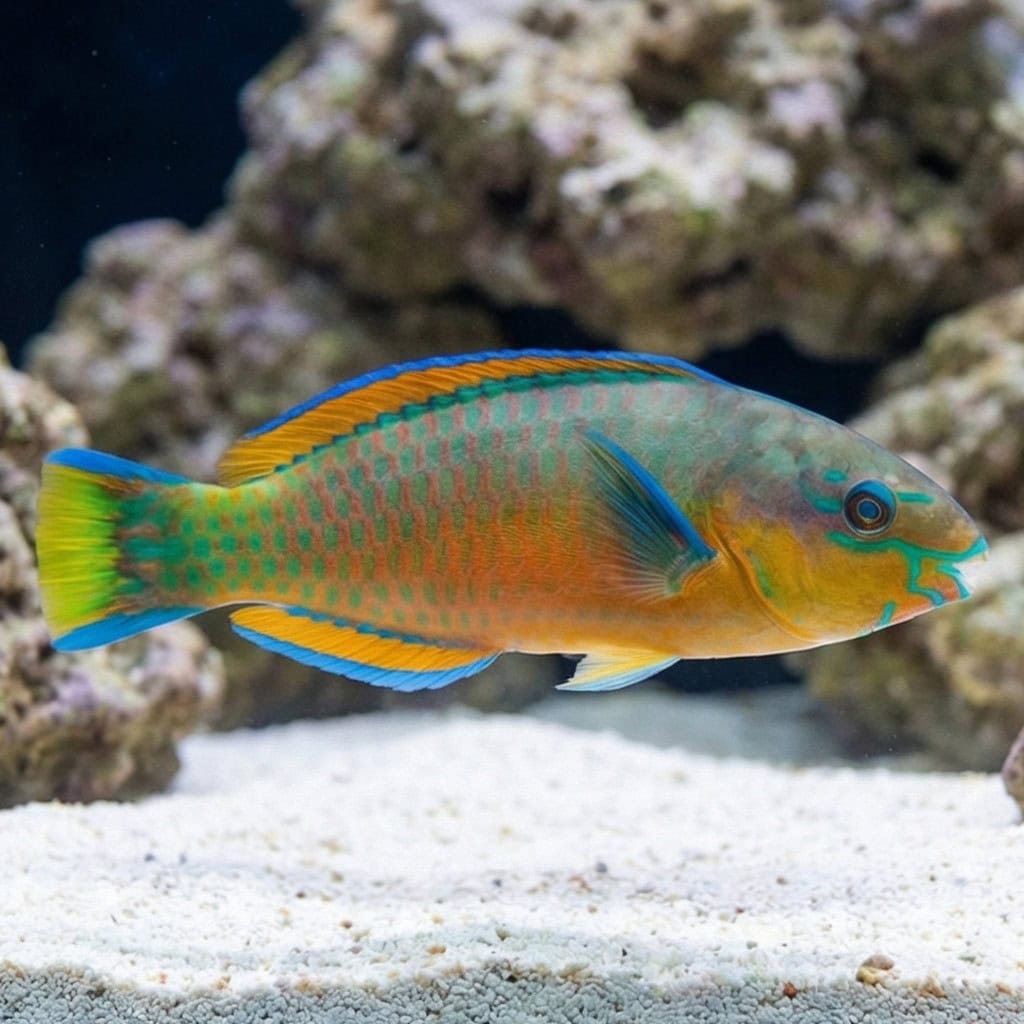
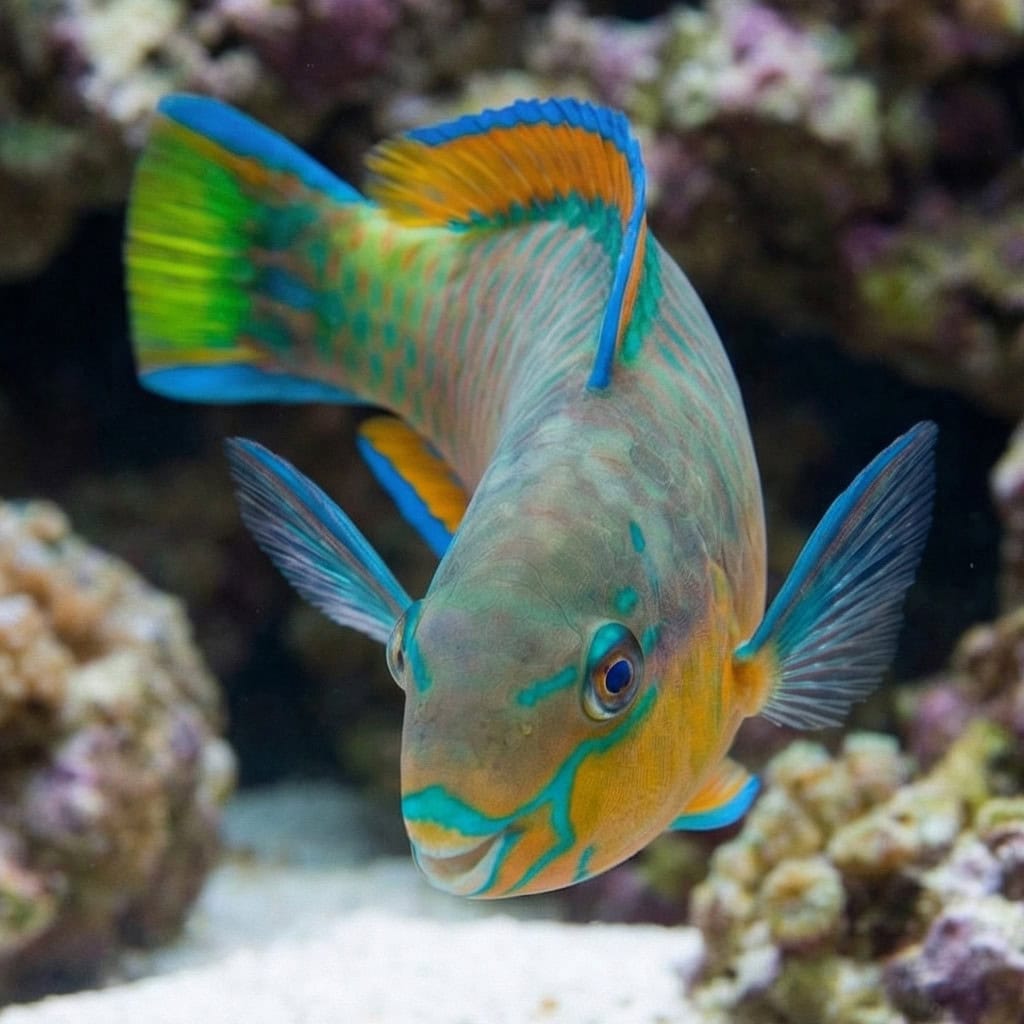
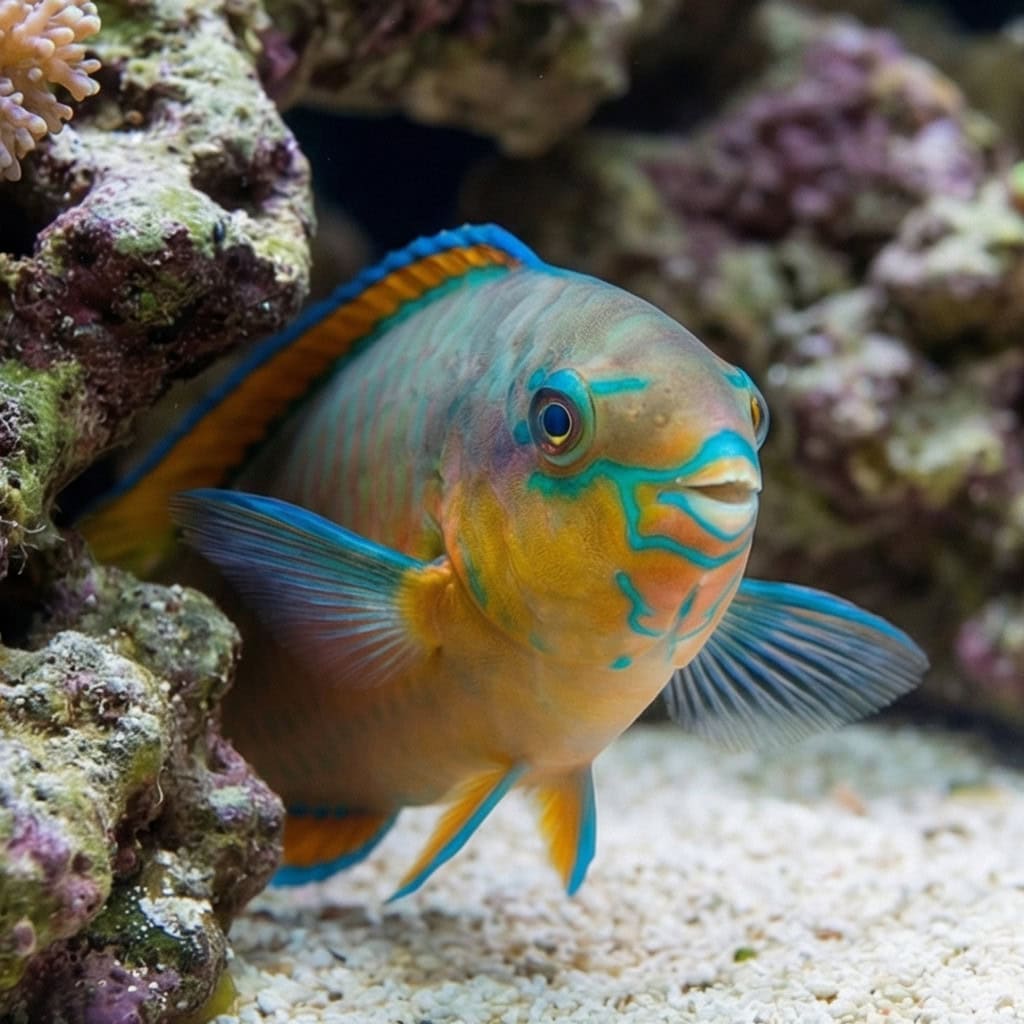
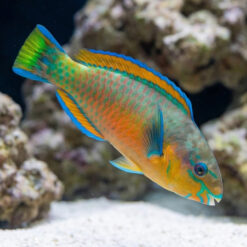
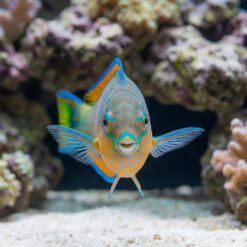
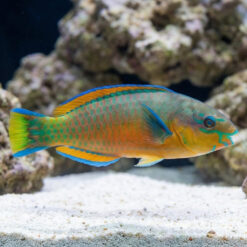
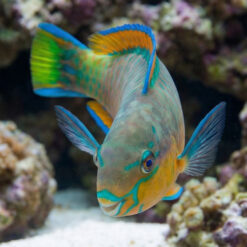
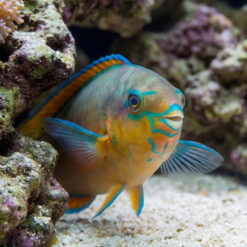
Quoys Parrotfish
Scarus quoyi
| Stock | Variations | Price | Quantity | |
|---|---|---|---|---|
| Out of Stock | 4.25 - 6.25" - Indo-Pacific | Original price was: $376.99.$197.99Current price is: $197.99. | Email me |
Every order ships with our standard 3-hour live arrival guarantee. Need more time? Add our 5-Day Guarantee at checkout.
Full guarantee terms →Ships Monday – Thursday for next-day arrival at your nearest FedEx Hold location — typically ready by 9 AM. We monitor every delivery.
Shipping details →
Monday – Friday 8 AM – 9 PM
Saturday 12 PM – 4 PM
Sunday 12 PM – 9 PM
Healthy, stable animals from vetted suppliers — inspected before packing, shipped overnight. Decades of experience built this model so we can deliver premium livestock at 30%+ less than you'd pay elsewhere.
| Care Level | Expert |
|---|---|
| Temperament | Peaceful |
| Reef Safe | With Caution |
| Functional Benefit | Algae Control |
| Diet Type | Herbivore |
| Mininum Tank Size | 250 gallons |
| Max Size | 10 inches |
| Temperature | 72–78°F |
| pH Range | 8.1–8.4 |
| Specific Gravity | 1.022–1.025 |
Quoy’s Parrotfish (Scarus quoyi) is a constant, day-active grazer that helps manage film algae on mature rockwork while adding the unmistakable beak-mouth parrotfish look to a large marine aquarium. It’s found on Indo-West Pacific reefs and spends much of its time cruising, stopping often to pick and scrape as it feeds.
What You’ll Observe:
- Repeated grazing loops across rock faces, overflows, and high-light areas where natural growth is strongest
- Short inspection stops where it pecks in quick bursts, then glides to the next patch
- A regular evening routine of settling into a preferred sleeping spot, sometimes forming a mucus cocoon overnight
- Most activity concentrated during the photoperiod, with calmer cruising between feeding passes
- In the first 1–3 weeks, more time spent using caves and overhangs before it establishes a predictable route
Provide a long aquarium with open swimming lanes and established, algae-bearing live rock so it can graze naturally throughout the day. Offer nori/seaweed daily plus spirulina-based pellets and herbivore-focused frozen blends in multiple small feedings to keep it consistently foraging.
Why does it “wrap itself” in slime at night?
Many parrotfish produce a mucus cocoon for rest; in aquariums it’s typically seen at lights-out and is part of its normal nightly routine.
Will it only graze, or can it learn prepared foods?
Most keepers start with constant access to nori/seaweed and then add small pellets and fine chopped frozen foods; once it recognizes a feeding cadence, it often joins the routine.
Is it normal if it hides a lot right after introduction?
A common pattern is heavy cave use at first, then progressively longer grazing passes as it maps the tank and settles into a route.
Does it change color or social role over time?
Scarus species can shift sex/role in nature and are often discussed in terms of harem structure; in aquariums this usually shows up as gradual behavior and color pattern changes rather than sudden switches.
What does “grazing” look like day-to-day in a reef display?
It typically targets algae and biofilm on rock and hard surfaces, moving in steady laps and returning to the same high-growth zones throughout the day.
We source from vetted suppliers known for healthy, long-lived specimens.
Recently viewed products