
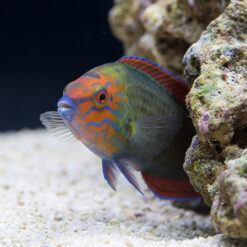
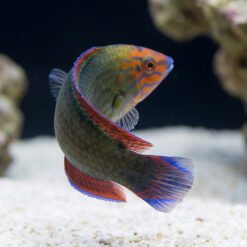
Red Head Wrasse
Halichoeres rubricephalus
| Stock | Variations | Price | Quantity |
|---|
Every order ships with our standard 3-hour live arrival guarantee. Need more time? Add our 5-Day Guarantee at checkout.
Full guarantee terms →Ships Monday – Thursday for next-day arrival at your nearest FedEx Hold location — typically ready by 9 AM. We monitor every delivery.
Shipping details →
Monday – Friday 8 AM – 9 PM
Saturday 12 PM – 4 PM
Sunday 12 PM – 9 PM
Healthy, stable animals from vetted suppliers — inspected before packing, shipped overnight. Decades of experience built this model so we can deliver premium livestock at 30%+ less than you'd pay elsewhere.
| Care Level | Moderate |
|---|---|
| Temperament | Peaceful |
| Reef Safe | With Caution |
| Functional Benefit | Pest Control |
| Diet Type | Carnivore |
| Mininum Tank Size | 70 gallons |
| Max Size | 4 inches |
| Temperature | 72–78°F |
| pH Range | 8.1–8.4 |
| Specific Gravity | 1.022–1.025 |
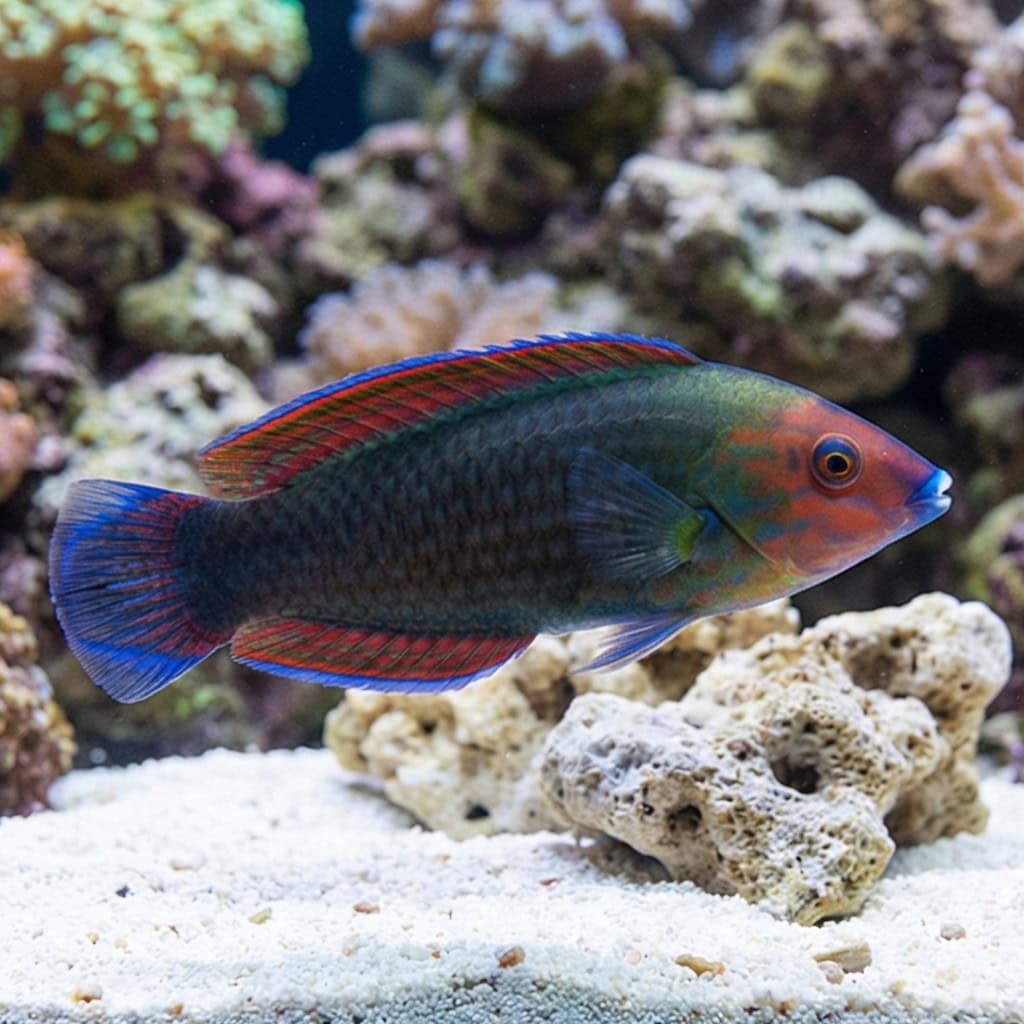
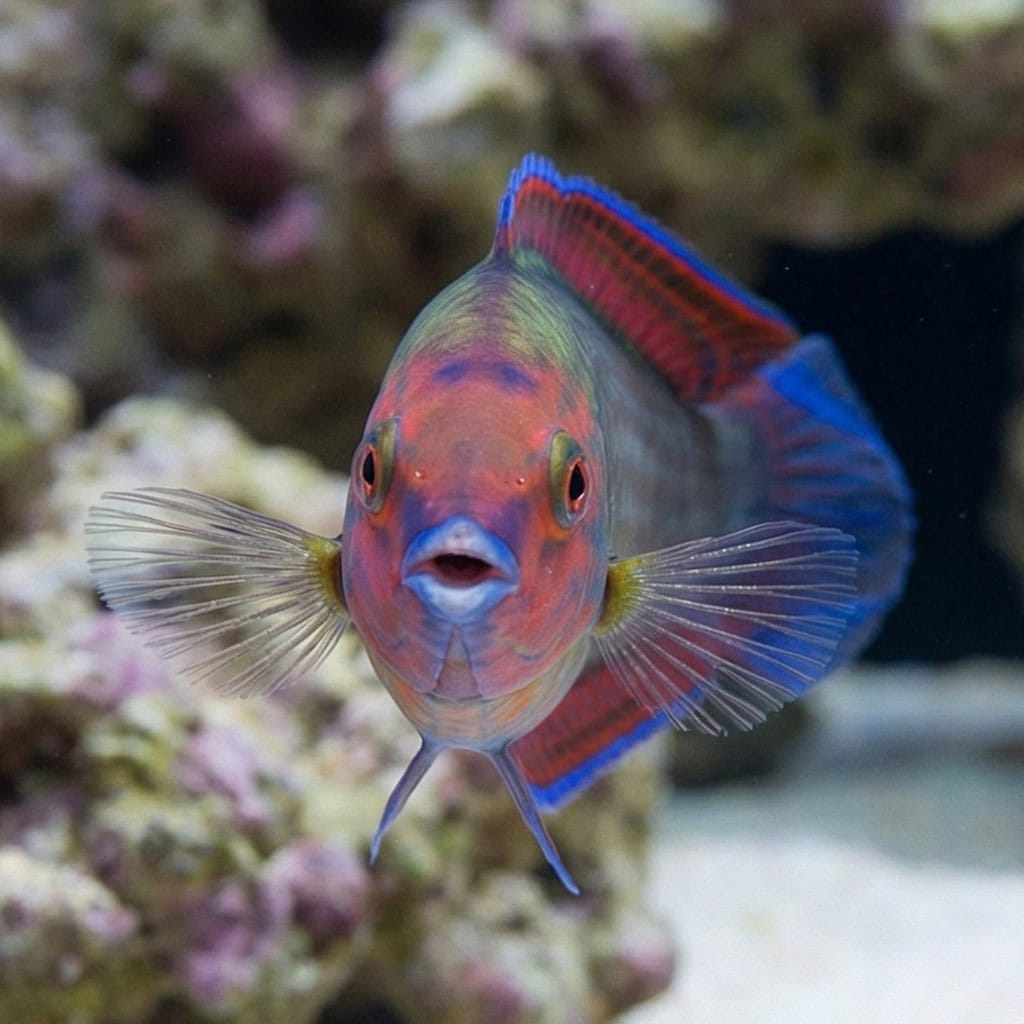
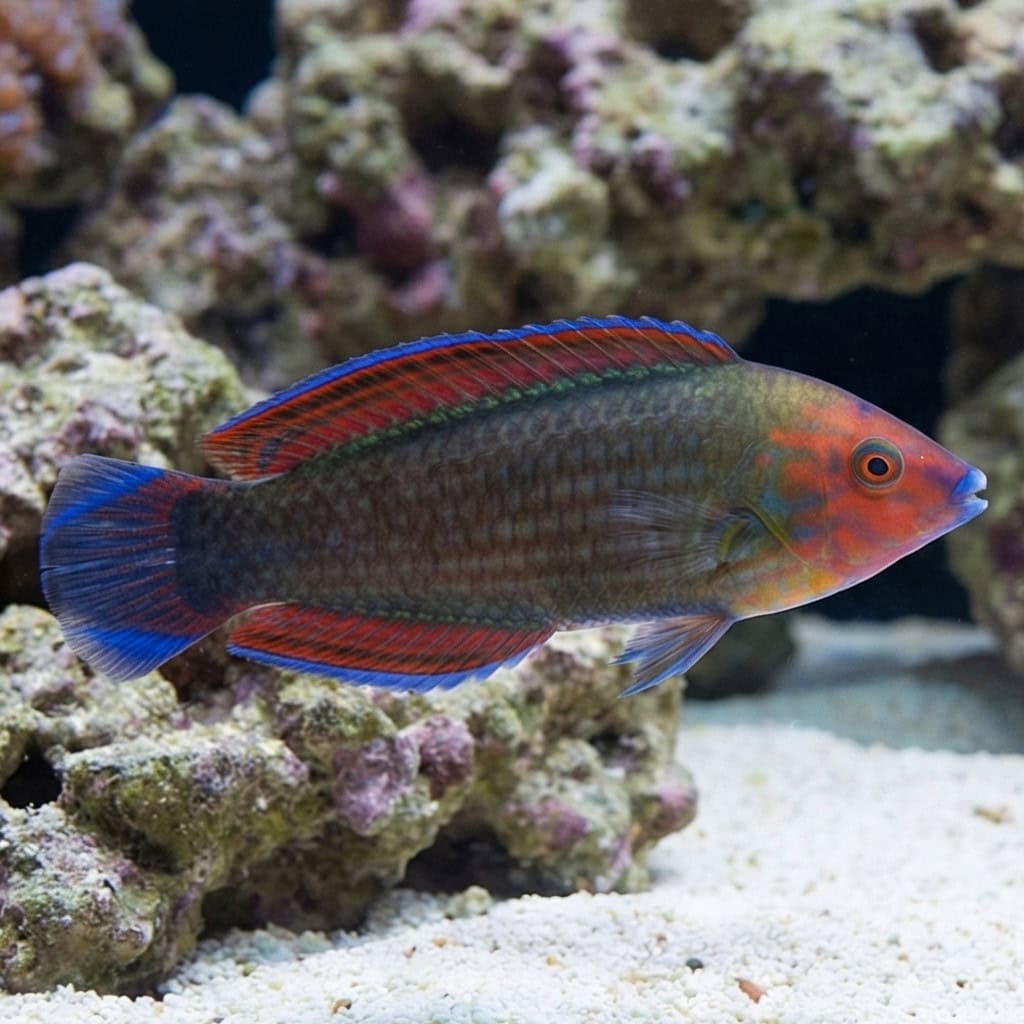
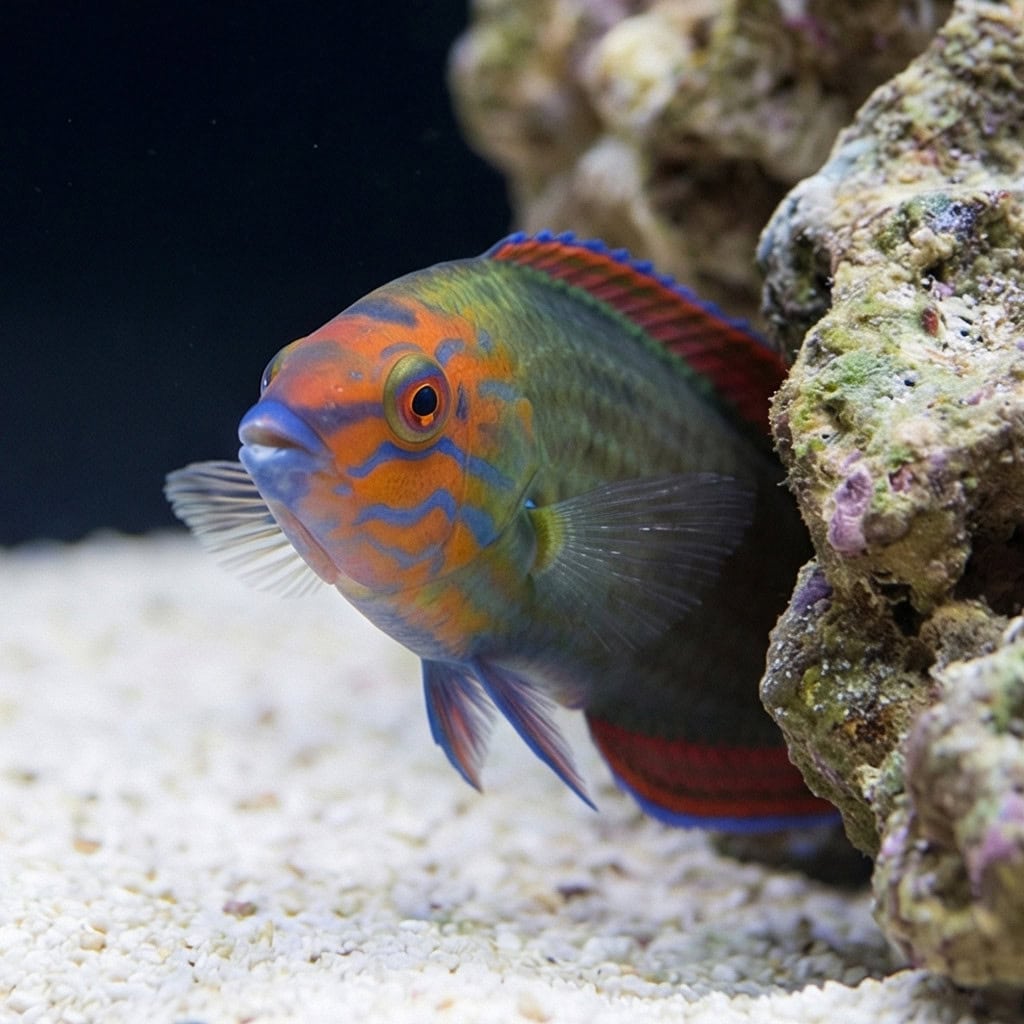
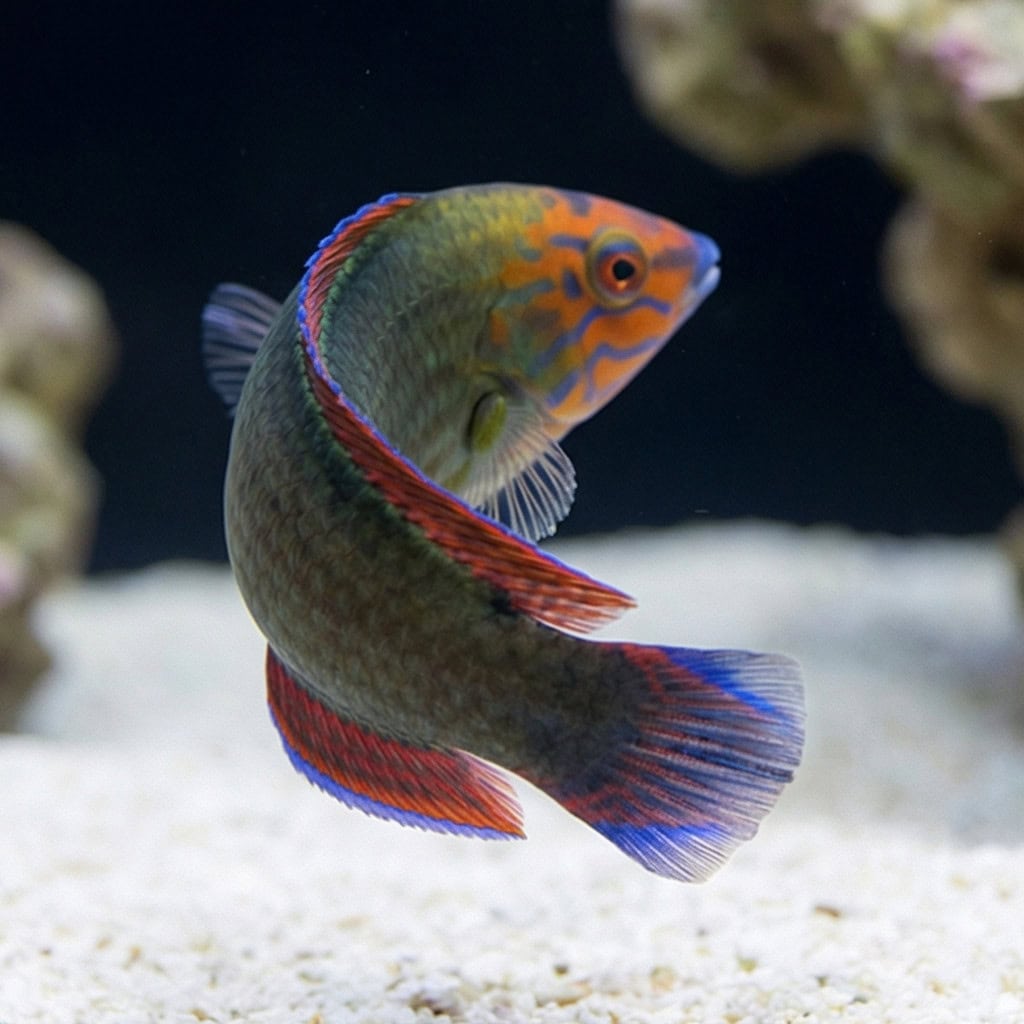
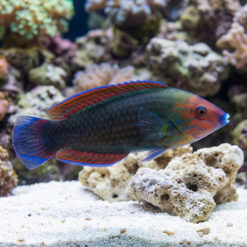
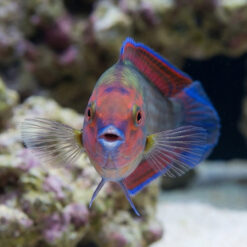
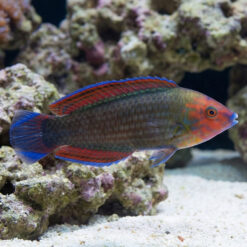
The Red Head Wrasse (Halichoeres rubricephalus) is an active sand-sleeping wrasse that forages through rockwork and across the substrate, helping reduce unwanted hitchhikers like fireworms and pyramidellid snails. Adult males are known for the red head coloration, while females tend to be greener with orange striping.
What You’ll Observe:
- Steady daytime cruising with frequent “inspection passes” over the sand and rock
- Quick dives into the sand to rest at night or when startled
- Curious picking behavior as it hunts small invertebrates on surfaces
- Confident, always-moving activity that keeps it visible for much of the day
Provide a mature reef with plenty of rockwork and a sand bed it can bury into, and make sure rock structures are stable. Offer a varied menu of small meaty foods in multiple feedings to match its active lifestyle and keep it focused on prepared foods.
Why did my Red Head Wrasse “disappear” right after I added it?
It’s common for sand-sleeping wrasses to bury themselves to rest, especially during the first few days while they learn the tank’s rhythm.
Do males keep their red head color long-term?
Many keepers report the red head can fade in captivity, and some note it holds better when the male is kept alongside a conspecific female.
Is it normal for this wrasse to redecorate the sand around rockwork?
Yes—diving into the sand can shift substrate, which is why stable rock placement directly on the tank bottom (not on sand) is a common keeper practice.
Can I keep more than one Red Head Wrasse together?
This species is typically kept singly; mixing with very similar wrasses can change social behavior and isn’t usually the first choice with a rare fish.
Is it “reef safe” even if it hunts pests?
It generally leaves corals alone, but its hunting style can overlap with small ornamental invertebrates, so most hobbyists plan livestock choices accordingly.
We work with trusted suppliers who keep our specimens healthy and well-fed before shipping.
Recently viewed products