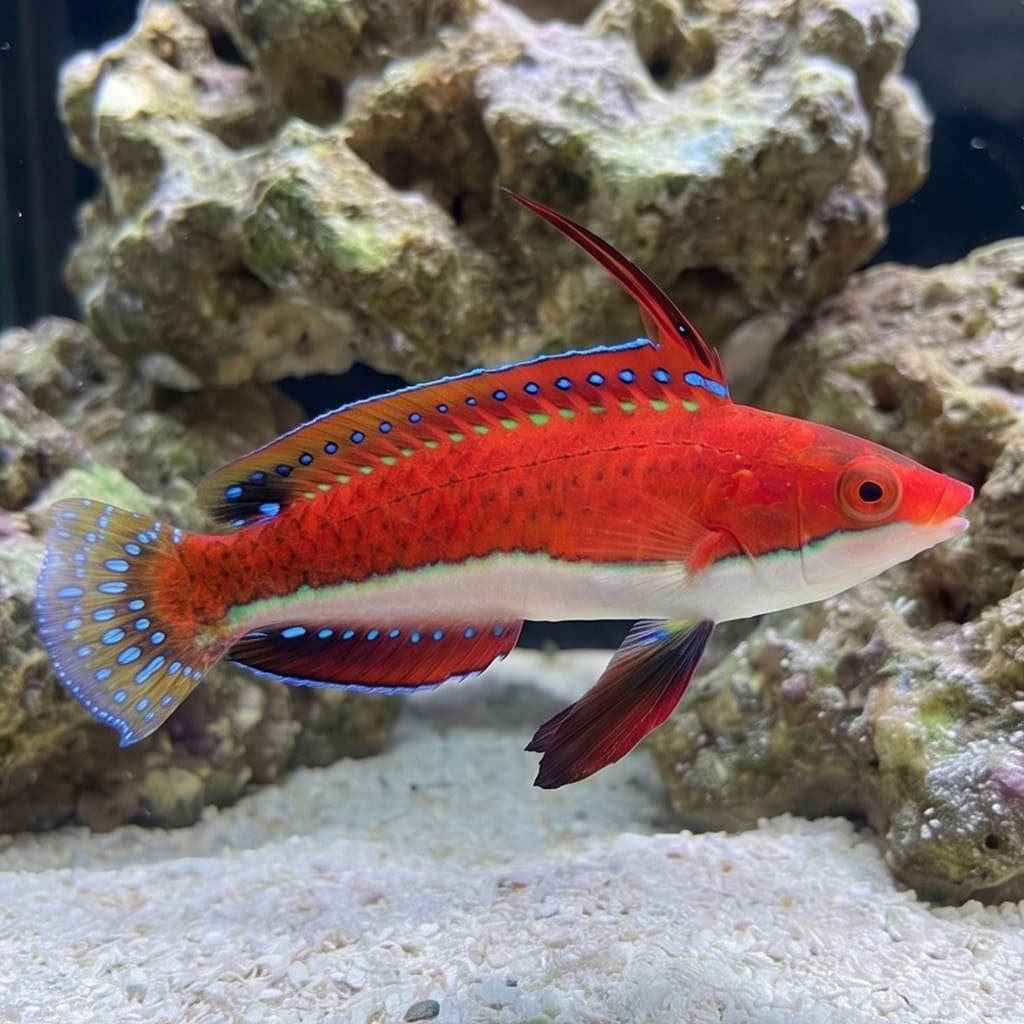
Ruby Longfin Fairy Wrasse
Cirrhilabrus rubeus
Original price was: $70.99.$28.99Current price is: $28.99.
| Stock | Variations | Price | Quantity | |
|---|---|---|---|---|
| In Stock | 2 - 3" - Indian Ocean | Original price was: $70.99.$28.99Current price is: $28.99. |
-
+
|
Every order ships with our standard 3-hour live arrival guarantee. Need more time? Add our 5-Day Guarantee at checkout.
Full guarantee terms →Ships Monday – Thursday for next-day arrival at your nearest FedEx Hold location — typically ready by 9 AM. We monitor every delivery.
Shipping details →
Monday – Friday 8 AM – 9 PM
Saturday 12 PM – 4 PM
Sunday 12 PM – 9 PM
Healthy, stable animals from vetted suppliers — inspected before packing, shipped overnight. Decades of experience built this model so we can deliver premium livestock at 30%+ less than you'd pay elsewhere.
| Care Level | Moderate |
|---|---|
| Temperament | Peaceful |
| Reef Safe | Yes |
| Functional Benefit | Ornamental Only |
| Diet Type | Carnivore |
| Mininum Tank Size | 55 gallons |
| Max Size | 3 inches |
| Temperature | 72–78°F |
| pH Range | 8.1–8.4 |
| Specific Gravity | 1.022–1.025 |
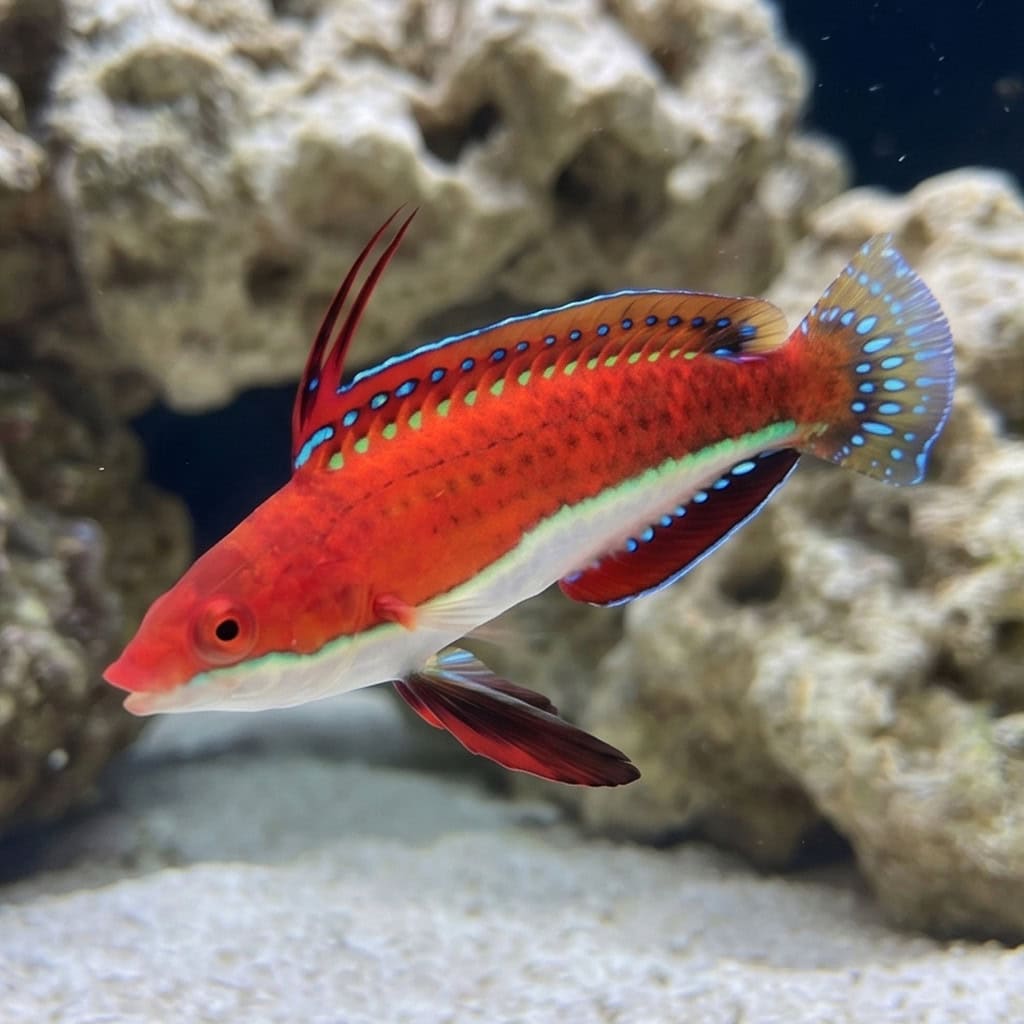
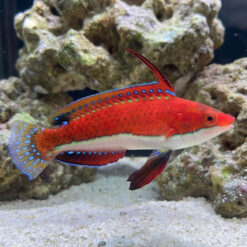
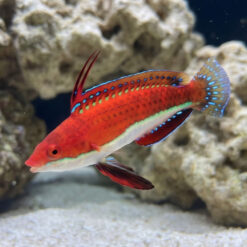
The Ruby Longfin Fairy Wrasse (Cirrhilabrus rubeus) is a reef-safe fairy wrasse known for ruby-red to magenta coloration and elongated spike dorsal fin rays in males. It comes from Indian Ocean locales such as Sri Lanka and the Maldives and is best showcased in a peaceful community reef with open swimming room and rockwork for cover.
What You’ll Observe:
- Active cruising in the water column, with frequent laps through open areas between rock structures
- A quick, confident feeding response to small meaty foods offered in the water column
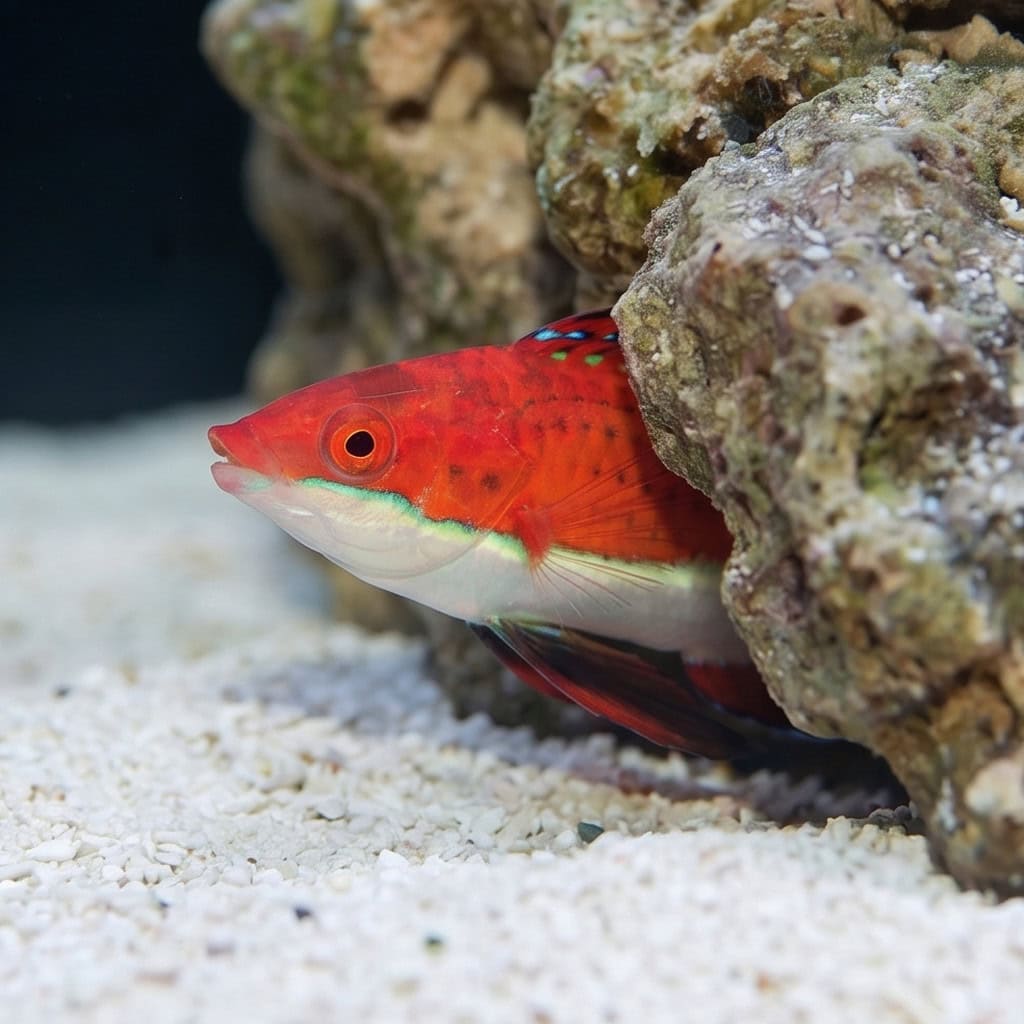
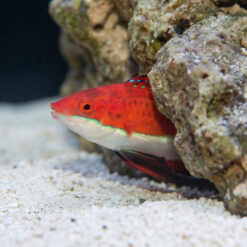
- Regular inspection passes through caves and crevices when it wants a break from swimming
- At night, it typically settles into a rock crevice to sleep rather than burying in sand
Provide ample rockwork with multiple crevices plus a tight-fitting lid, since fairy wrasses are known to jump. Offer a varied rotation of enriched frozen meaty foods at least twice daily so its activity level stays consistent.
Can this wrasse sleep in the sand like other wrasses?
This species typically sleeps by wedging into rock crevices, so rockwork sleep spots are more important than deep sand.
Why did my Ruby Longfin Fairy Wrasse turn pale or show darker stress coloration?
Short-term color shifts are commonly seen around new additions, social pressure, or changing light cycles, and many fish color back up once the routine feels steady.
Can I keep it with other fairy wrasses?
Many hobbyists have success, but mixing similar fairy wrasses can cause chasing, so introductions are often handled with a slow, visible getting used to each other period.
Is an acclimation box useful when adding a second wrasse later?
Many keepers use acclimation boxes to let existing wrasses see the newcomer without contact, which can make early cohabitation calmer.
Does it need to be the last fish added?
It often does best when the tank is stable and feeding predictably, and many keepers add more assertive fish earlier so the wrasse can settle into a consistent routine.
We work with trusted suppliers who keep our specimens healthy and well-fed before shipping.
Recently viewed products