
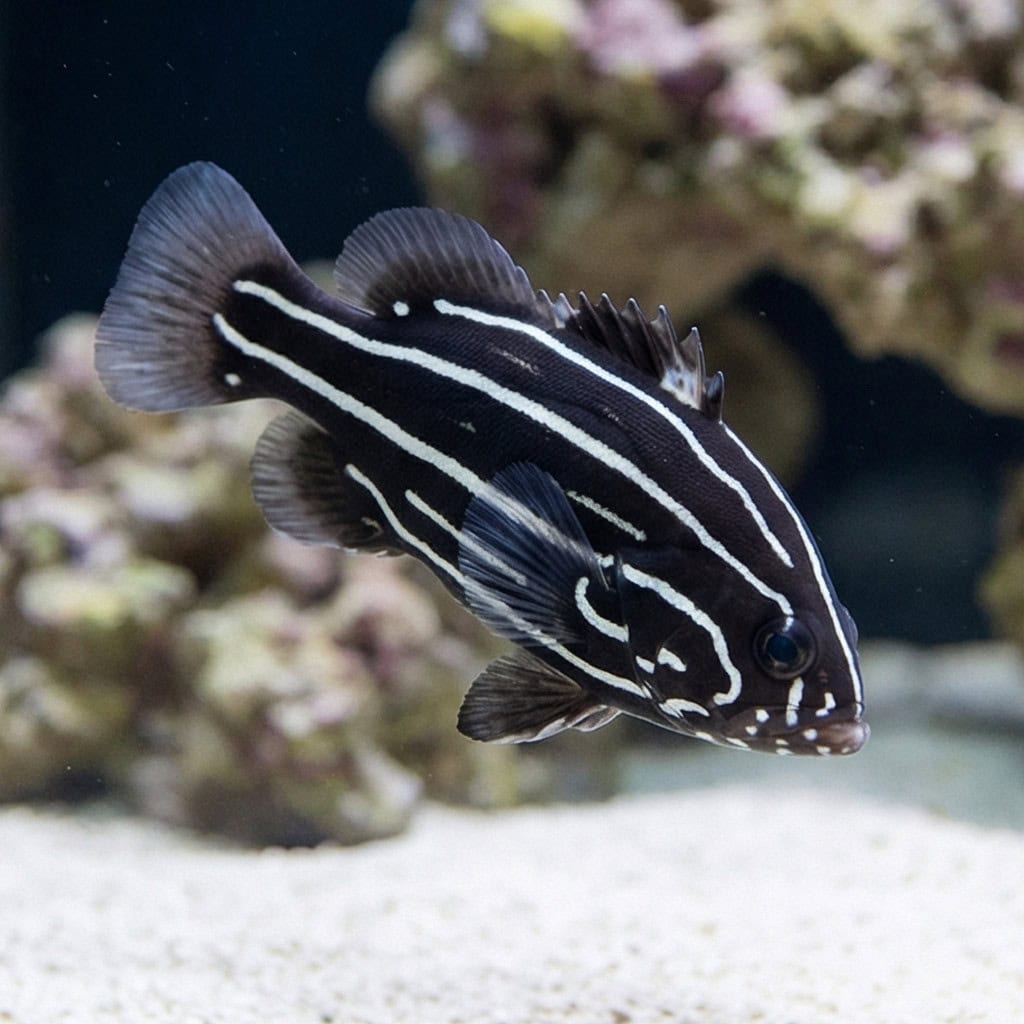
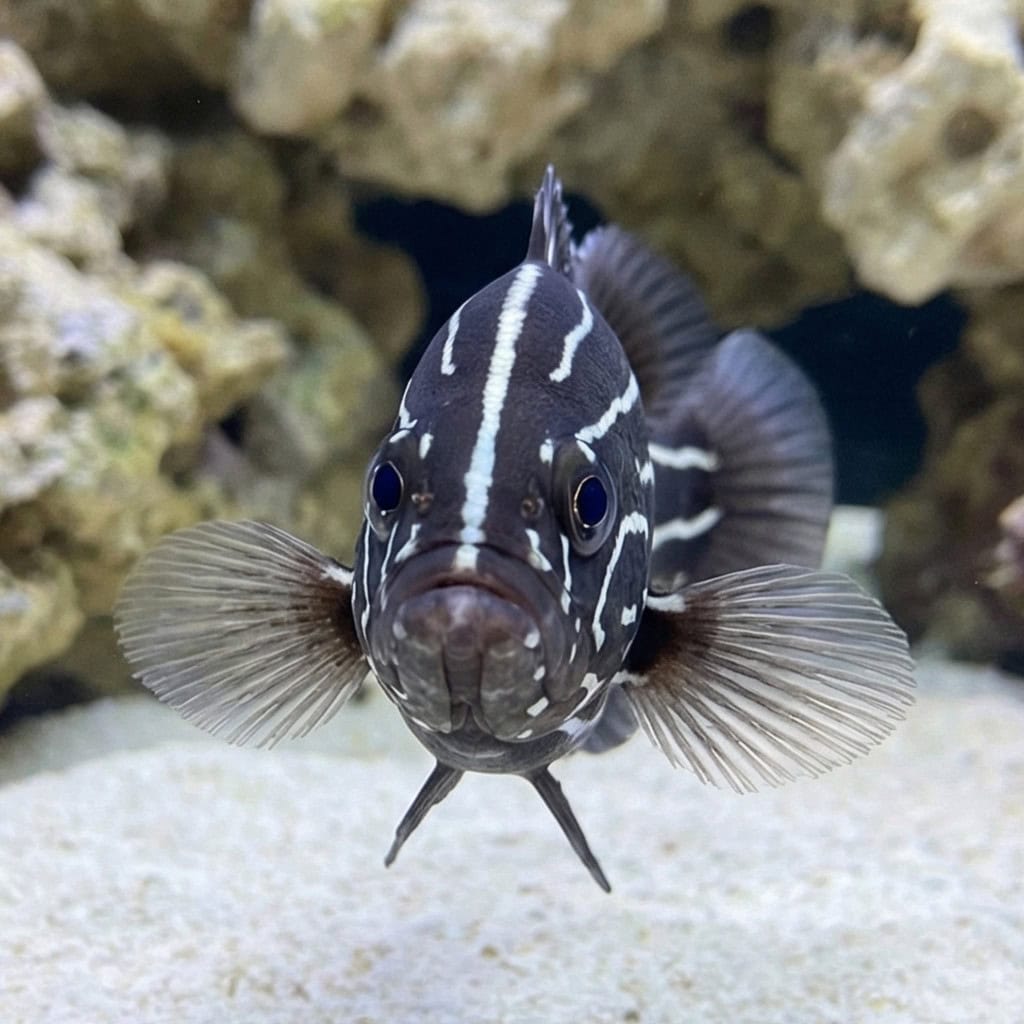
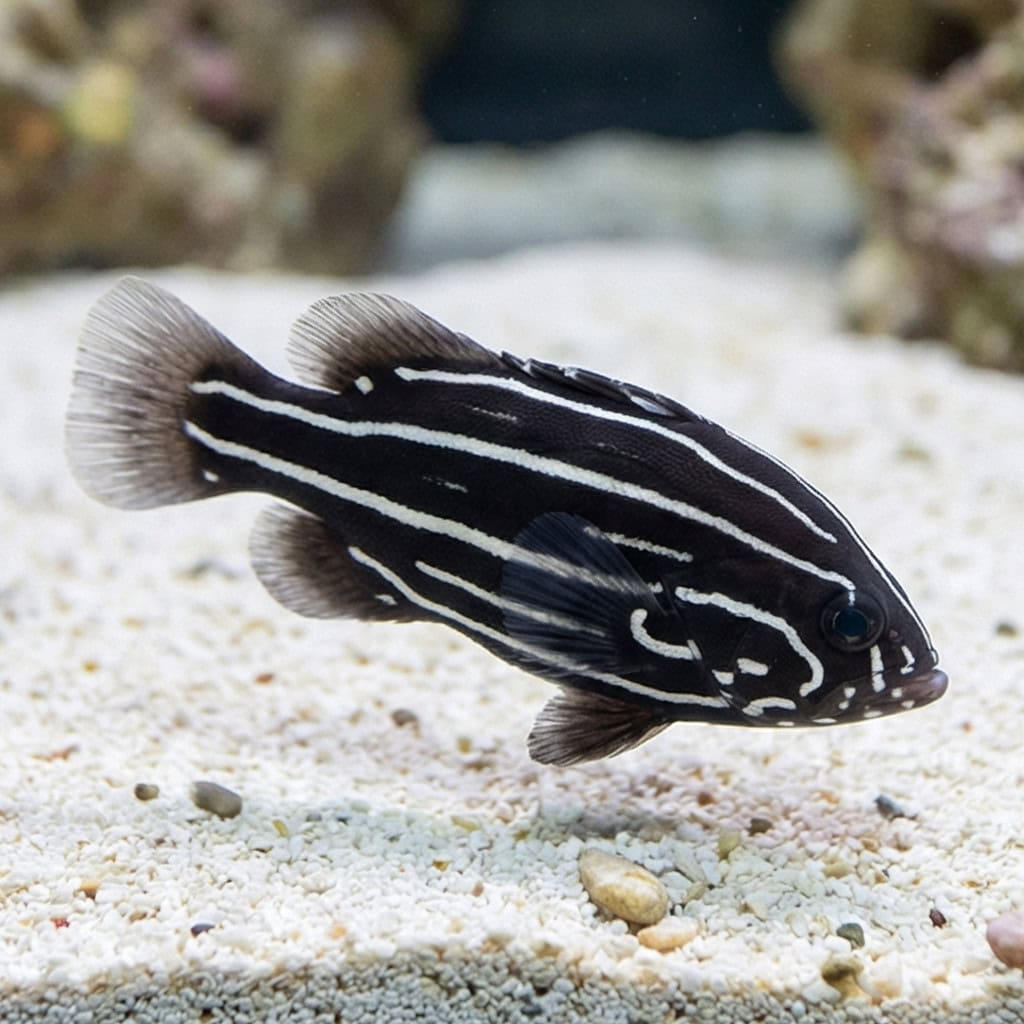
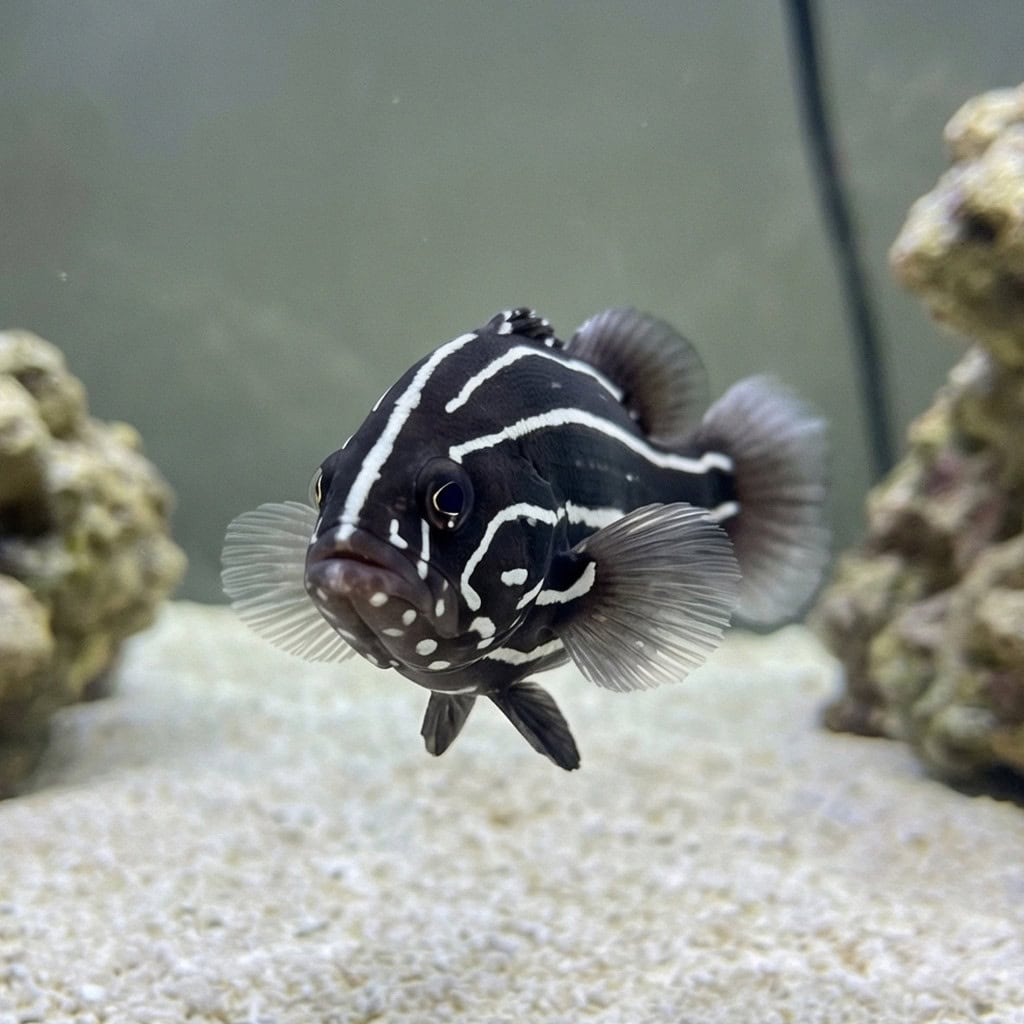
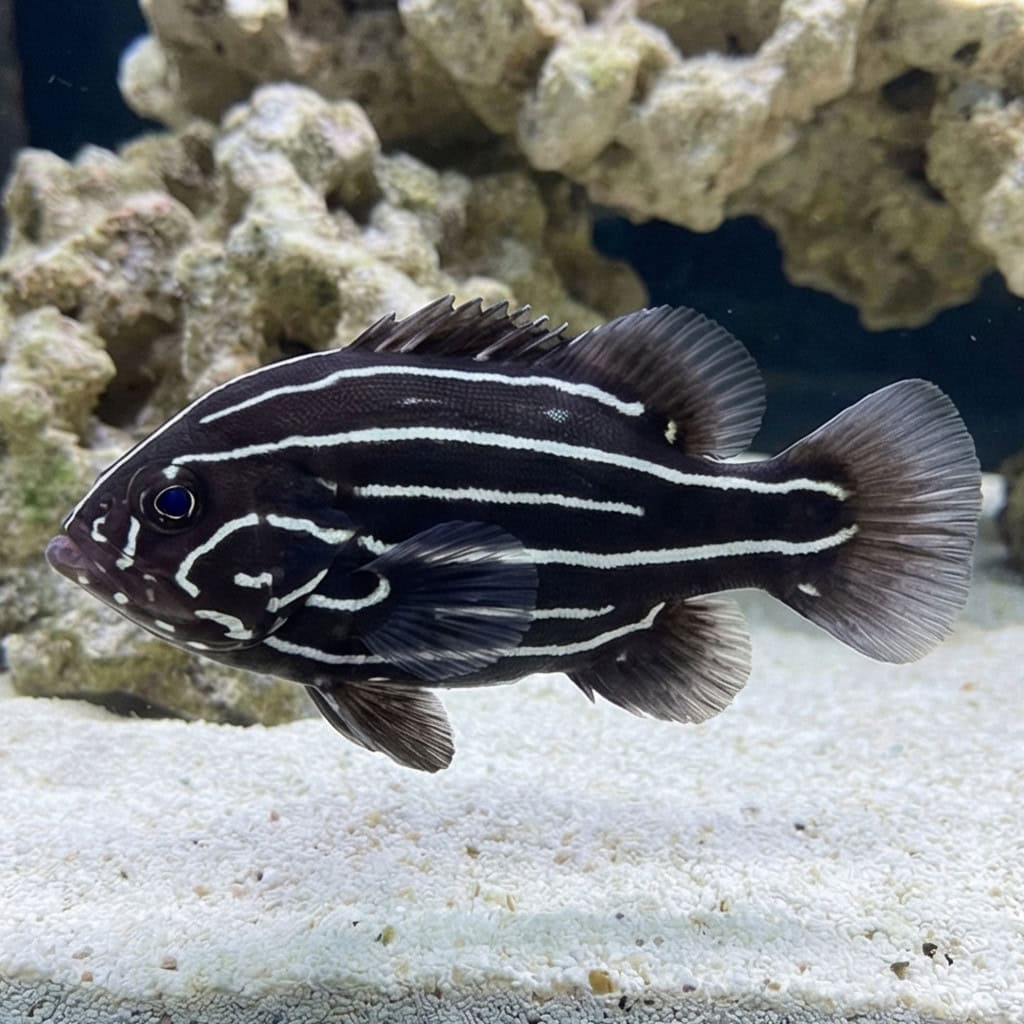
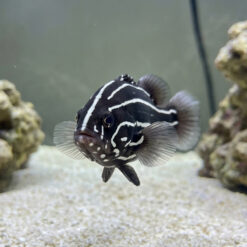
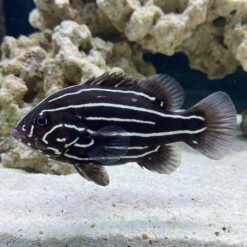
Six Lined Soapfish
Grammistes sexlineatus
| Stock | Variations | Price | Quantity |
|---|
Every order ships with our standard 3-hour live arrival guarantee. Need more time? Add our 5-Day Guarantee at checkout.
Full guarantee terms →Ships Monday – Thursday for next-day arrival at your nearest FedEx Hold location — typically ready by 9 AM. We monitor every delivery.
Shipping details →
Monday – Friday 8 AM – 9 PM
Saturday 12 PM – 4 PM
Sunday 12 PM – 9 PM
Healthy, stable animals from vetted suppliers — inspected before packing, shipped overnight. Decades of experience built this model so we can deliver premium livestock at 30%+ less than you'd pay elsewhere.
| Care Level | Expert |
|---|---|
| Temperament | Aggressive |
| Reef Safe | With Caution |
| Functional Benefit | Ornamental Only |
| Diet Type | Carnivore |
| Mininum Tank Size | 180 gallons |
| Max Size | 12 inches |
| Temperature | 72–78°F |
| pH Range | 8.1–8.4 |
| Specific Gravity | 1.022–1.025 |
The Six Lined Soapfish (Grammistes sexlineatus), often listed as the Golden Stripe Soapfish, has a dark body marked with pale horizontal lines that become more defined as it matures. It’s an Indo-Pacific, reef-associated predator that typically uses rockwork and ledges as “home base” and makes short patrols as the lights dim.
What You’ll Observe:
- Spending much of the day tucked into a favorite cave or under an overhang
- Becoming noticeably more active in the evening, cruising slowly along the rockwork
- Quick, decisive feeding strikes when food hits the water
- Holding a clear “personal space” around its chosen hiding spot
Provide a calm, well-established aquarium with substantial rockwork, shaded retreats, and open lanes to swim between caves. Offer a rotation of meaty frozen foods (such as shrimp, clam, squid, and marine blends) and keep feeding consistent so it learns your routine. For best long-term results, choose tankmates that won’t crowd its hiding areas and that are too large to be viewed as food.
Will it stay hidden all day?
It’s common for this species to “park” in a cave during the day and show more movement at dusk, especially in newer surroundings.
How do most keepers get them started on prepared foods?
Many hobbyists report best results by offering strongly scented meaty items first, then transitioning to a broader frozen mix once it’s eating on schedule.
Can it be kept with ornamental shrimp and small crabs?
Some keepers avoid pairing it with small crustaceans because it may treat them as food; larger, robust tankmates tend to be a better fit.
Does it do better as a single specimen or in a group?
Most discussions center on keeping one as a standalone “centerpiece” fish, since it can become territorial around its preferred cave.
Any handling or acclimation tips people commonly mention?
A frequent theme is minimizing stress during transfer and acclimation—steady, unhurried acclimation and keeping handling gentle.
Shipped with pure oxygen and temperature control so it arrives stress-free and ready to eat.
Recently viewed products