
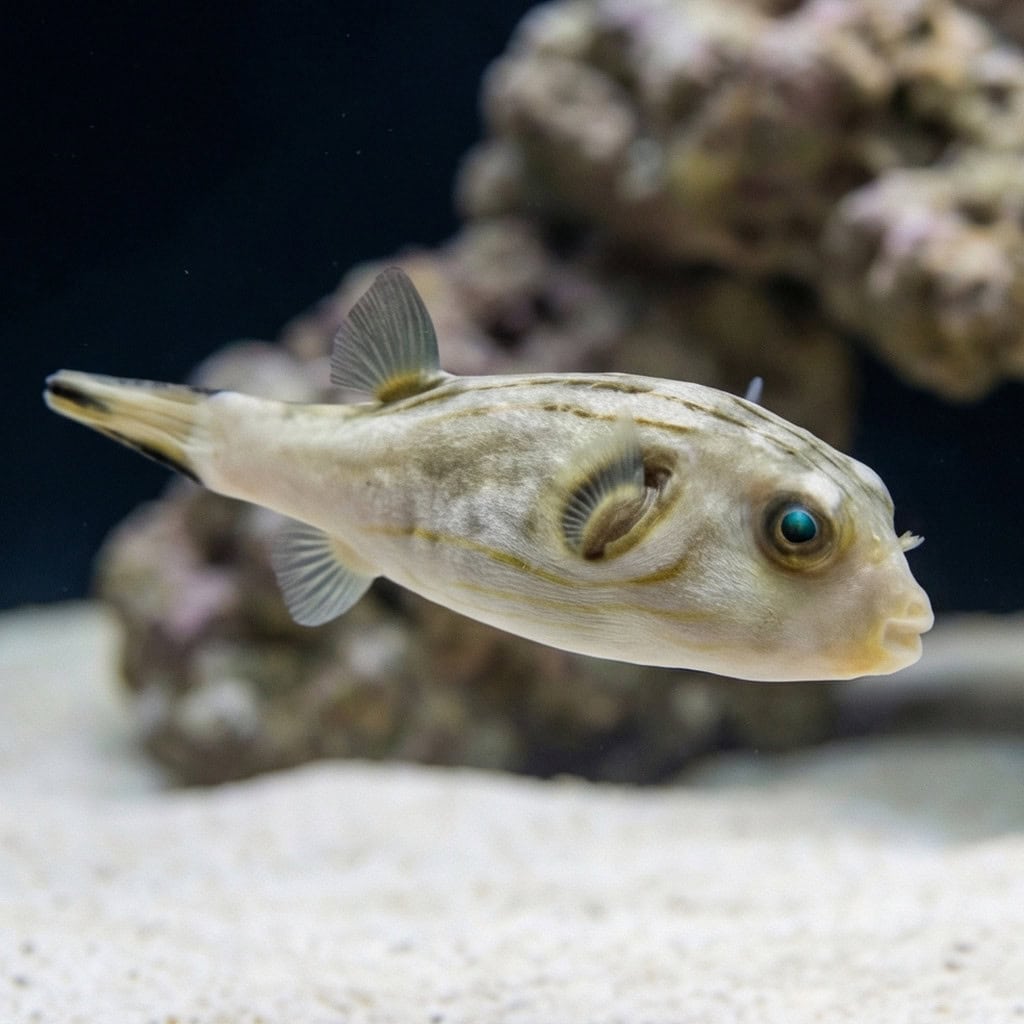
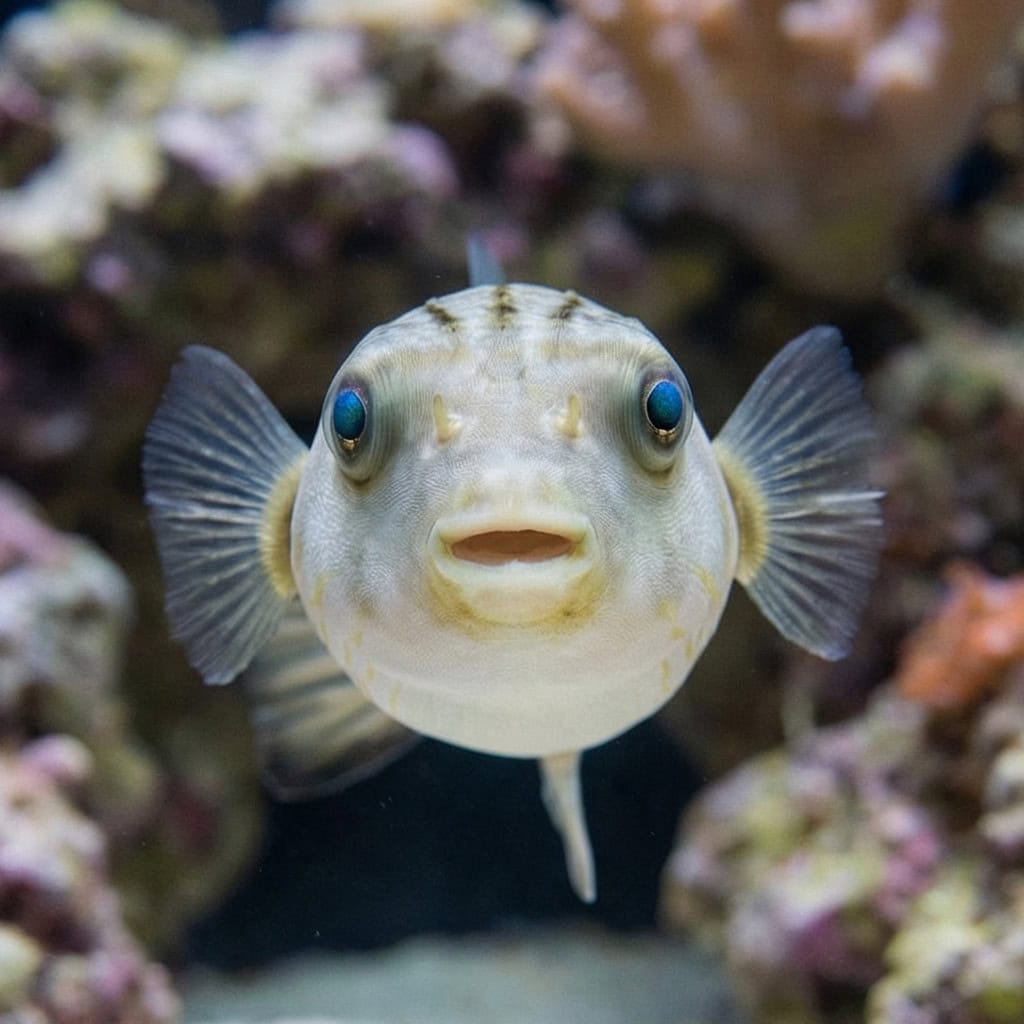
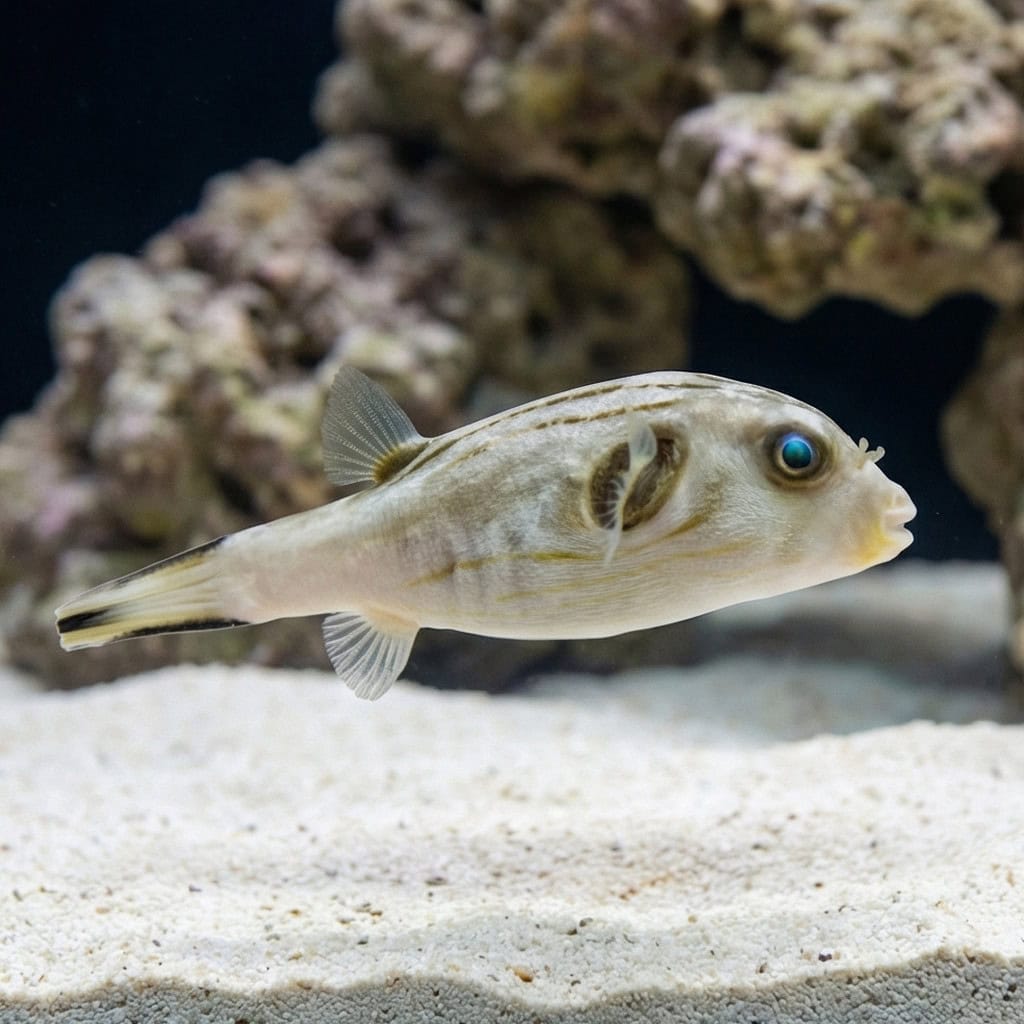
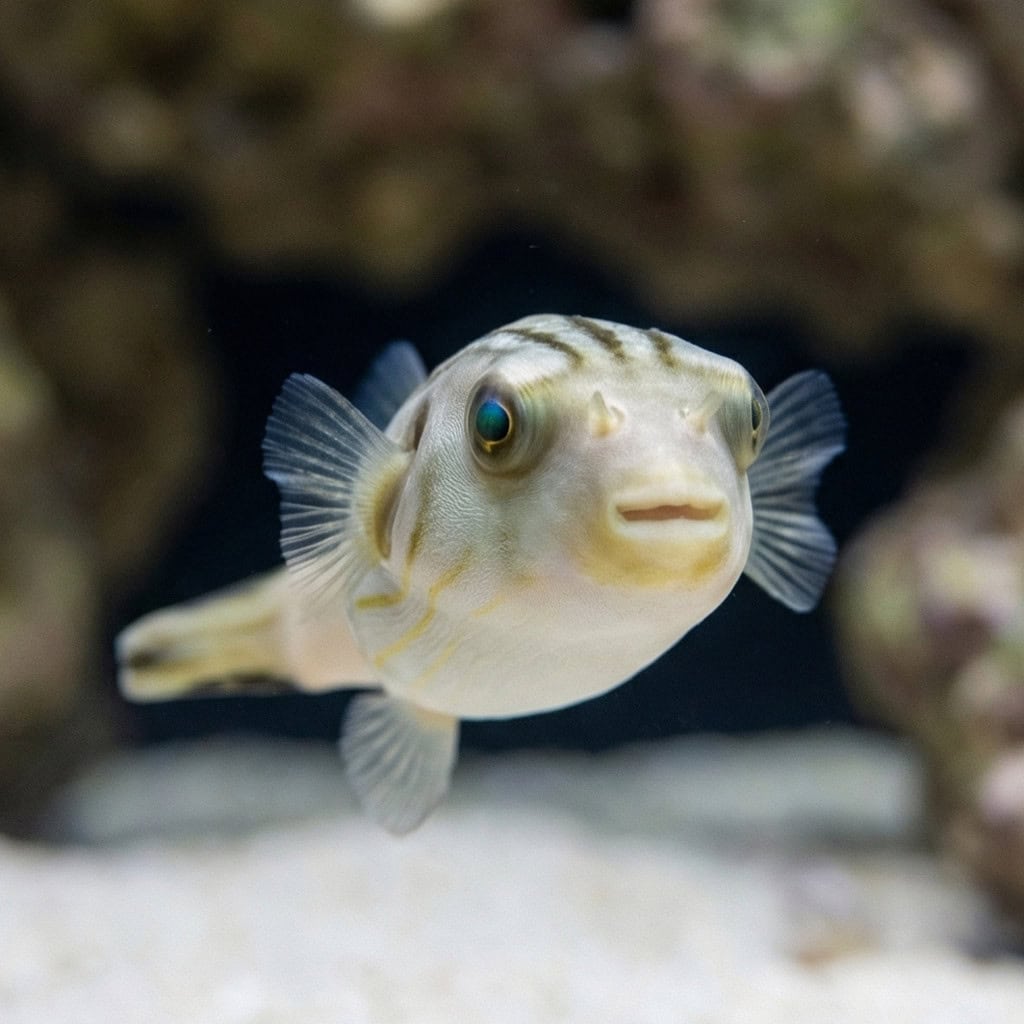
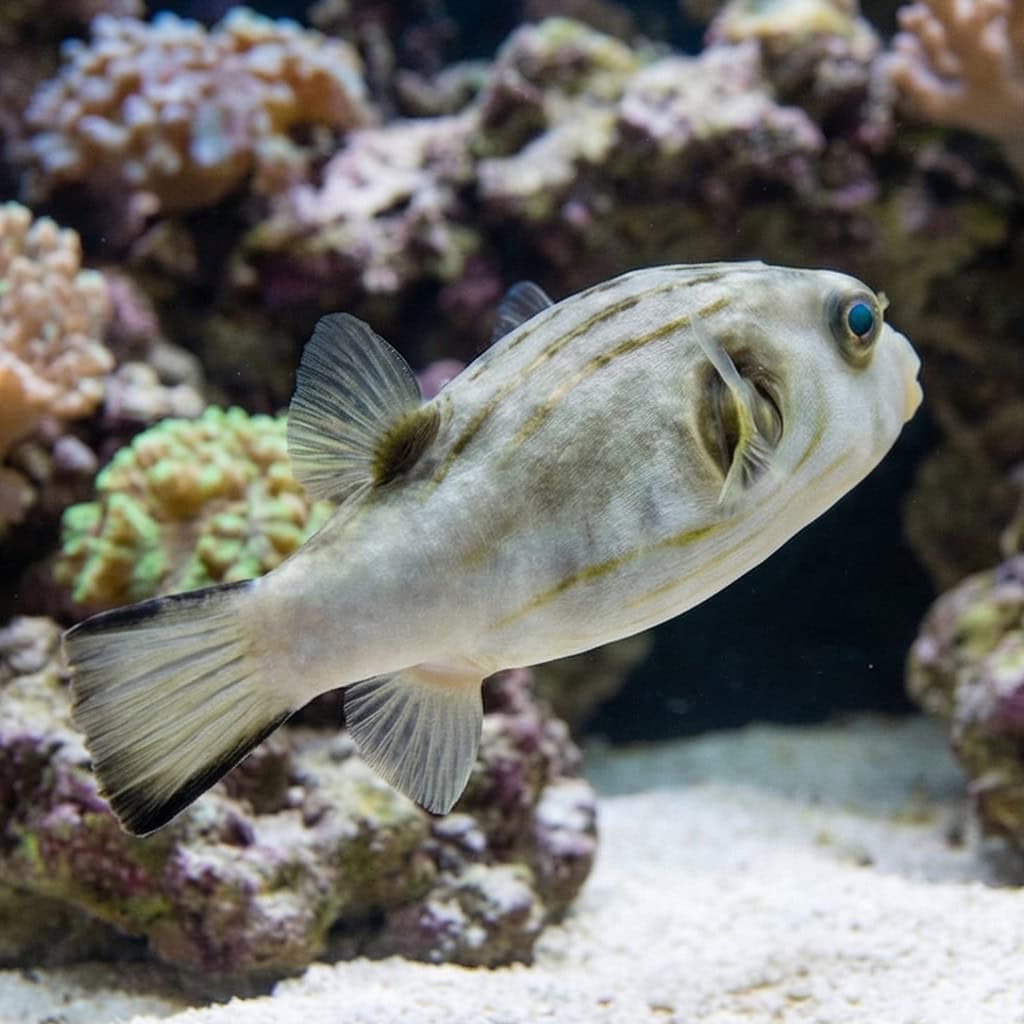
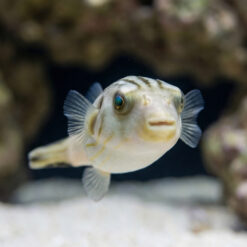
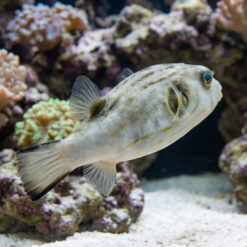
Striped Dogface Puffer
Arothron manilensis
| Stock | Variations | Price | Quantity |
|---|
Every order ships with our standard 3-hour live arrival guarantee. Need more time? Add our 5-Day Guarantee at checkout.
Full guarantee terms →Ships Monday – Thursday for next-day arrival at your nearest FedEx Hold location — typically ready by 9 AM. We monitor every delivery.
Shipping details →
Monday – Friday 8 AM – 9 PM
Saturday 12 PM – 4 PM
Sunday 12 PM – 9 PM
Healthy, stable animals from vetted suppliers — inspected before packing, shipped overnight. Decades of experience built this model so we can deliver premium livestock at 30%+ less than you'd pay elsewhere.
| Care Level | Moderate |
|---|---|
| Temperament | Semi-Aggressive |
| Reef Safe | No |
| Functional Benefit | Ornamental Only |
| Diet Type | Carnivore |
| Mininum Tank Size | 120 gallons |
| Max Size | 12 inches |
| Temperature | 72–78°F |
| pH Range | 8.1–8.4 |
| Specific Gravity | 1.022–1.025 |
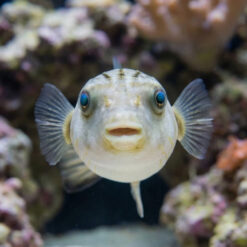
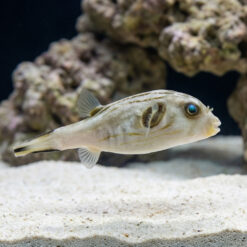
The Striped Dogface Puffer (Arothron manilensis), also seen as the Narrow-lined/Manila Puffer, has a pale body marked with thin brown striping and yellow-tinted fins that stay visible even when it’s hovering in place. It’s a diurnal Indo-Pacific puffer that spends its time cruising sandy zones and rockwork, and it’s best kept as a fish-only show specimen rather than a reef inhabitant.
What You’ll Observe:
- Slow, deliberate “patrol” laps with frequent pauses to perch on rock ledges or rest on the sand
- Curious front-glass behavior, especially around feeding time
- Short bursts of movement using pectoral fins to pivot and inspect caves and overhangs
- A strong “crunch-and-chew” feeding style when offered chunky meaty foods
Provide open swimming room plus a few roomy caves/overhangs, and plan filtration around a messy carnivore. Offer a varied meaty menu (shrimp, squid, clam, krill) in smaller portions 2–3 times per day, and use feeding tongs to place food where it can eat calmly. When moving the fish, use a specimen container rather than a net to keep transfers smooth.
How do I tell if resting on rocks or the sand is normal?
Many Arothron puffers alternate between active “patrol” time and stationary perching. If it still comes out for food and does regular laps, this resting behavior is commonly reported.
Will it learn to take food from tongs?
Most owners have the easiest time by holding a small piece of food steady with tongs until the puffer investigates and takes the first bite; after that, many switch to consistent tong-feeding routines.
Does it change color or pattern after introduction?
Some individuals darken or lighten during the first days as they settle into the tank and choose favorite zones. Once it has a routine, coloration often looks more consistent under stable lighting.
Why does it “blow” sand or spit water?
Sand-blowing and directed water jets are often described as normal exploratory behavior. It’s commonly seen when the fish is investigating the bottom or interacting with its surroundings.
Can it live with other puffers long-term?
Keepers often report best results when tankmates are introduced with plenty of space and multiple shelter areas so each fish can settle into its own routine. In very large systems, some hobbyists do keep more than one Arothron together, but outcomes vary by individual.
Each fish is checked for strong appetite and activity before we approve it for your tank.
Recently viewed products