
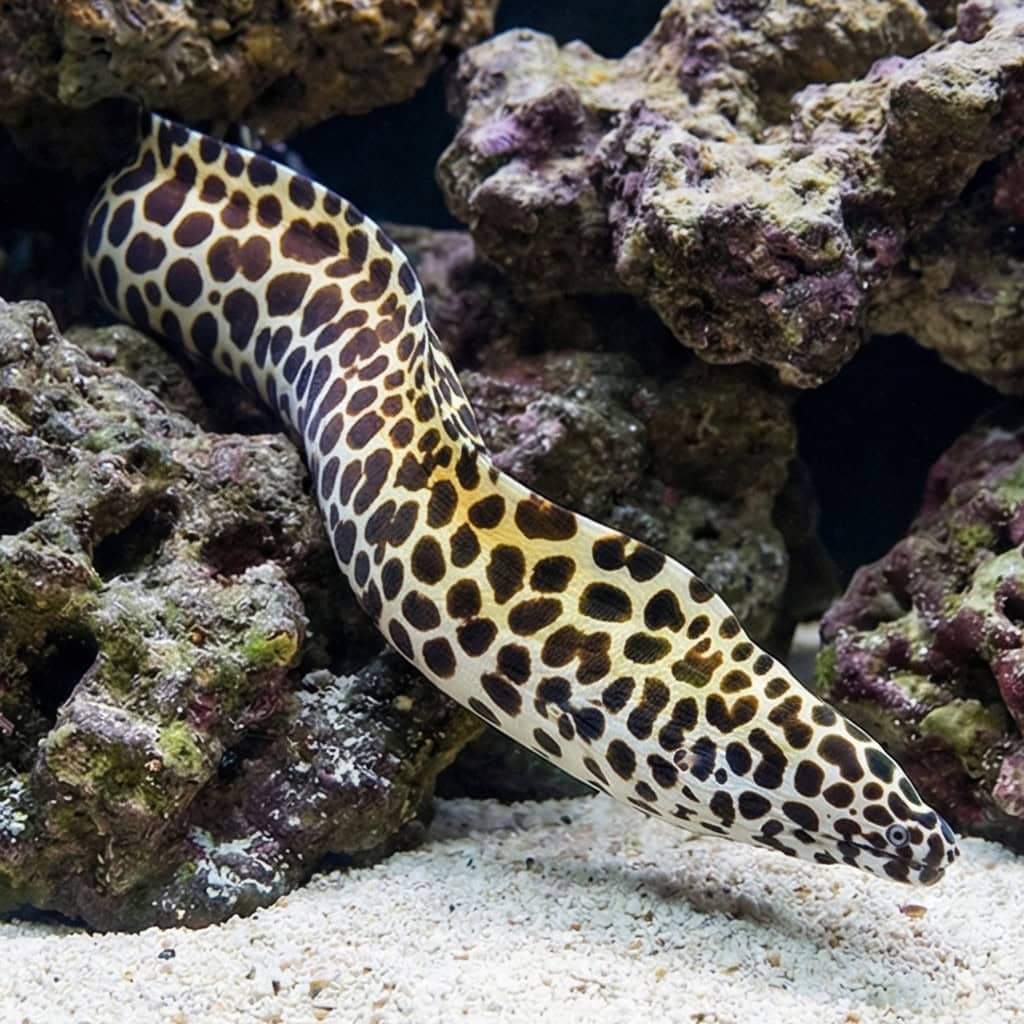
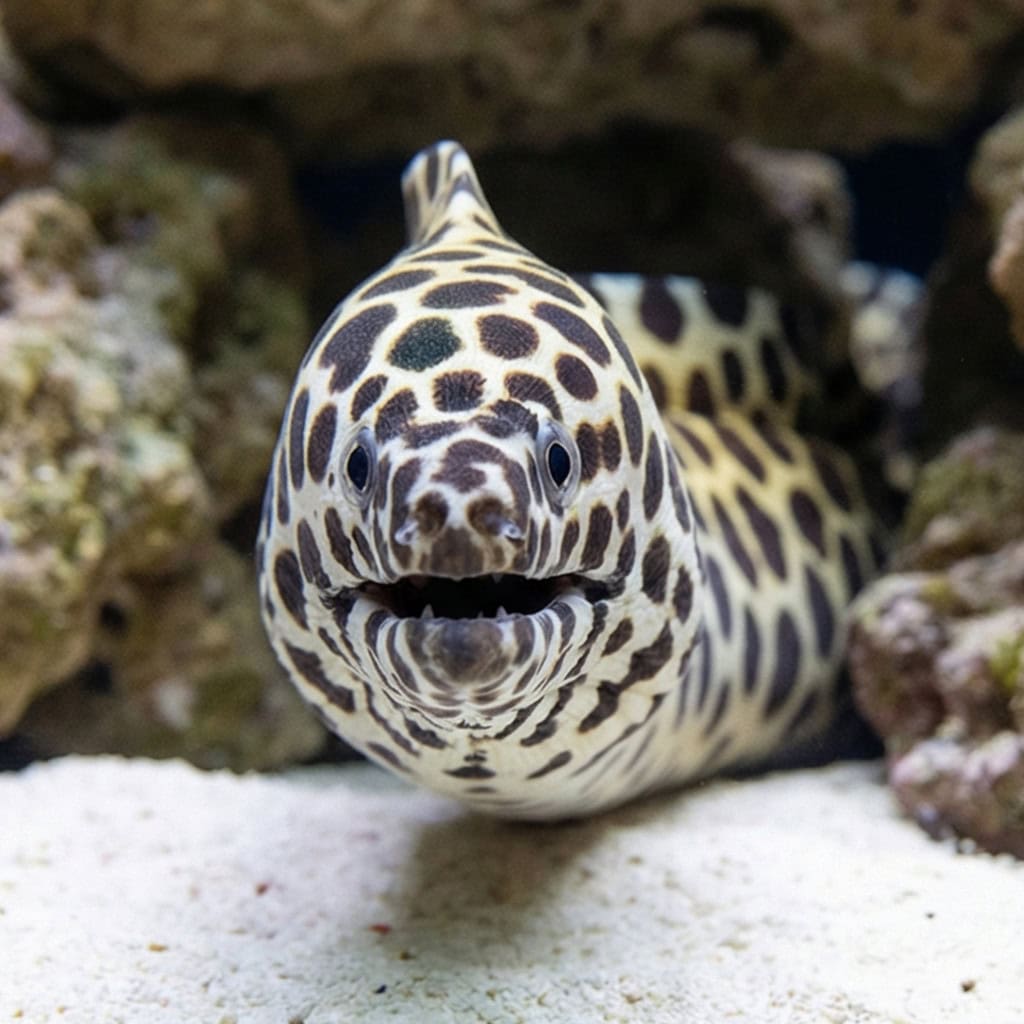
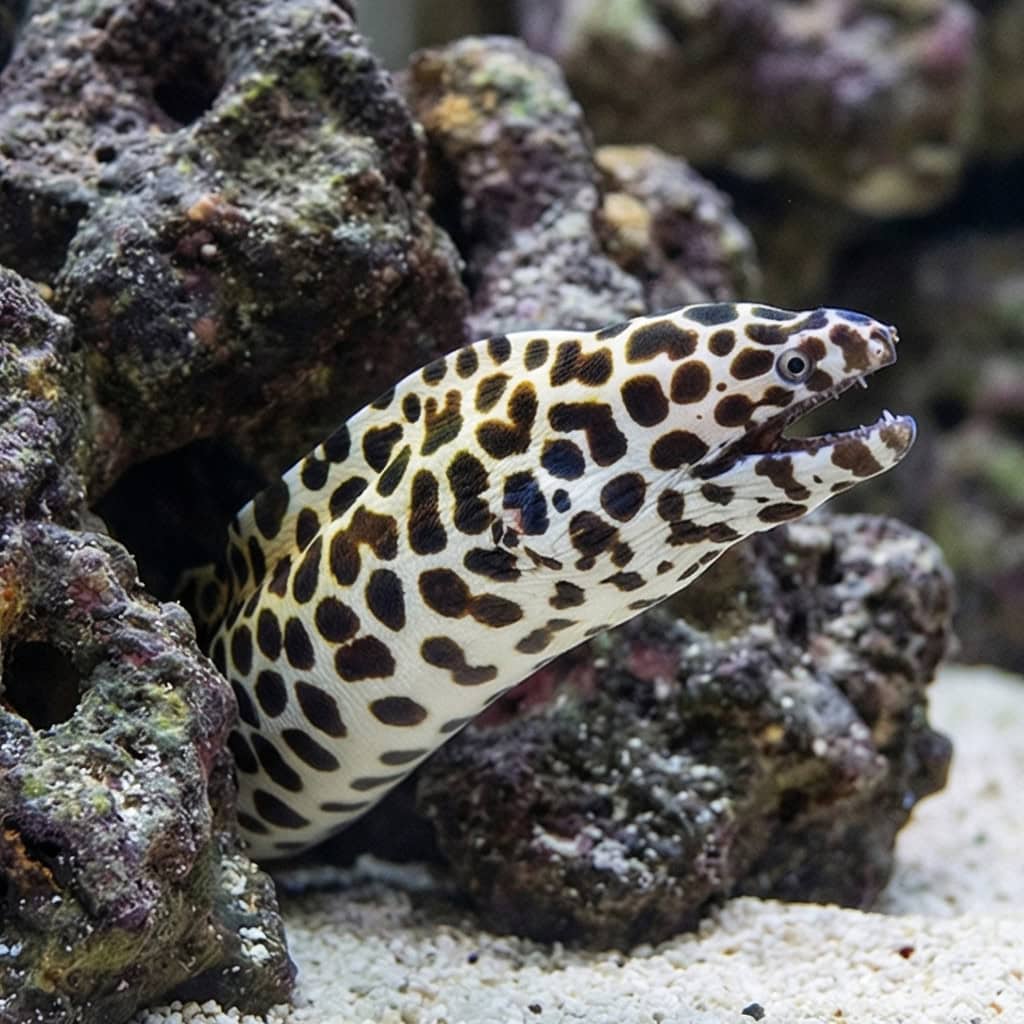
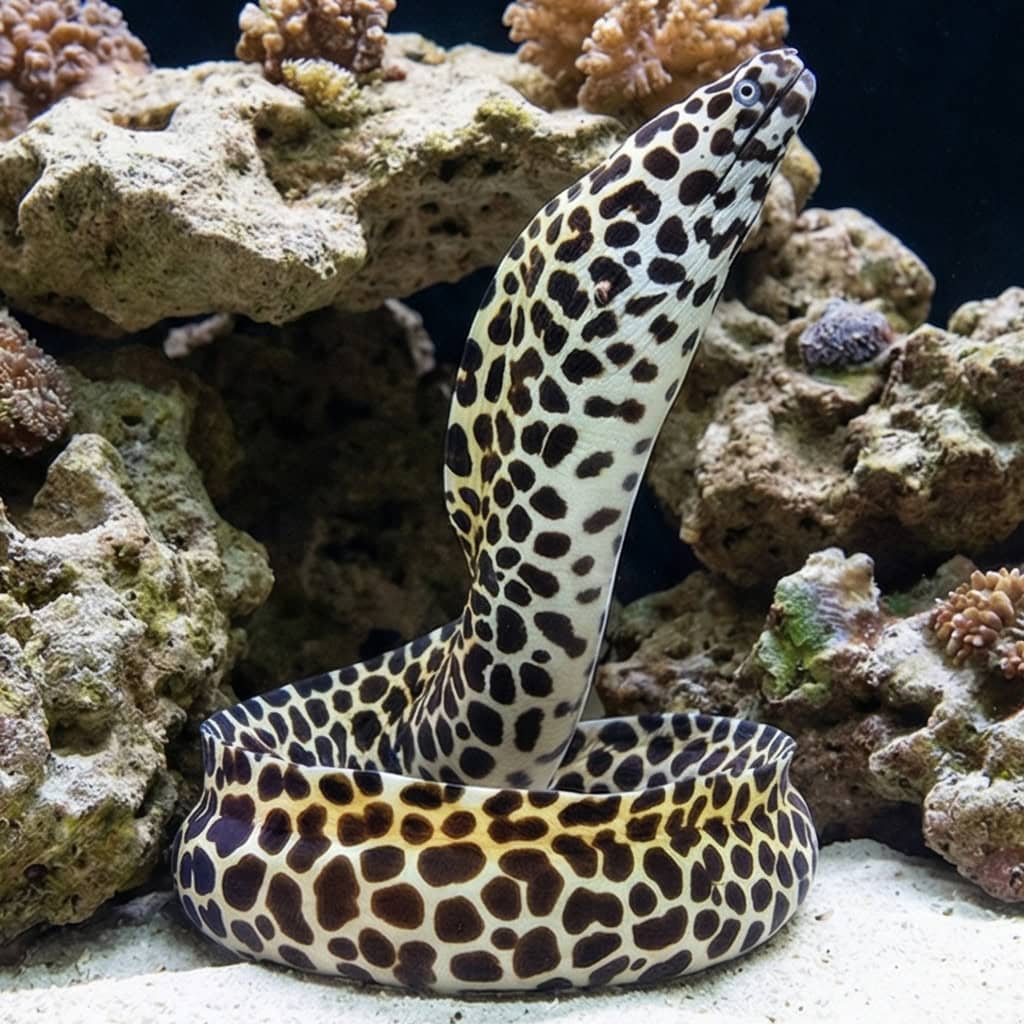
Tesselata Eel
Gymnothorax favagineus
| Stock | Variations | Price | Quantity |
|---|
Every order ships with our standard 3-hour live arrival guarantee. Need more time? Add our 5-Day Guarantee at checkout.
Full guarantee terms →Ships Monday – Thursday for next-day arrival at your nearest FedEx Hold location — typically ready by 9 AM. We monitor every delivery.
Shipping details →
Monday – Friday 8 AM – 9 PM
Saturday 12 PM – 4 PM
Sunday 12 PM – 9 PM
Healthy, stable animals from vetted suppliers — inspected before packing, shipped overnight. Decades of experience built this model so we can deliver premium livestock at 30%+ less than you'd pay elsewhere.
| Care Level | Expert |
|---|---|
| Temperament | Aggressive |
| Reef Safe | No |
| Functional Benefit | Ornamental Only |
| Diet Type | Carnivore |
| Mininum Tank Size | 300 gallons+ |
| Max Size | 24 inches |
| Temperature | 72–78°F |
| pH Range | 8.1–8.4 |
| Specific Gravity | 1.022–1.025 |
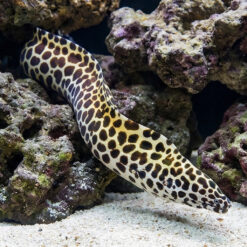
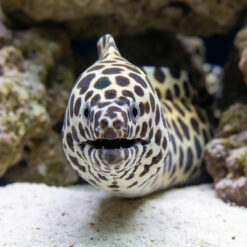
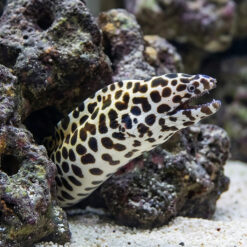
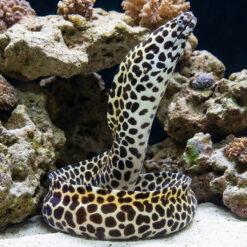
The Tessalata Eel (Gymnothorax favagineus), also called the Honeycomb Moray or Tessellated Moray, is a large moray eel recognized for a light base color with dark, maze-like blotches that form a honeycomb pattern. It spends much of the day stationed in a cave with its head out, then becomes more active as the tank lighting dims.
What You’ll Observe:
- A consistent “den” behavior’choosing a favorite cave and watching the room from the entrance
- Most movement and hunting-style cruising happening in the evening and after feedings
- Strong feeding responses to scent, often coming fully out once food is in the water
- Regular “repositioning” in its hide, backing in and turning around to face outward
Provide a large, stable rockscape with multiple tunnels or a roomy PVC shelter so it can claim a secure home base. Offer meaty marine foods (such as shrimp, squid, and fish flesh) using feeding tongs or a feeding stick so meals stay controlled and targeted. Maintain a tight, escape-resistant lid and a clean, high-filtration system for the best long-term stability.
Is it normal for a moray to “yawn” or sit with its mouth open?
Yes’morays commonly gape to move water across their gills, and it’s often seen when they’re relaxed in a cave.
Will it knock over rockwork or corals while it moves around?
It can put a lot of leverage on rocks when entering/exiting a den, so a locked-in rock foundation and secured frags help the tank stay tidy.
How do I get it to take food from tongs instead of lunging at everything?
Feed in the same spot and present food at the tong tip consistently; many morays learn the routine and focus on the offered piece.
How often should I feed to keep behavior steady?
Many keepers prefer smaller, consistent meals on a schedule so feeding time stays predictable and less chaotic in the display.
Can it live with other large fish without “accidents” at feeding time?
It typically does best with robust, appropriately sized tankmates that give it space during feeding, especially if you target-feed the eel first.
Shipped with pure oxygen and temperature control so it arrives stress-free and ready to eat.
Recently viewed products