
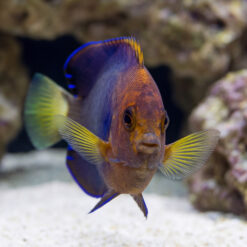
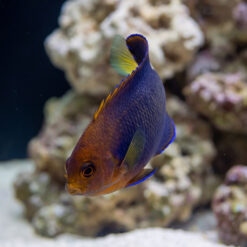
White Tailed Pygmy Angelfish
Centropyge flavicauda
Price range: $30.99 through $46.99
| Stock | Variations | Price | Quantity | |
|---|---|---|---|---|
| Out of Stock | 2 - 3" - Indo-Pacific | Original price was: $98.99.$51.99Current price is: $51.99. | Email me | |
| Only 8 left | 2" or smaller - Indo-Pacific | Original price was: $88.99.$46.99Current price is: $46.99. |
-
+
|
|
| Only 1 left | 1.25 - 2.25" - SSC Certified - Central Pacific | Original price was: $57.99.$30.99Current price is: $30.99. |
-
+
|
Every order ships with our standard 3-hour live arrival guarantee. Need more time? Add our 5-Day Guarantee at checkout.
Full guarantee terms →Ships Monday – Thursday for next-day arrival at your nearest FedEx Hold location — typically ready by 9 AM. We monitor every delivery.
Shipping details →
Monday – Friday 8 AM – 9 PM
Saturday 12 PM – 4 PM
Sunday 12 PM – 9 PM
Healthy, stable animals from vetted suppliers — inspected before packing, shipped overnight. Decades of experience built this model so we can deliver premium livestock at 30%+ less than you'd pay elsewhere.
| Care Level | Moderate |
|---|---|
| Temperament | Semi-Aggressive |
| Reef Safe | With Caution |
| Functional Benefit | Algae Control |
| Diet Type | Omnivore |
| Mininum Tank Size | 30 gallons |
| Max Size | 3 inches |
| Temperature | 72–78°F |
| pH Range | 8.1–8.4 |
| Specific Gravity | 1.022–1.025 |
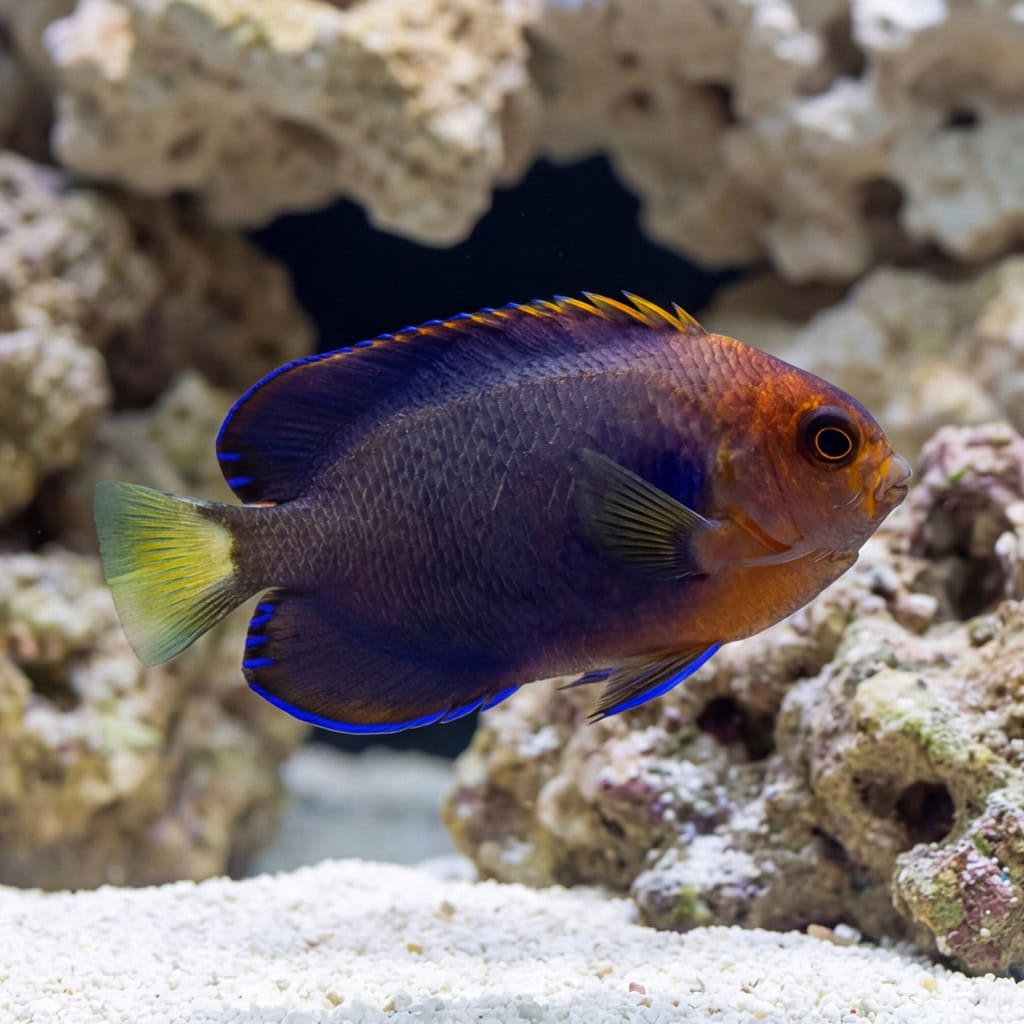
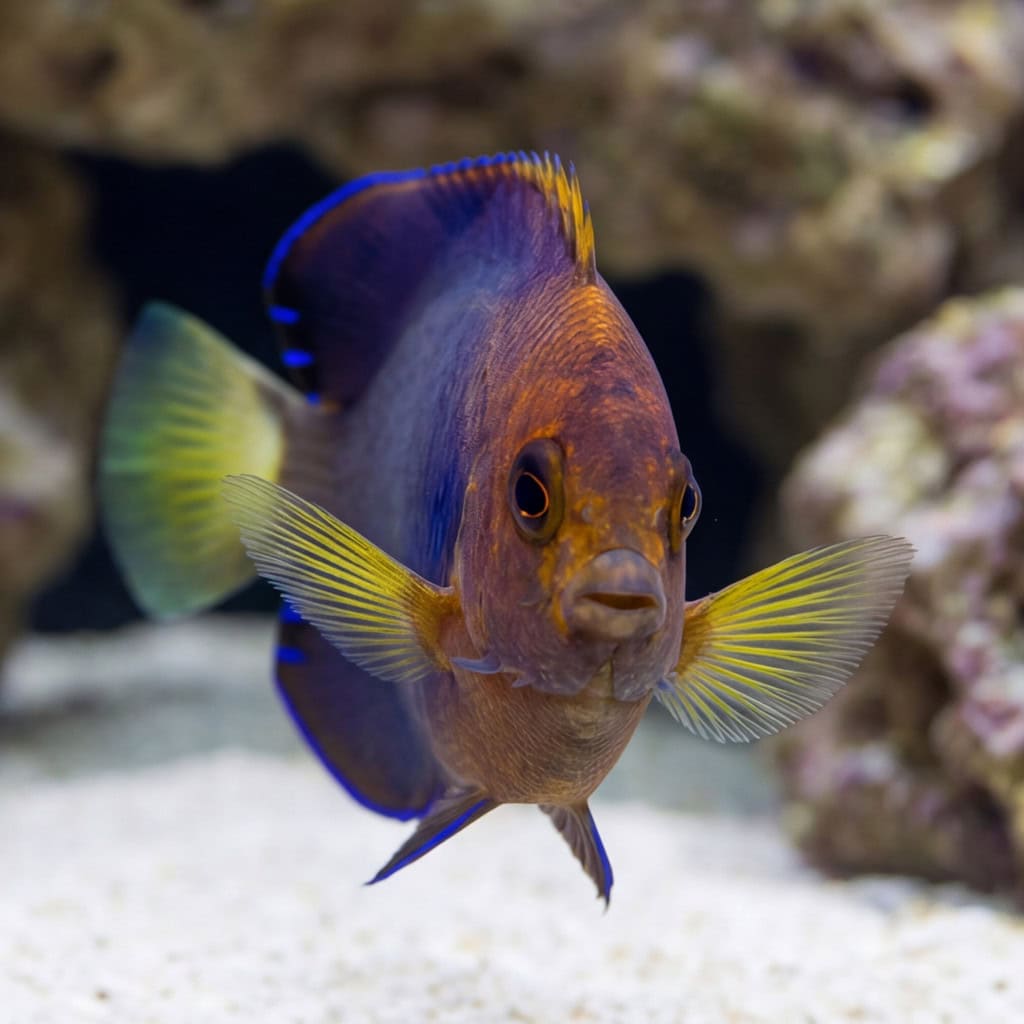
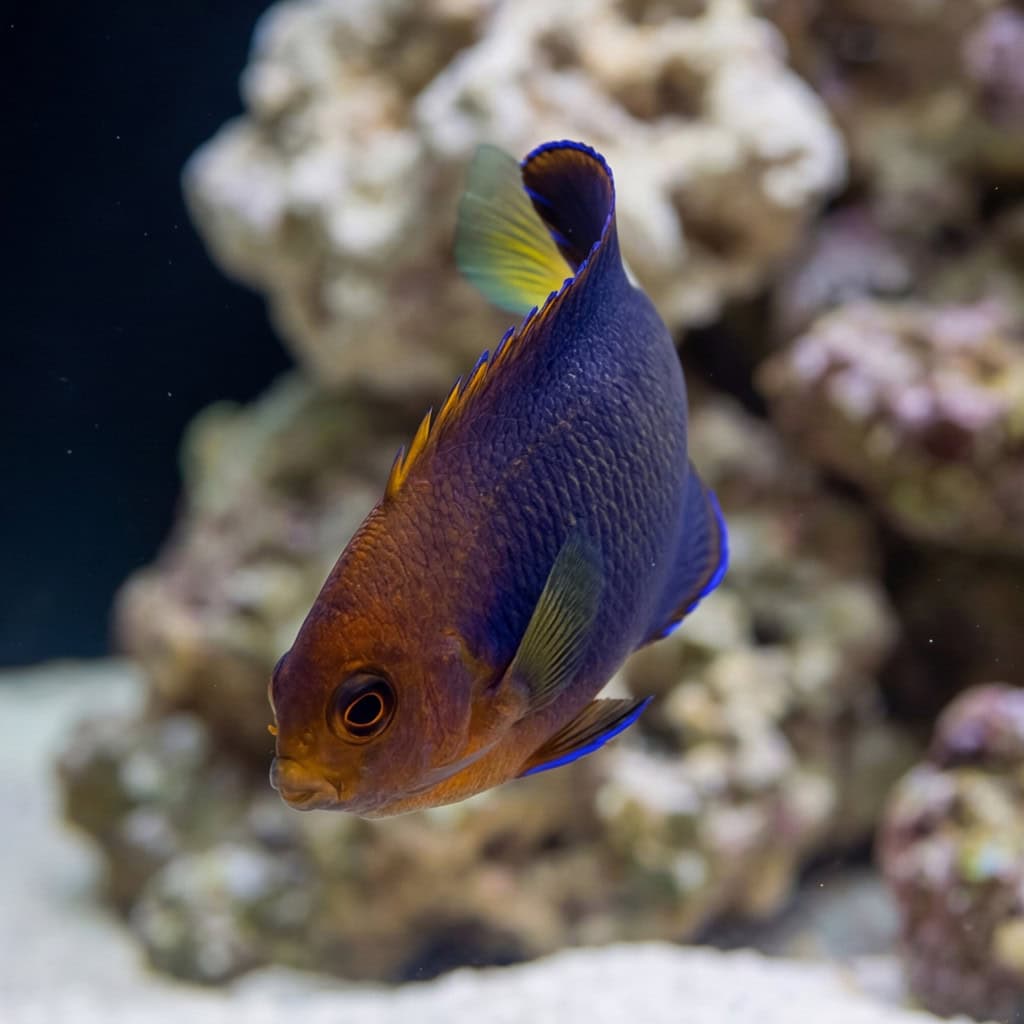
The White Tailed Pygmy Angelfish (Centropyge flavicauda, often listed as Centropyge fisheri) is a small Centropyge dwarf angelfish that spends the day grazing film algae and diatoms from live rock. Its body ranges from orange-brown to deep blue tones, with a pale, semi-transparent tail and crisp blue edging on the fins.
What You’ll Observe:
- Short “patrol loops” around the rockwork, stopping often to peck and graze
- Regular use of a favorite cave or crevice, especially as lights ramp down
- Quick, confident dashes into open water at feeding time, then back to the rocks
- Occasional posturing toward similarly shaped fish once it feels established
Provide mature live rock with multiple caves and shaded gaps so it can graze and settle in on its own schedule. Offer a varied menu of algae-based foods plus small meaty items and foods with sponge, split into a few small feedings each day for steady behavior and condition.
Do they do better singly or as a pair?
Hobbyists often report good long-term results either way, but pairs are typically introduced together so neither fish “claims” the whole rockwork first.
Why is it chasing one specific fish after lights out?
Some keepers see targeted nighttime chasing; giving the angel a short “time-out” in an acclimation box can break the pattern and help reset territories.
Will it definitely nip corals in a reef?
It varies by individual—some are kept for years without noticeable nipping, while others show interest in fleshy corals or clam mantles, especially as they settle in.
What foods usually get a new one eating quickly?
Many keepers start with a mix of spirulina/algae foods and small frozen meaty items, then add angelfish-style foods that include sponge once it’s browsing confidently.
Is it normal for it to stay tight to the rockwork at first?
Yes—this species naturally works channels, rubble, and reef slopes, and it usually widens its “route” as it learns the tank’s hiding spots.
Each fish is checked for strong appetite and activity before we approve it for your tank.
Recently viewed products