
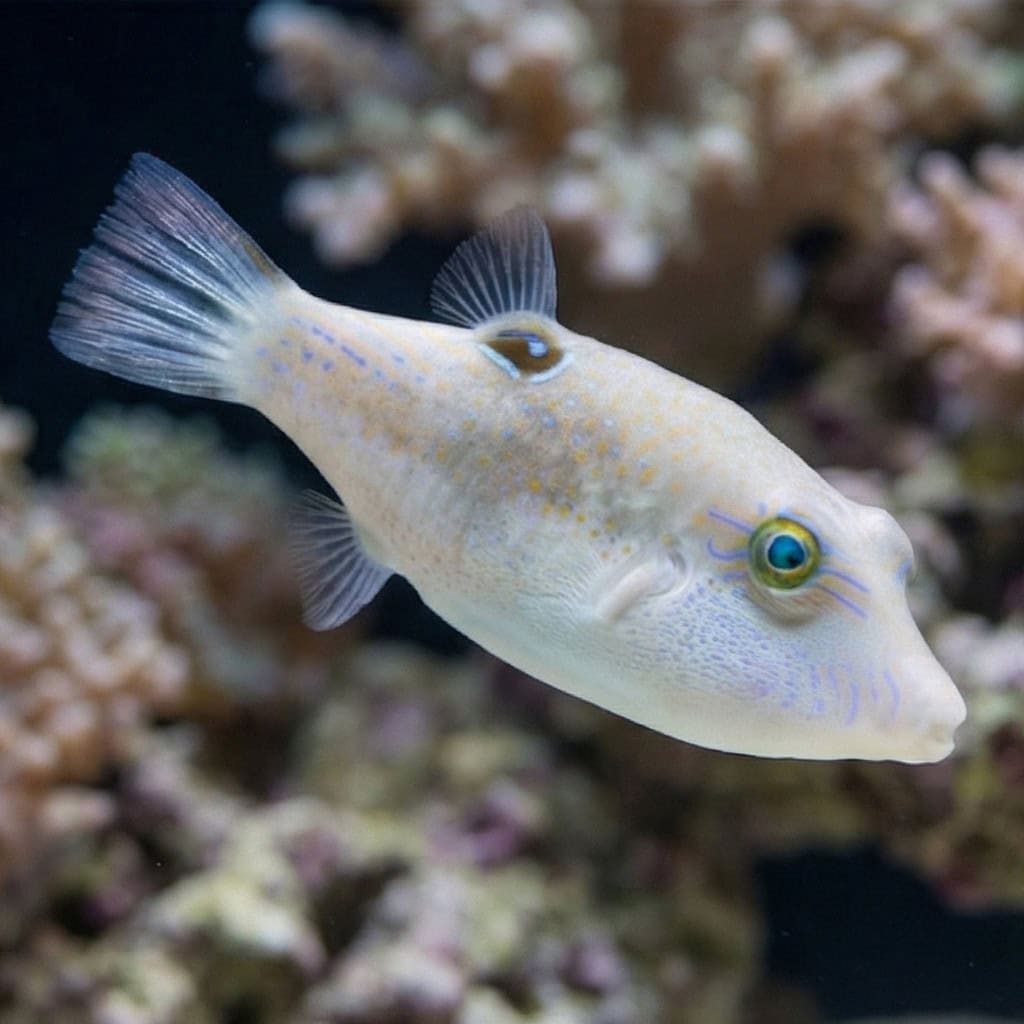
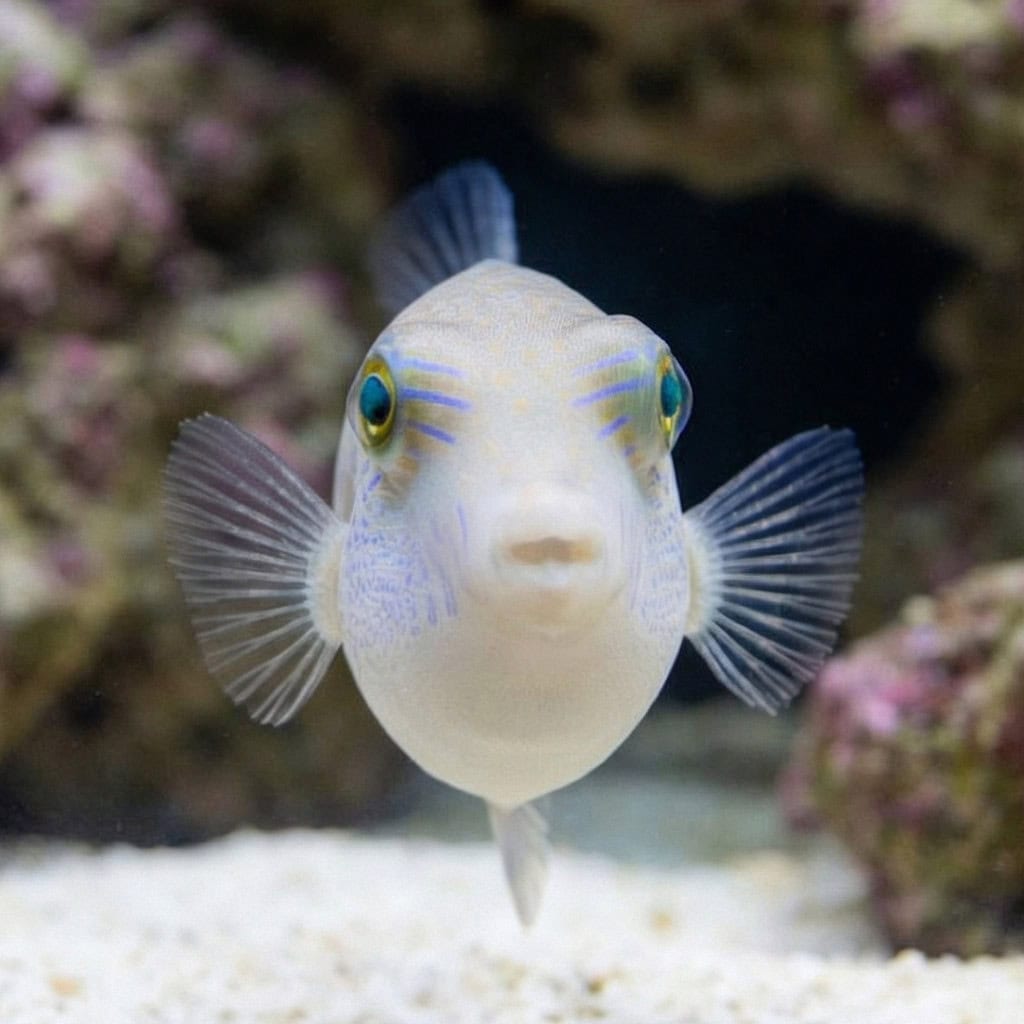
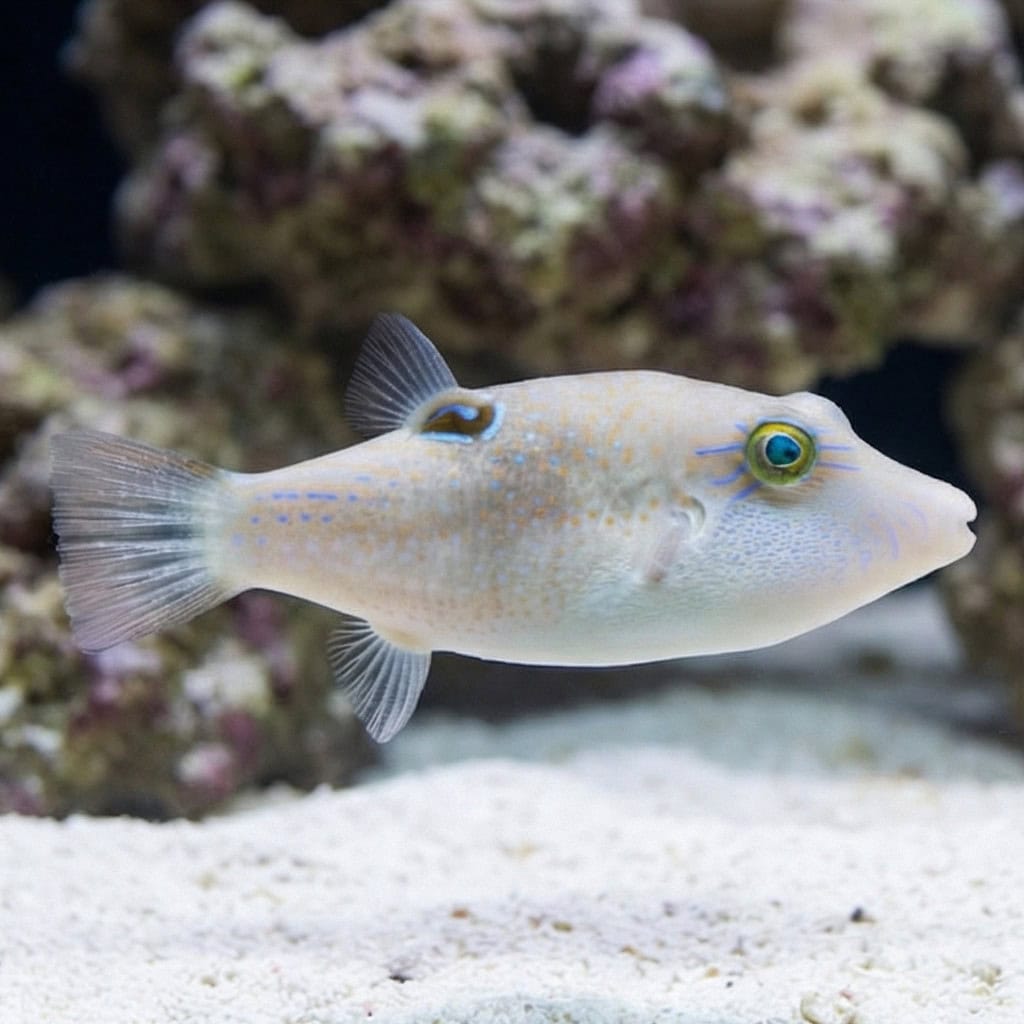
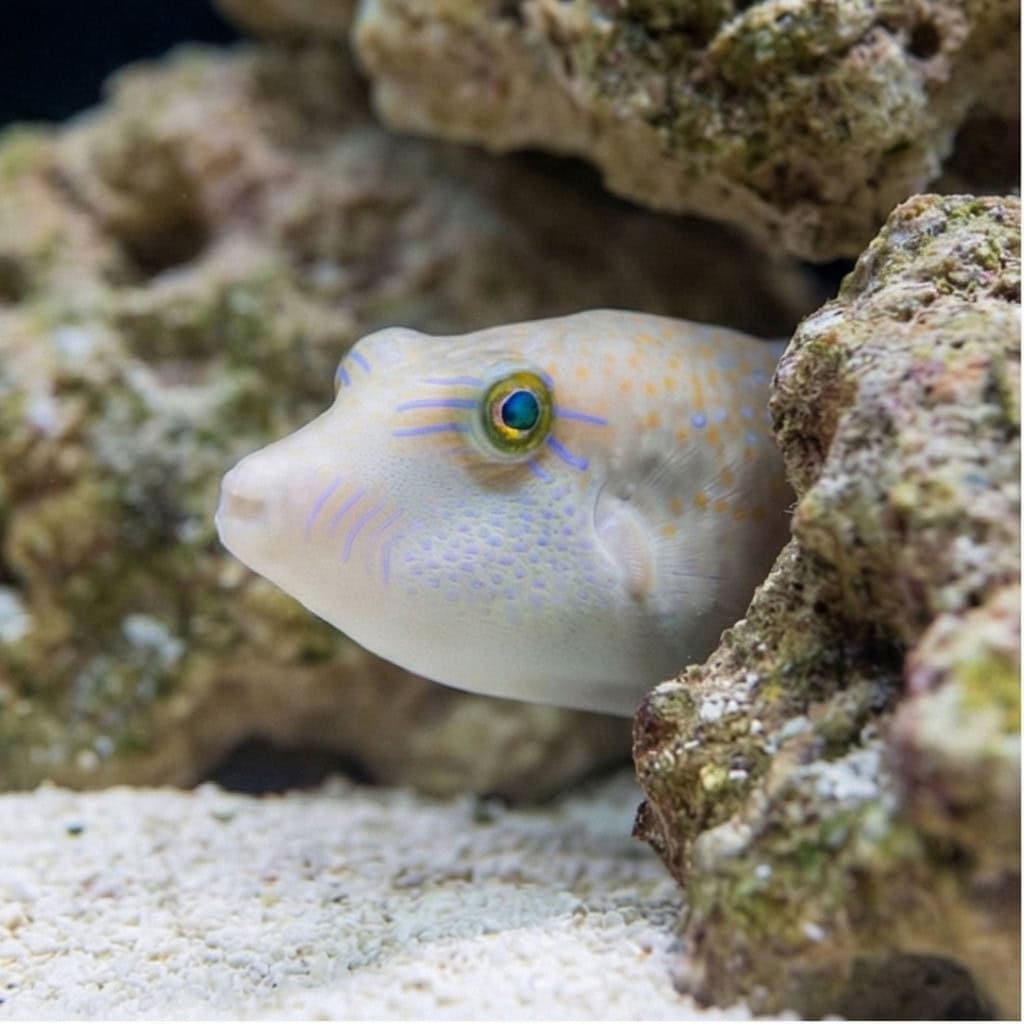
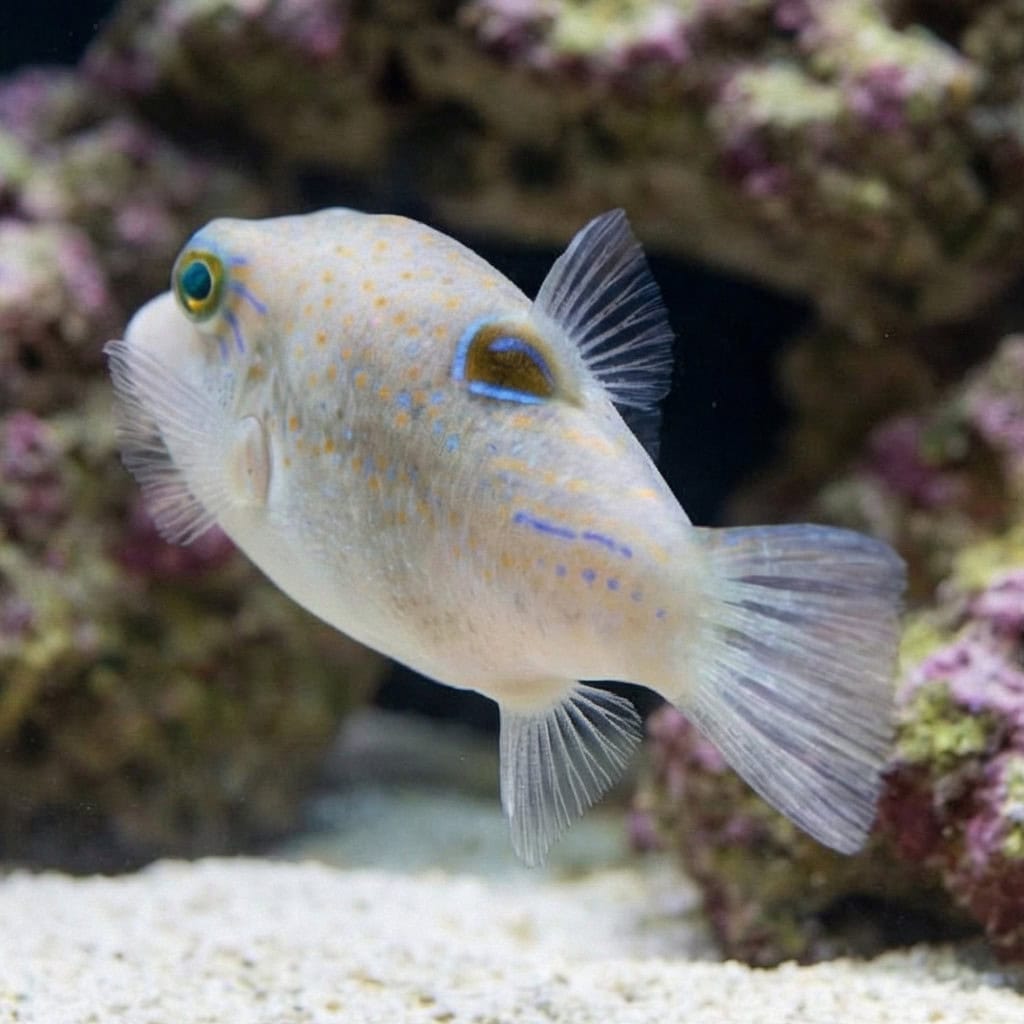
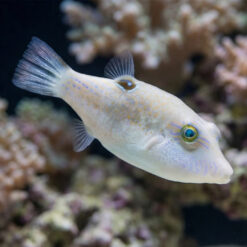
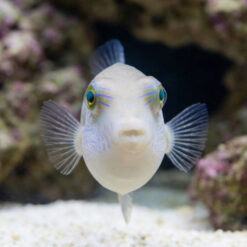
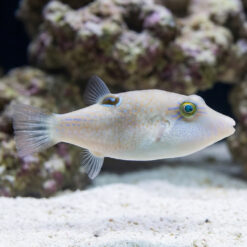
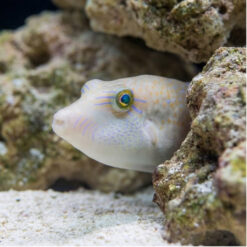
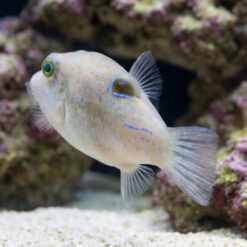
Whitebelly Puffer
Canthigaster bennetti
| Stock | Variations | Price | Quantity |
|---|
Every order ships with our standard 3-hour live arrival guarantee. Need more time? Add our 5-Day Guarantee at checkout.
Full guarantee terms →Ships Monday – Thursday for next-day arrival at your nearest FedEx Hold location — typically ready by 9 AM. We monitor every delivery.
Shipping details →
Monday – Friday 8 AM – 9 PM
Saturday 12 PM – 4 PM
Sunday 12 PM – 9 PM
Healthy, stable animals from vetted suppliers — inspected before packing, shipped overnight. Decades of experience built this model so we can deliver premium livestock at 30%+ less than you'd pay elsewhere.
| Care Level | Moderate |
|---|---|
| Temperament | Semi-Aggressive |
| Reef Safe | With Caution |
| Functional Benefit | Ornamental Only |
| Diet Type | Omnivore |
| Mininum Tank Size | 20 gallons |
| Max Size | 4 inches |
| Temperature | 72–78°F |
| pH Range | 8.1–8.4 |
| Specific Gravity | 1.022–1.025 |
The Whitebelly Puffer (Canthigaster bennetti), also called Bennett’s toby or Bennett’s sharpnose puffer, is a small Canthigaster puffer that stays around 4 inches and brings constant “on-the-move” foraging to a marine aquarium.
It’s an Indo-West Pacific reef-associated fish commonly found on shallow reef flats and sheltered lagoons.
What You’ll Observe:
- Short, deliberate cruising along rockwork with frequent stops to inspect surfaces
- Quick pecking and picking at the tank’s natural film and small bits of food
- A consistent “patrol route” it repeats throughout the day
- Confident feeding behavior once it learns your routine
Provide stable rockwork with plenty of crevices so it can weave in and out of cover while it forages. Offer a varied menu of small meaty foods plus algae-based options, and include harder items (like chopped clam on the half shell) as part of the rotation to support natural feeding. A steady feeding schedule (multiple small feedings) helps it stay active and engaged.
Will it rearrange sand or dig like some bottom-dwellers?
It usually spends its time inspecting rockwork and tank surfaces rather than moving sand in a noticeable way.
Can I keep two “toby puffers” together if my tank has lots of hiding spots?
Many hobbyists report that mixing Canthigaster puffers can lead to repeated chasing in smaller systems, so most keepers plan on one per tank unless the setup is large and carefully matched.
Why does it sometimes take food and then spit it out?
Keepers often see tobys “test bite” new foods; offering smaller pieces and repeating the same foods over several feedings usually increases take-rate.
Do they need hard foods, or is frozen food enough?
Hobbyists commonly rotate in harder, shell-on foods (like clam) to encourage natural crunching behavior as part of a varied diet.
Is it normal for a toby to disappear into the rockwork for stretches of time?
Yes—many owners describe periods where it’s out patrolling, followed by breaks where it rests or stays tucked into the rock for a while.
We work with trusted suppliers who keep our specimens healthy and well-fed before shipping.
Recently viewed products