
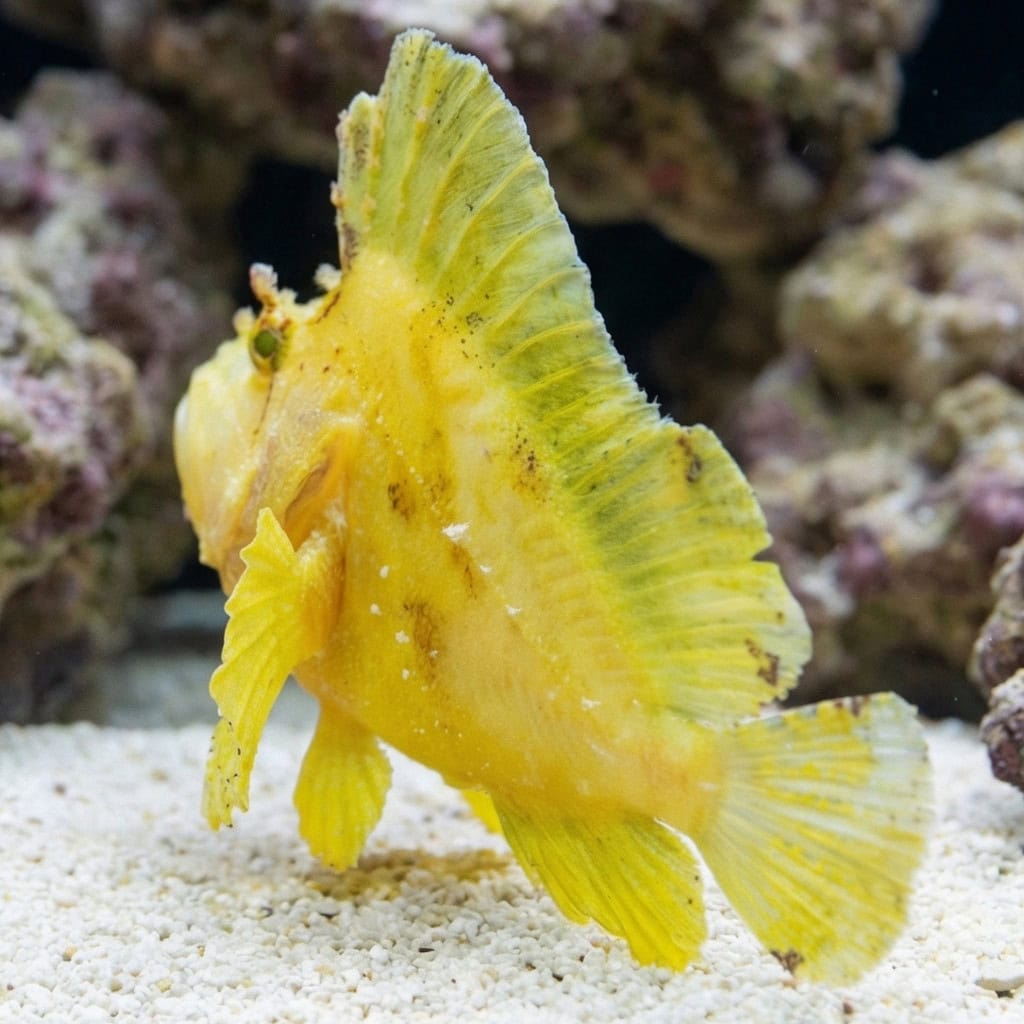
Yellow Leaf Fish
Taenianotus triacanthus
| Stock | Variations | Price | Quantity |
|---|
Every order ships with our standard 3-hour live arrival guarantee. Need more time? Add our 5-Day Guarantee at checkout.
Full guarantee terms →Ships Monday – Thursday for next-day arrival at your nearest FedEx Hold location — typically ready by 9 AM. We monitor every delivery.
Shipping details →
Monday – Friday 8 AM – 9 PM
Saturday 12 PM – 4 PM
Sunday 12 PM – 9 PM
Healthy, stable animals from vetted suppliers — inspected before packing, shipped overnight. Decades of experience built this model so we can deliver premium livestock at 30%+ less than you'd pay elsewhere.
| Care Level | Moderate |
|---|---|
| Temperament | Semi-Aggressive |
| Reef Safe | With Caution |
| Functional Benefit | Ornamental Only |
| Diet Type | Carnivore |
| Mininum Tank Size | 30 gallons |
| Max Size | 4 inches |
| Temperature | 72–78°F |
| pH Range | 8.1–8.4 |
| Specific Gravity | 1.022–1.025 |
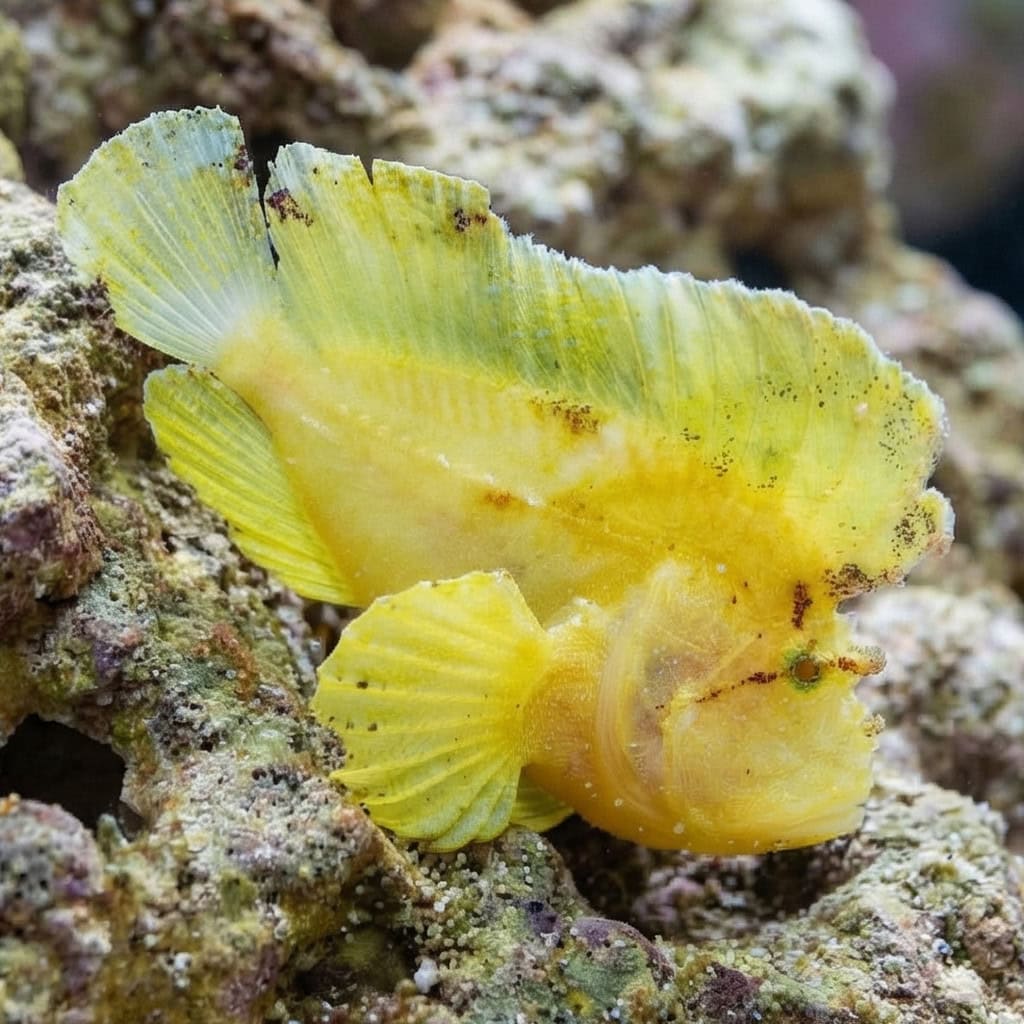
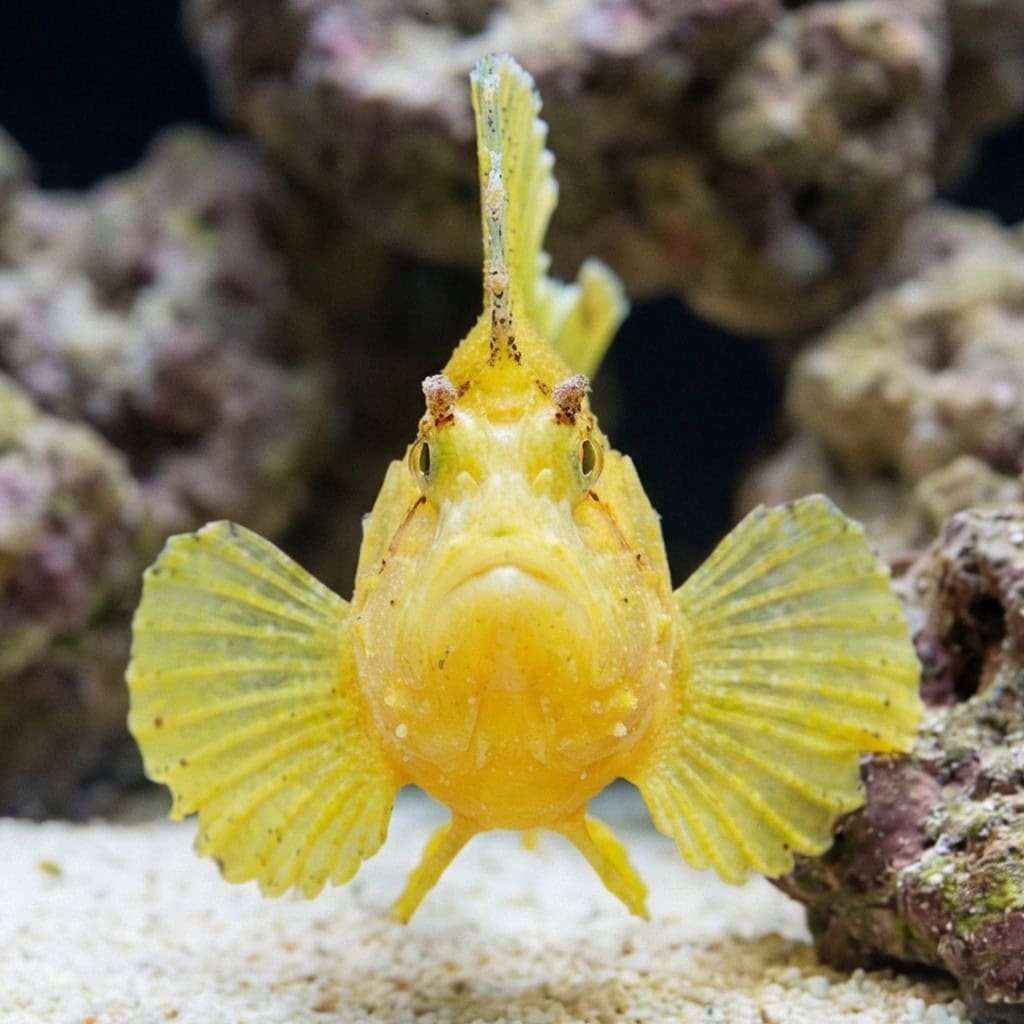
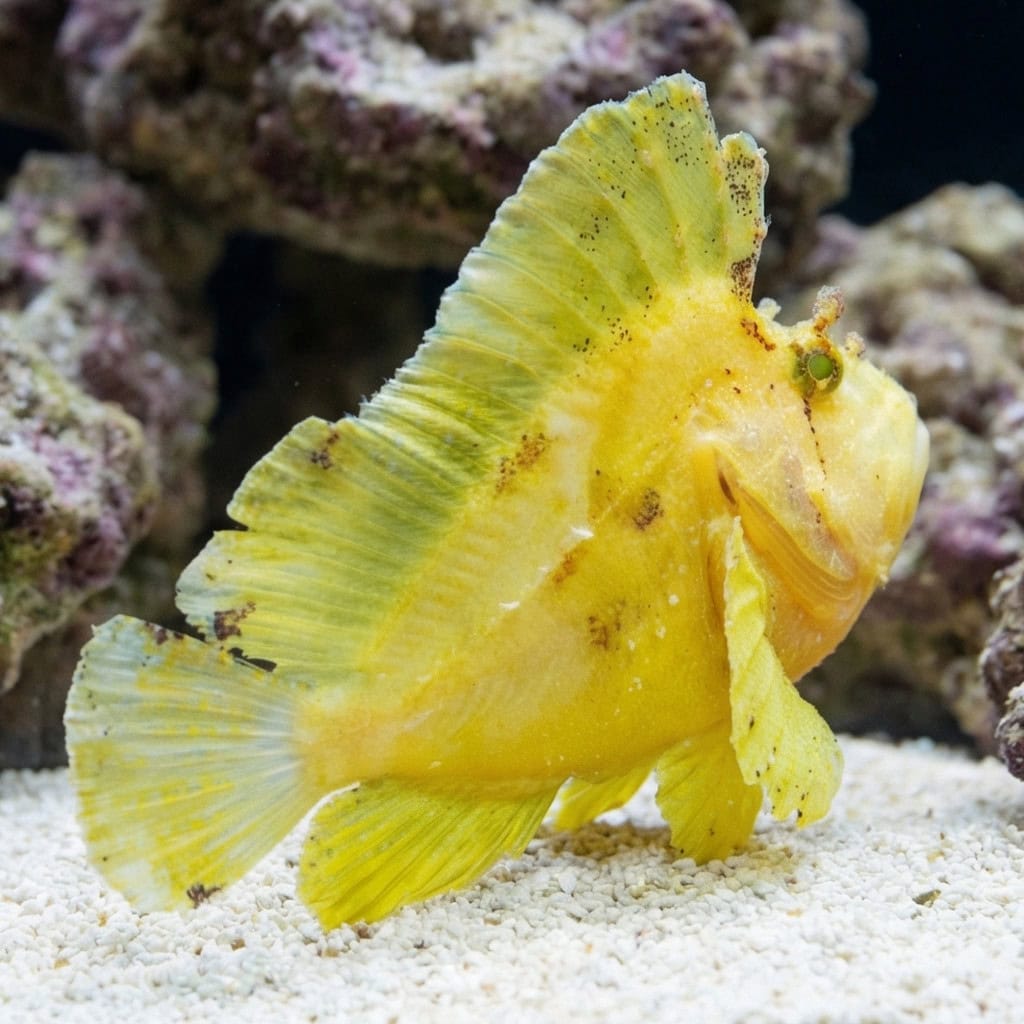
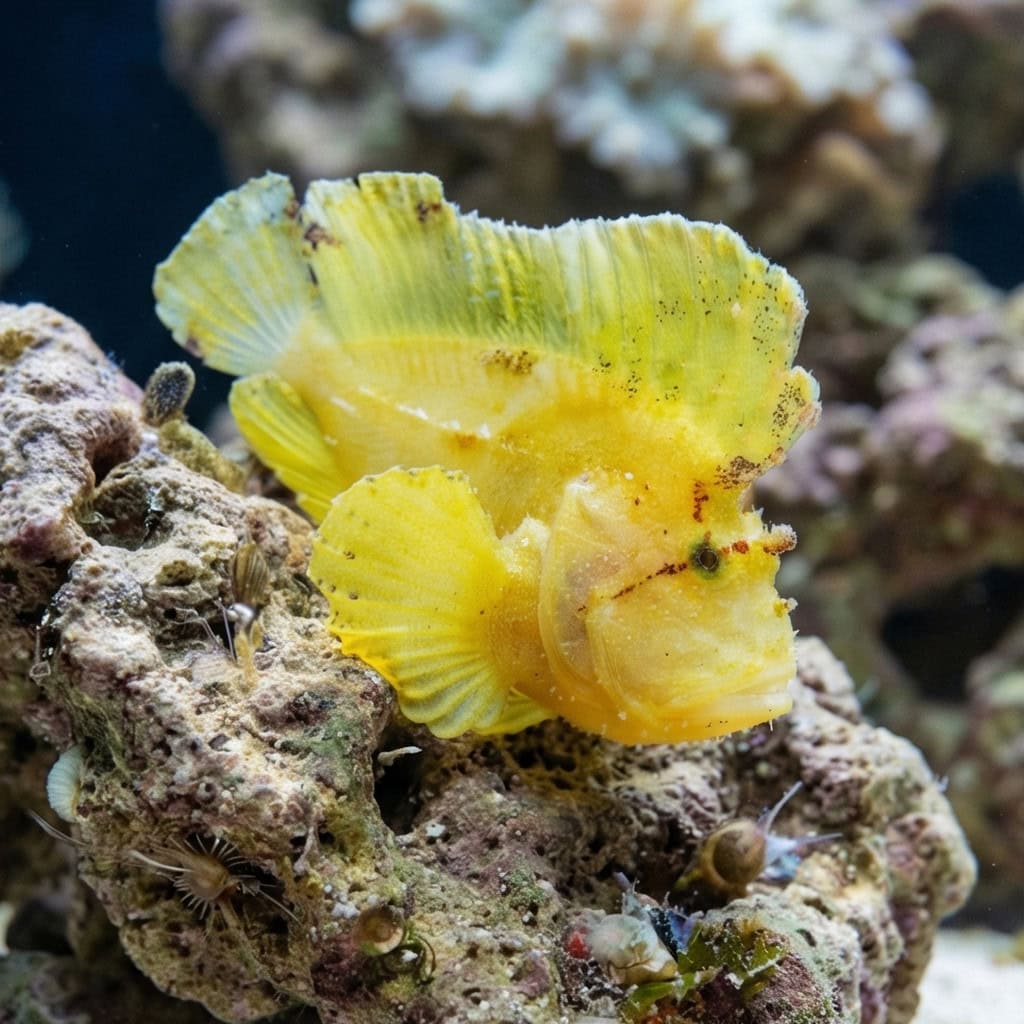
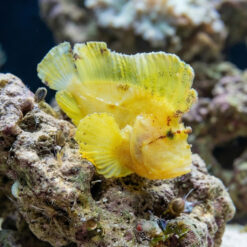
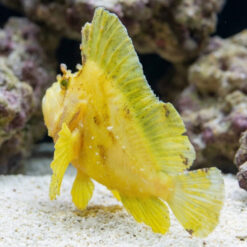
The Yellow Leaf Fish (Taenianotus triacanthus), also called a leaf scorpionfish or “paperfish,” is a laterally flattened ambush predator that often sways in the current like a drifting leaf while it waits for prey. It perches on rock, coral branches, or sand-leaning spots and uses camouflage to blend into the reef.
What You’ll Observe:
- Long pauses in a “perched” stance, followed by short, precise moves to a new lookout spot
- A slow side-to-side rocking motion that mimics a falling leaf
- Fast, sudden suction strikes when food passes close enough
- Periodic skin shedding (molting) that can look like a thin, loose film
How to Succeed: Provide multiple perching and hiding options in the rockwork so it can choose a comfortable “hunting” position. Offer appropriately sized meaty foods (for example, shrimp- or fish-based items) with a feeding stick/tongs placed nearby for an easy strike. Many keepers plan tankmates and feeding so smaller fish and ornamental shrimp aren’t viewed as food.
Will it “molt,” and should I remove the shed skin?
Yes—keepers often notice a thin, clear shed. It typically breaks up or is removed by filtration and cleanup crew over time.
How do I transition one onto frozen foods?
A common approach is starting with highly enticing foods and then using a feeding stick/syringe to present thawed items right in front of the fish so it can strike without chasing. Consistency and a predictable feeding spot help.
Does it swim around like a “normal” fish?
Most of the day it behaves more like a perched reef animal—holding position, rocking with flow, and relocating to a new perch rather than cruising open water.
Can I keep two together if they’re sold as a pair?
It’s common to see them offered as pairs, and hobbyists discuss keeping them together when the tank has enough space and multiple perches so neither fish has to compete for the same spot.
Why does it sometimes ignore food unless it’s very close?
This species is a close-range ambush feeder; placing the food near its “strike zone” often gets a faster response than expecting it to chase food around the tank.
Each fish is checked for strong appetite and activity before we approve it for your tank.
Recently viewed products