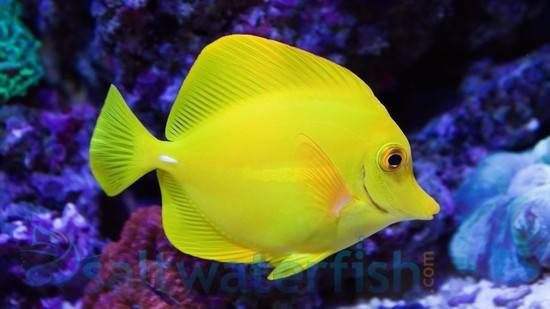
Yellow Tang
Zebrasoma flavescens
| Stock | Variations | Price | Quantity |
|---|
Every order ships with our standard 3-hour live arrival guarantee. Need more time? Add our 5-Day Guarantee at checkout.
Full guarantee terms →Ships Monday – Thursday for next-day arrival at your nearest FedEx Hold location — typically ready by 9 AM. We monitor every delivery.
Shipping details →
Monday – Friday 8 AM – 9 PM
Saturday 12 PM – 4 PM
Sunday 12 PM – 9 PM
Healthy, stable animals from vetted suppliers — inspected before packing, shipped overnight. Decades of experience built this model so we can deliver premium livestock at 30%+ less than you'd pay elsewhere.
| Care Level | Moderate |
|---|---|
| Temperament | Semi-Aggressive |
| Reef Safe | Yes |
| Functional Benefit | Algae Control |
| Diet Type | Herbivore |
| Mininum Tank Size | 90 gallons |
| Max Size | 8 inches |
| Temperature | 72–78°F |
| pH Range | 8.1–8.4 |
| Specific Gravity | 1.022–1.025 |
The Yellow Tang (Zebrasoma flavescens) is a constant grazer that helps with algae control by browsing rock surfaces throughout the day. Its solid yellow body color stands out in reef tanks, and the species is naturally found around Pacific reefs, especially the Hawaiian Islands.
What You’ll Observe:
- Steady, active swimming in open areas, with frequent loops through the rockwork
- Repeated “picking” at live rock and glass as it searches for natural growth to graze
- Most activity during the daytime, with a regular routine tied to your lighting schedule
- Short bursts of speed when food goes in, followed by more grazing between feedings
Provide plenty of open swim room plus mature rockwork it can graze all day. Offer dried seaweed on a clip along with a mix of prepared foods so it stays consistent with feeding even when the tank looks clean. Strong circulation and high oxygen levels help match the energetic conditions tangs come from.
Why does my Yellow Tang look pale or “washed out” at night?
Many tangs shift color when resting, and the stronger yellow usually returns after the lights come on and it resumes daytime activity.
How often should I put a seaweed sheet (nori) on a clip?
A common approach is offering a small portion daily or every other day and adjusting based on how quickly it gets eaten and your nutrient levels.
My Yellow Tang ignores the seaweed clip—how do I get it to use it?
Keep offering it consistently and try changing placement (higher in the water column, different side of the tank) or folding the sheet so it’s easier to tear. Some fish take time to “learn” the clip.
Is it normal for it to graze all day and still act hungry at feeding time?
Yes—grazing is a big part of their daily routine, and they also learn the tank’s feeding schedule and will stay engaged when you feed prepared foods.
How do I reduce “clip guarding” when I feed seaweed?
Spacing out two or more clips can spread out the activity, so one fish can’t control the entire feeding spot at once.
Shipped with pure oxygen and temperature control so it arrives stress-free and ready to eat.
Recently viewed products