
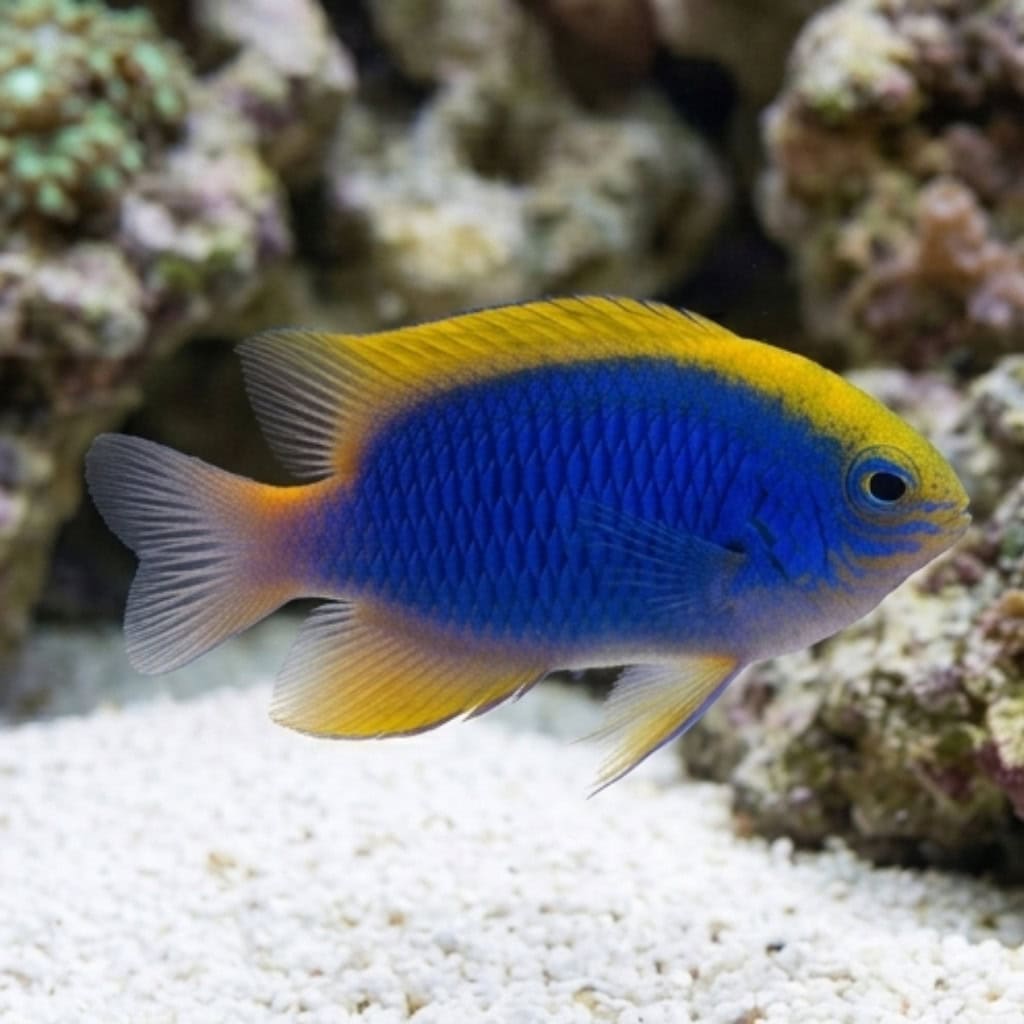
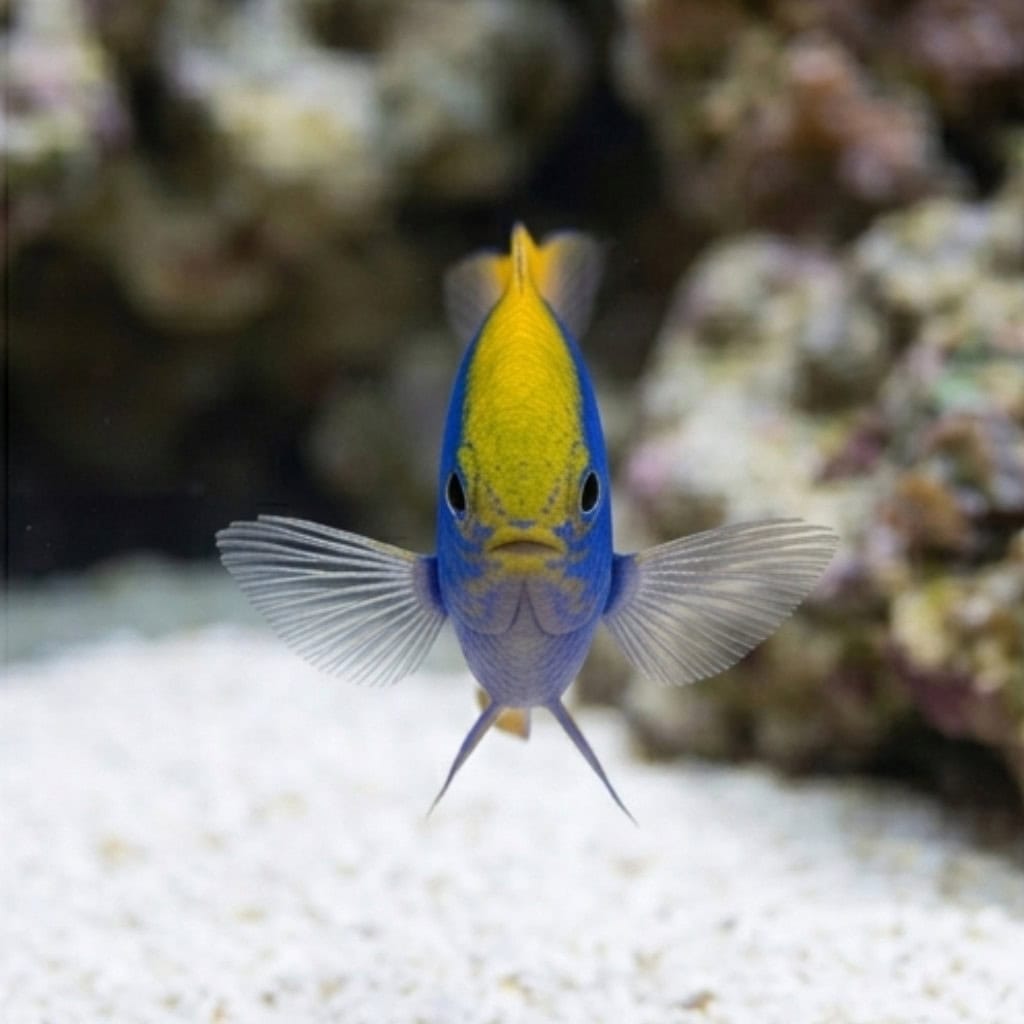
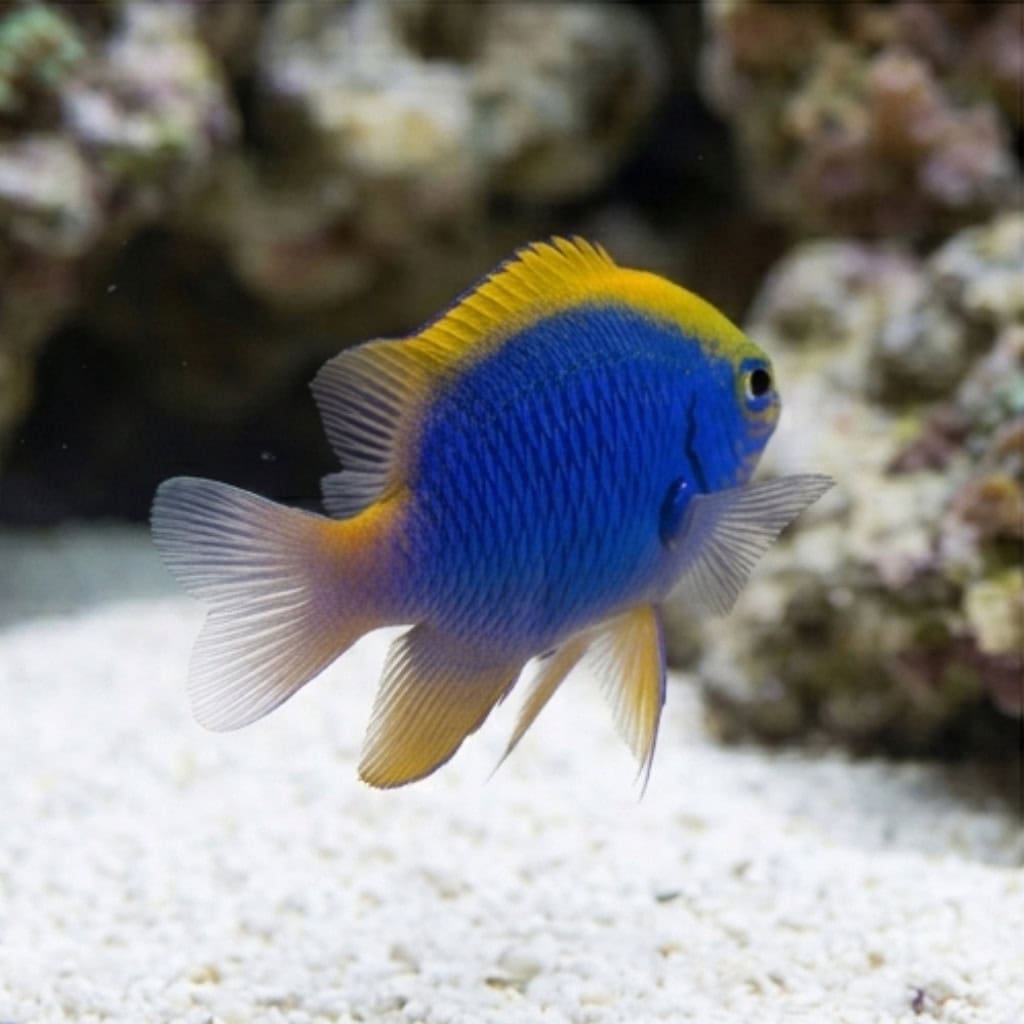
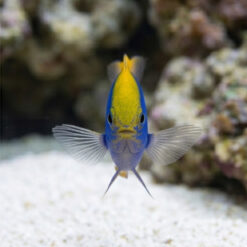
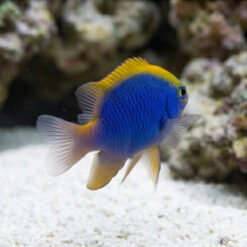
Yellowfin Blue Devil Damsel
Chrysiptera flavipinnis
| Stock | Variations | Price | Quantity |
|---|
Every order ships with our standard 3-hour live arrival guarantee. Need more time? Add our 5-Day Guarantee at checkout.
Full guarantee terms →Ships Monday – Thursday for next-day arrival at your nearest FedEx Hold location — typically ready by 9 AM. We monitor every delivery.
Shipping details →
Monday – Friday 8 AM – 9 PM
Saturday 12 PM – 4 PM
Sunday 12 PM – 9 PM
Healthy, stable animals from vetted suppliers — inspected before packing, shipped overnight. Decades of experience built this model so we can deliver premium livestock at 30%+ less than you'd pay elsewhere.
| Care Level | Easy |
|---|---|
| Temperament | Aggressive |
| Reef Safe | Yes |
| Functional Benefit | Ornamental Only |
| Diet Type | Planktivore |
| Mininum Tank Size | 30 gallons |
| Max Size | 3 inches |
| Temperature | 72–78°F |
| pH Range | 8.1–8.4 |
| Specific Gravity | 1.022–1.025 |
The Yellowfin Blue Devil Damsel (Chrysiptera flavipinnis) is a small reef-associated damselfish with a blue body and contrasting yellow fins, often seen hovering close to rock and coral rubble zones. This species is found in the western Pacific, including areas from Papua New Guinea through the Coral Sea and along eastern Australia.
What You’ll Observe:
- Quick, darting swims between rock crevices with a consistent “home base” it returns to throughout the day
- Confident midwater hovering near structure, especially when anticipating food
- Short, purposeful patrol loops around its preferred rockwork area
- Pairing behavior in established tanks, with both fish staying close to the same nesting zone
To help it settle in, provide rockwork with multiple holes and narrow swim-throughs so it can choose a secure base and still move freely. Offer small frozen foods and high-quality pellets in several small feedings so it can grab food quickly in a mixed community. Stable lighting and a consistent daily routine help this fish stay active and visible.
Why does it “claim” one rock and keep returning to the same spot?
Many keepers notice it adopts a favorite crevice as a home base, then makes short patrol swims out from that spot.
Does rearranging rockwork make introductions smoother in an established tank?
Some hobbyists report that changing the rock layout can reset “map memory,” so the fish explores again instead of focusing on one established corner.
How long does it usually take tankmates to settle into a routine with this fish?
A common experience is that interactions soften over several weeks as everyone learns each other’s paths and preferred hiding places.
Can two smaller individuals become a pair over time?
Keepers often report that two juveniles can pair up, and the pair may stay close to a chosen nesting surface once established.
What does a short “time-out” and reintroduction look like in practice?
Some aquarists isolate the fish briefly, then reintroduce it after small layout changes and with lights low so it re-enters in exploration mode.
We work with trusted suppliers who keep our specimens healthy and well-fed before shipping.
Only logged in customers who have purchased this product may leave a review.
Recently viewed products
Reviews
There are no reviews yet.