
Zebra Flounder
Gymnachirus nudus
| Stock | Variations | Price | Quantity |
|---|
Every order ships with our standard 3-hour live arrival guarantee. Need more time? Add our 5-Day Guarantee at checkout.
Full guarantee terms →Ships Monday – Thursday for next-day arrival at your nearest FedEx Hold location — typically ready by 9 AM. We monitor every delivery.
Shipping details →
Monday – Friday 8 AM – 9 PM
Saturday 12 PM – 4 PM
Sunday 12 PM – 9 PM
Healthy, stable animals from vetted suppliers — inspected before packing, shipped overnight. Decades of experience built this model so we can deliver premium livestock at 30%+ less than you'd pay elsewhere.
| Care Level | Moderate |
|---|---|
| Temperament | Peaceful |
| Reef Safe | With Caution |
| Functional Benefit | Sand Sifting |
| Diet Type | Carnivore |
| Mininum Tank Size | 40 gallons |
| Max Size | 6 inches |
| Temperature | 72–78°F |
| pH Range | 8.1–8.4 |
| Specific Gravity | 1.022–1.025 |
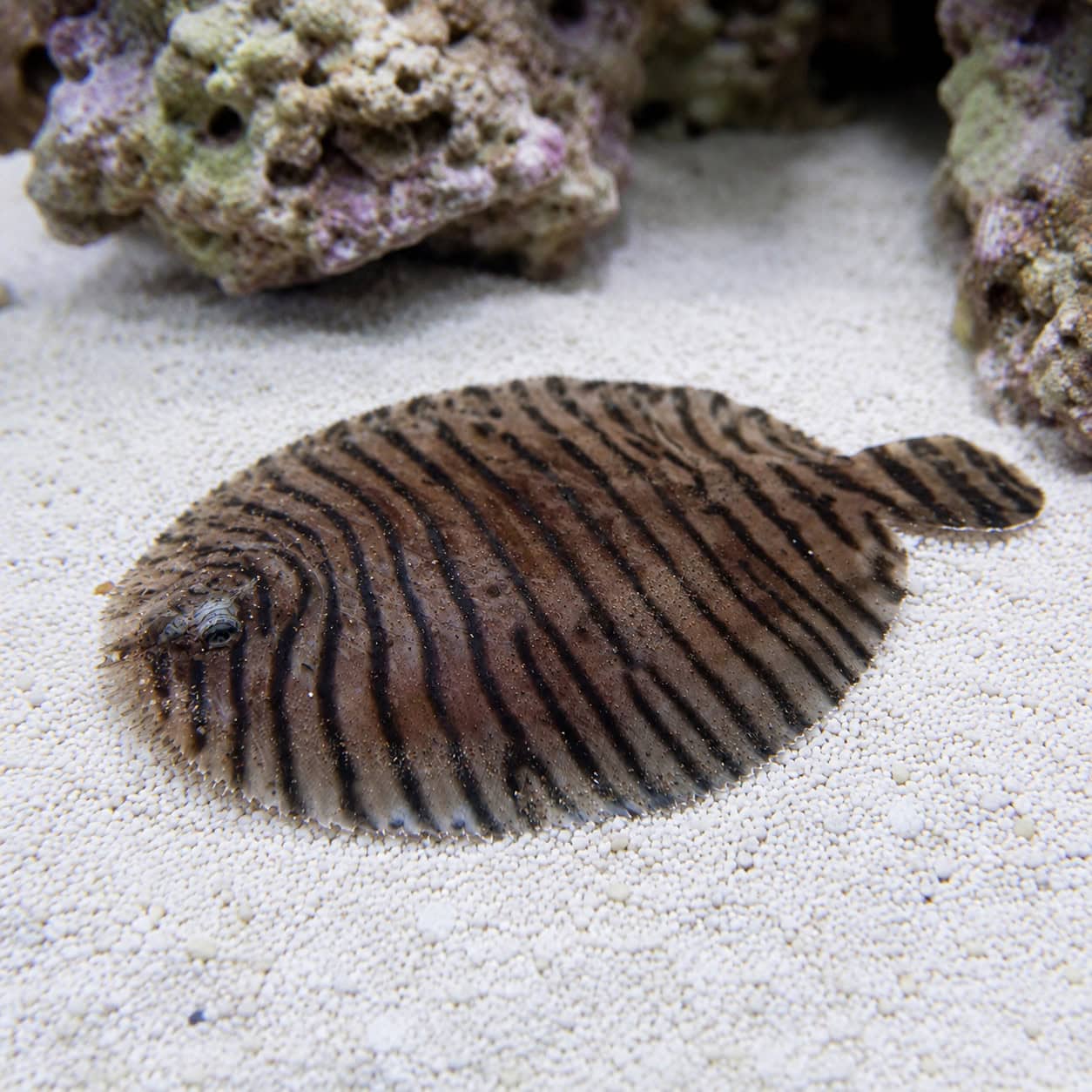
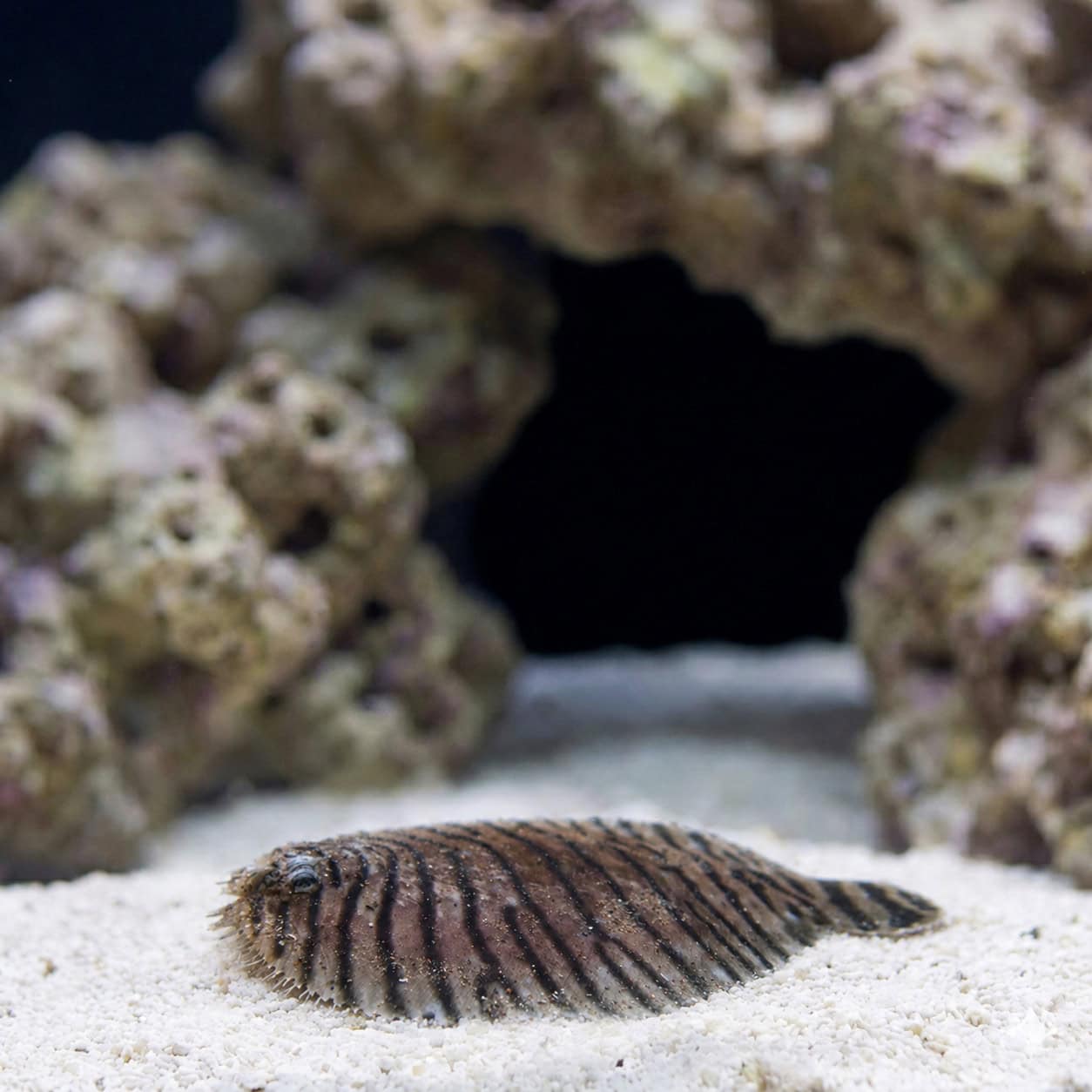
The Zebra Flounder (Gymnachirus nudus) is a sand-bottom flatfish with bold, zebra-like banding that helps it blend into open substrate areas. It naturally spends most of its time on soft bottoms, making it a good fit for aquariums that have a dedicated sand zone.
What You’ll Observe:
- Settling onto the sand and “melting” into the bottom as it rests with only its eyes raised
- Short, smooth bursts of movement as it shifts position and re-buries in a new spot
- Most activity concentrated around feeding time, with long calm periods in between
- A consistent preference for staying low and using the sandbed as its home base
Provide a fine sand bed with open space to lie flat, plus low rock edges it can tuck against when it wants cover. Offer small meaty foods (like mysis and finely chopped seafood) and place the food on the sand nearby so it can feed naturally from the bottom.
Is it normal if it stays buried for hours or even most of the day?
Yes—this is typical flatfish behavior. Many individuals spend long stretches under or pressed into the sand and become most visible around feeding time.
How do I make sure it actually gets the food instead of faster fish eating everything?
Place food directly onto the sand close to where it’s resting, or use feeding tongs/pipette to drop small pieces right in front of it so it can feed without chasing.
Why does it seem most active in the morning or right after the lights change?
Many keepers notice “timed” activity around lighting transitions. Try feeding shortly after lights-on (or at a consistent daily time) so it learns the routine.
Should I match the store’s salinity first if it was being held in lower-salinity water?
Yes—matching the holding salinity at first and then adjusting gradually tends to produce steadier behavior and more consistent feeding.
Can I keep two Zebra Flounders together?
It can work in a wider tank if there’s enough sand area for each fish to claim a resting spot; they do best when they aren’t forced to share the same small patch of substrate.
Our selection process means you get robust, well-adjusted specimens that settle in quickly.
Recently viewed products