
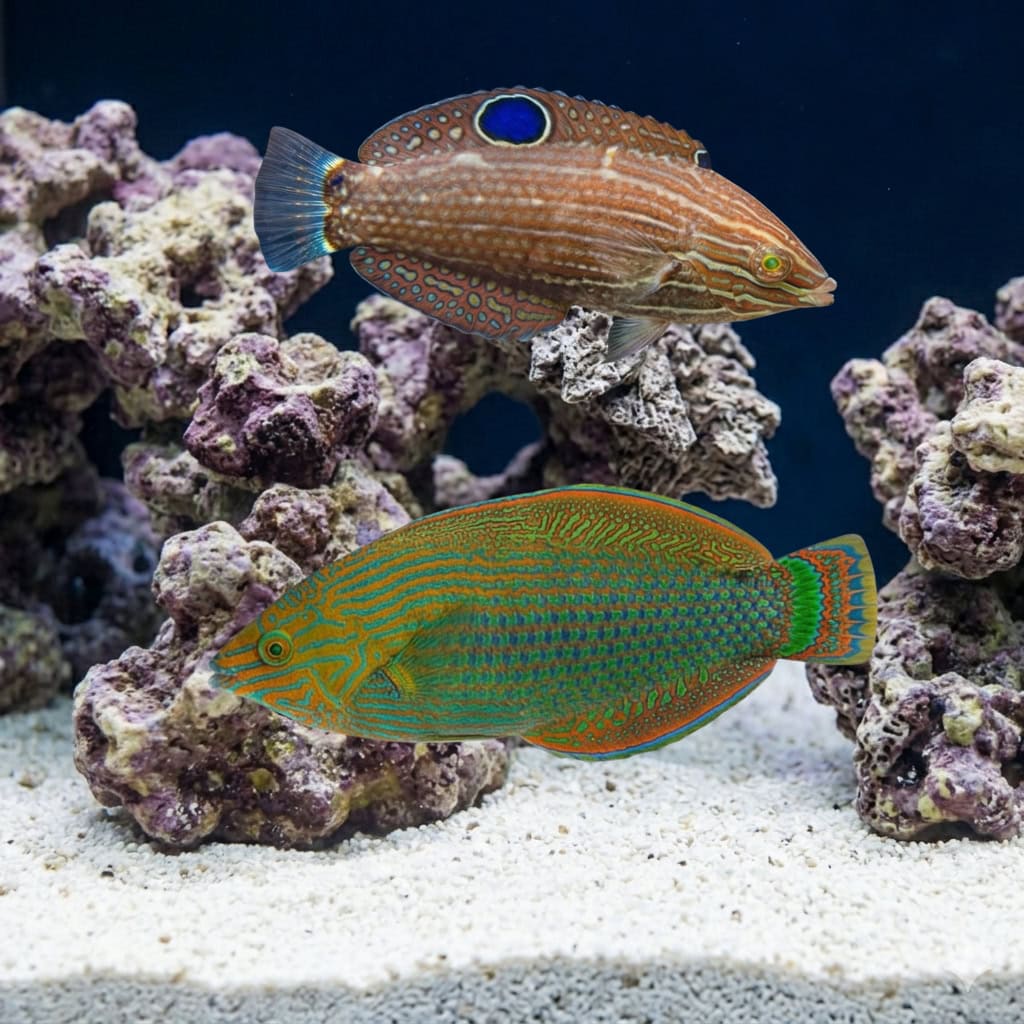
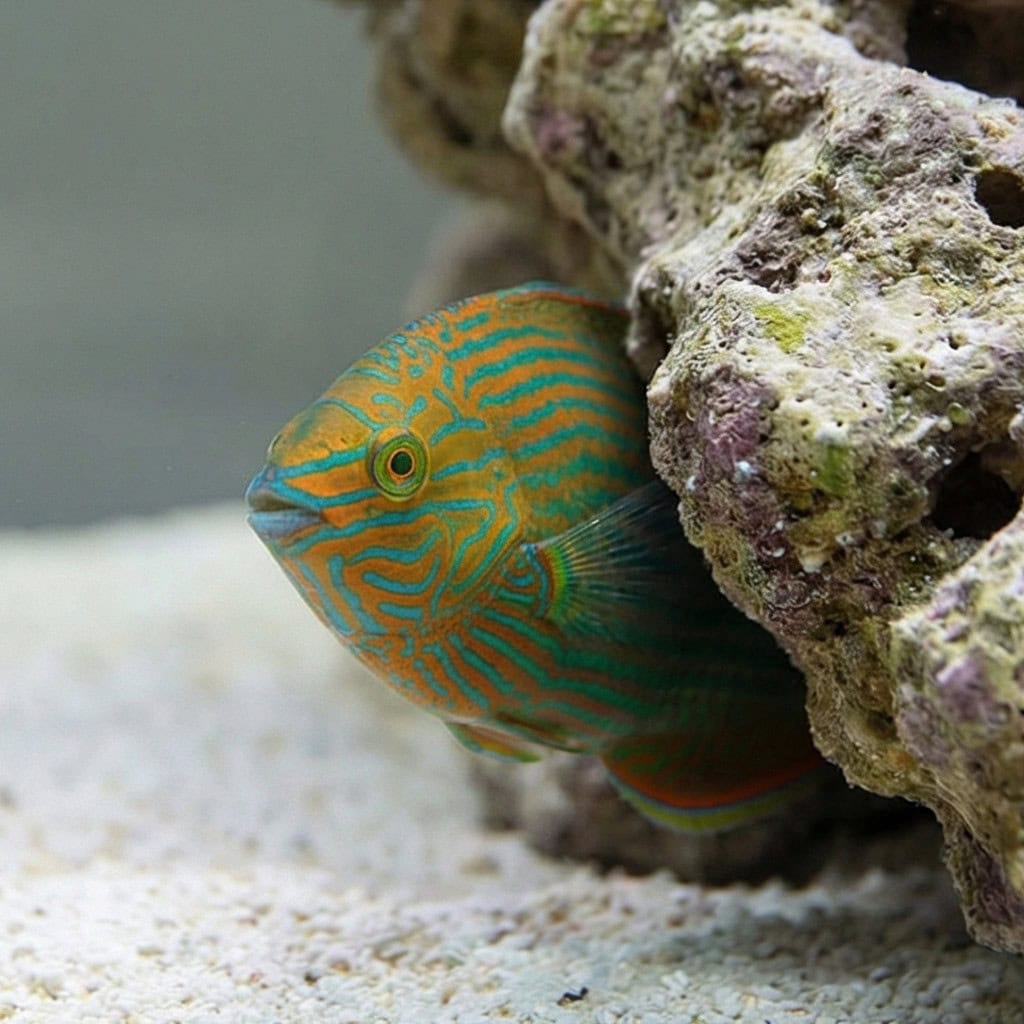
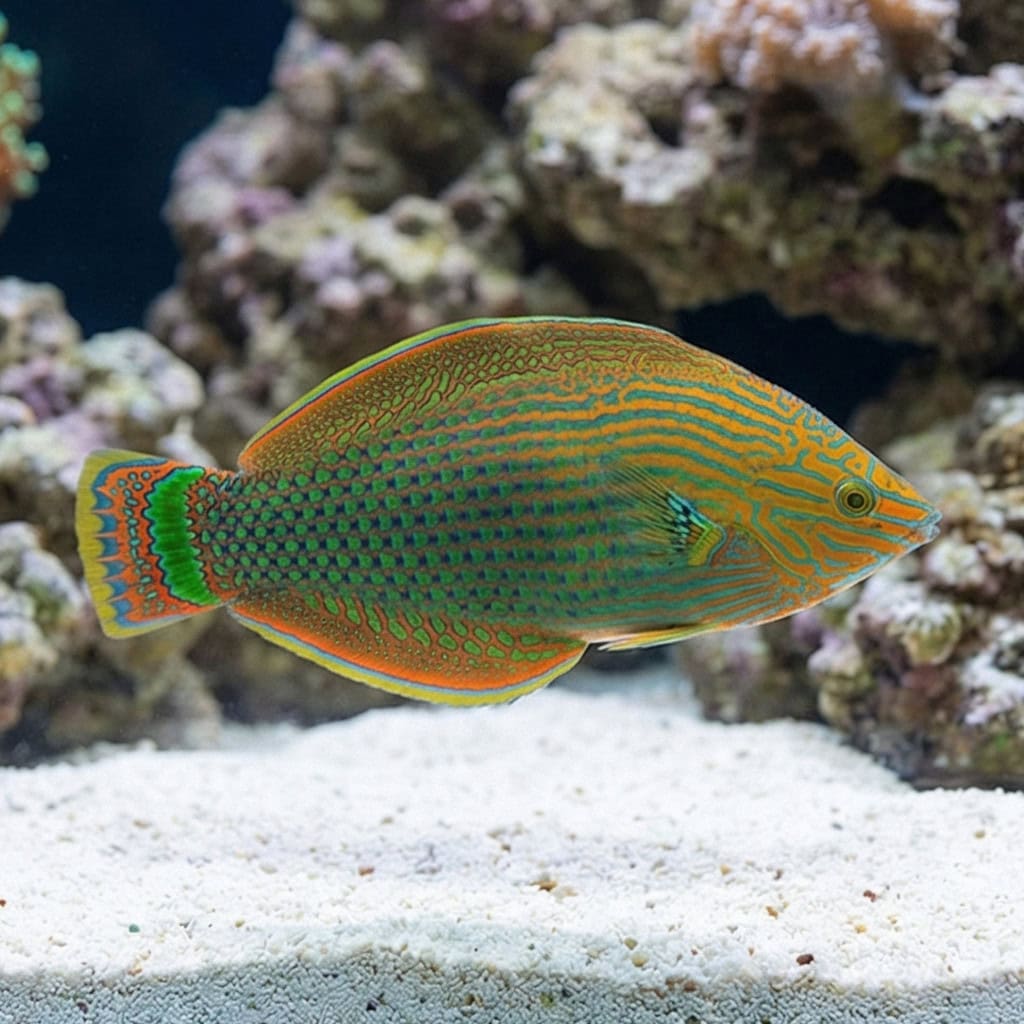
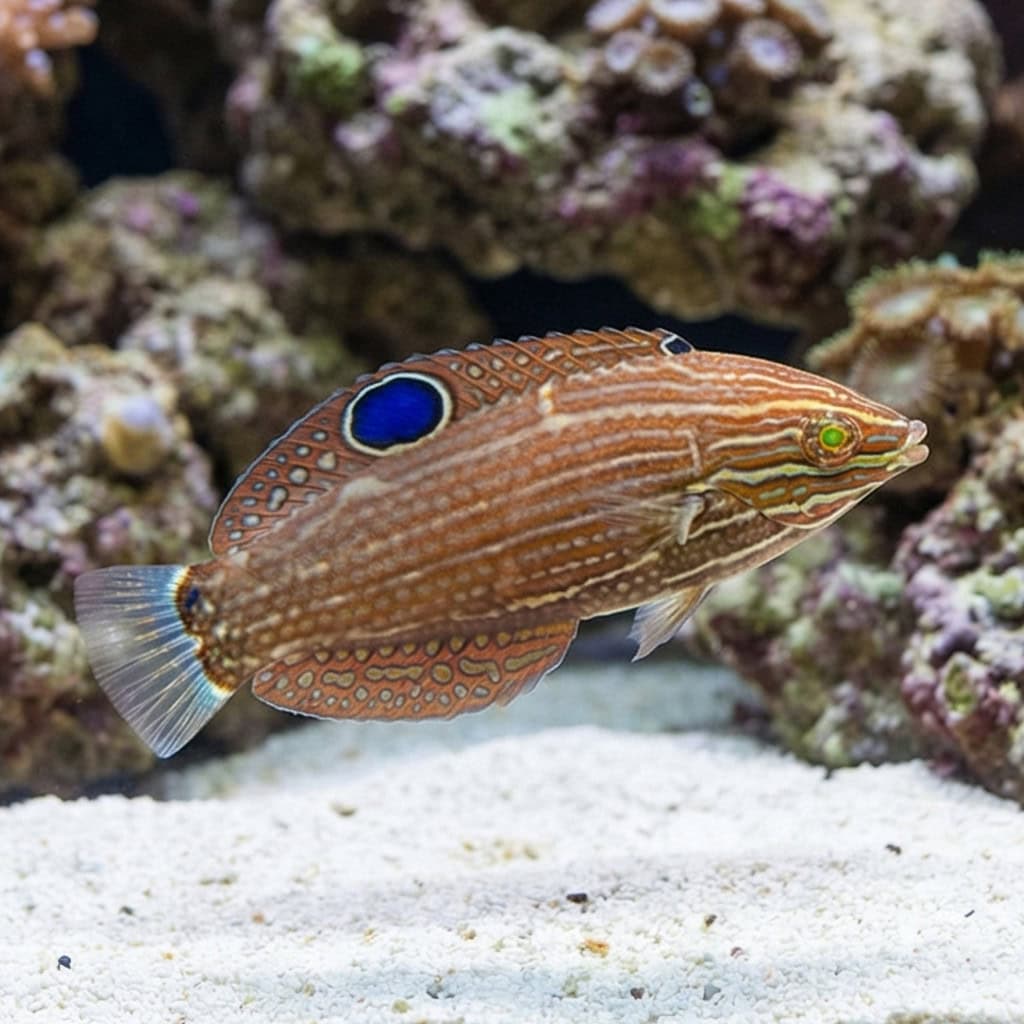
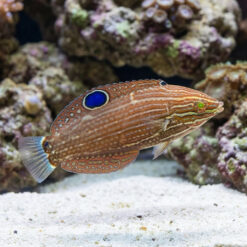
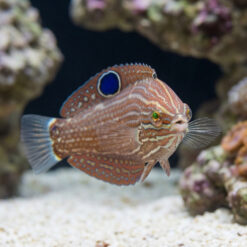
Dusky Wrasse
Halichoeres marginatus
| Stock | Variations | Price | Quantity | |
|---|---|---|---|---|
| Out of Stock | 2 - 3" - Juvenile - Indian Ocean | Original price was: $102.99.$54.99Current price is: $54.99. | Email me |
Every order ships with our standard 3-hour live arrival guarantee. Need more time? Add our 5-Day Guarantee at checkout.
Full guarantee terms →Ships Monday – Thursday for next-day arrival at your nearest FedEx Hold location — typically ready by 9 AM. We monitor every delivery.
Shipping details →
Monday – Friday 8 AM – 9 PM
Saturday 12 PM – 4 PM
Sunday 12 PM – 9 PM
Healthy, stable animals from vetted suppliers — inspected before packing, shipped overnight. Decades of experience built this model so we can deliver premium livestock at 30%+ less than you'd pay elsewhere.
| Care Level | Moderate |
|---|---|
| Temperament | Semi-Aggressive |
| Reef Safe | With Caution |
| Functional Benefit | Pest Control |
| Diet Type | Carnivore |
| Mininum Tank Size | 90 gallons |
| Max Size | 8 inches |
| Temperature | 72–78°F |
| pH Range | 8.1–8.4 |
| Specific Gravity | 1.022–1.025 |
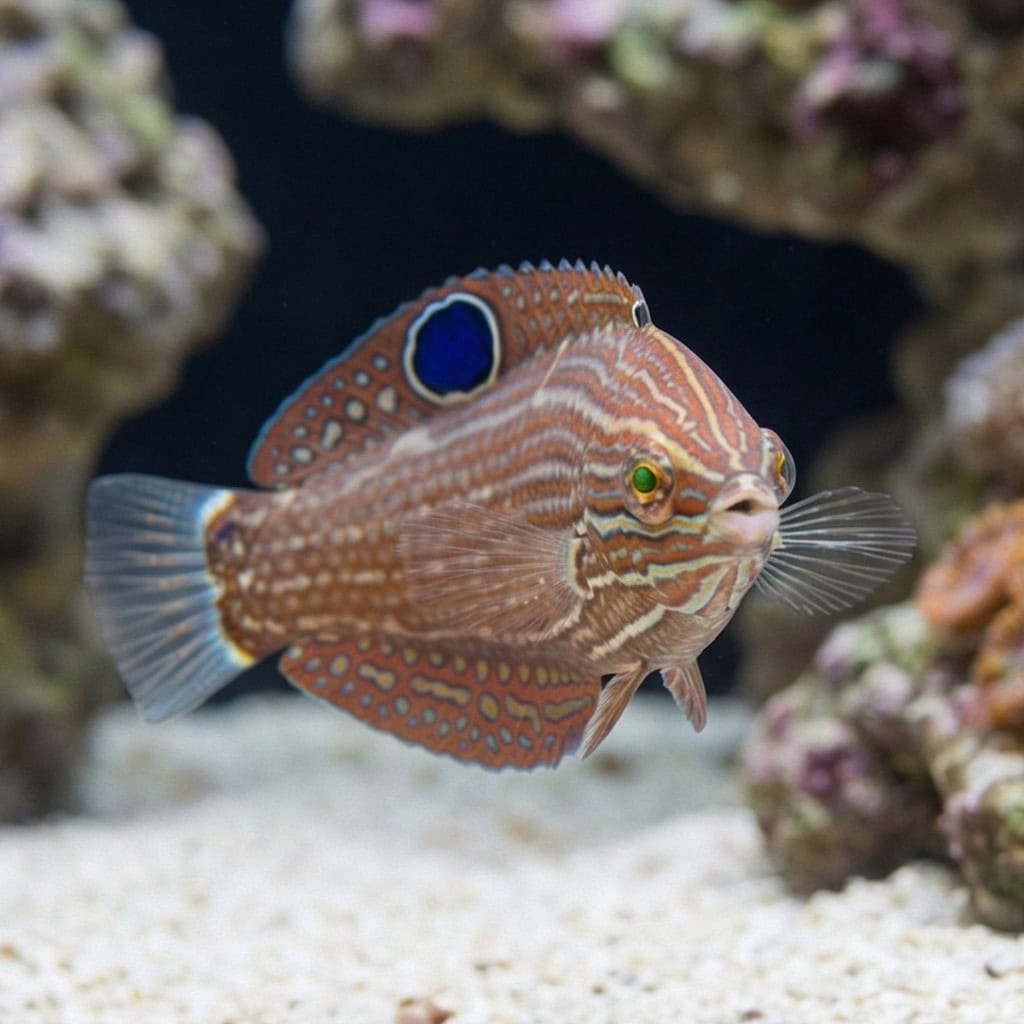
The Dusky Wrasse (Halichoeres marginatus) is an active sand-and-rockwork forager that can help reduce common nuisance pests like bristleworms, flatworms, and pyramidellid snails. It spends the day cruising the lower half of the tank, picking at small prey in the substrate and between rock crevices. This species is found across the Indo-Pacific, and its color pattern can shift as it matures.
What You’ll Observe:
- Steady “patrol” swimming along the sand line, with frequent stops to peck at the substrate
- Quick dives into the sand at night (and sometimes briefly after introduction)
- Regular circling of rockwork, inspecting holes and overhangs for tiny foods
- Short bursts of speed when startled, then returning to foraging routes
- Confident feeding once settled, often meeting food at the front glass
Provide a mature reef tank with plenty of open sand and rockwork edges to search, plus a tight-fitting lid. Offer a mix of meaty frozen foods and quality pellets in smaller portions through the day so it can feed while still hunting naturally. It typically does best as the only Dusky Wrasse in the system, alongside tankmates that give it space during feeding time.
Why is my Dusky Wrasse “missing” right after I add it?
Many Halichoeres wrasses dive into the sand to rest, especially during the first few days. Once it learns the tank’s routine, it usually appears more consistently for feedings.
Can I keep two Dusky Wrasses together as a pair?
Some hobbyists report temporary tolerance when small, but long-term cohabitation often turns into one fish claiming the tank. Planning for a single specimen is the best approach.
Does this wrasse still hunt pests if I feed it well?
Yes—many keepers notice it continues to pick and search all day even after it accepts frozen and pellet foods. Consistent feeding helps keep that foraging behavior steady and predictable.
Is a bare-bottom quarantine setup okay for this species?
A lot of keepers add a small container of fine sand (or a sand “tray”) so it has a place to sleep and settle. That simple option often makes its daily routine look more normal.
How do I avoid mix-ups with other fish sold as “dusky wrasse”?
“Dusky” is used for multiple wrasses in the trade. Halichoeres marginatus is a sand-diving Halichoeres wrasse, while many “dusky fairy wrasse” listings refer to Cirrhilabrus species that do not bury in sand.
Each fish is checked for strong appetite and activity before we approve it for your tank.
Recently viewed products