
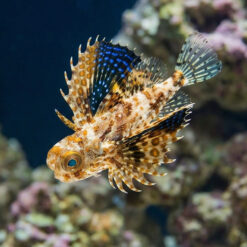
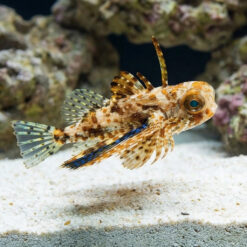
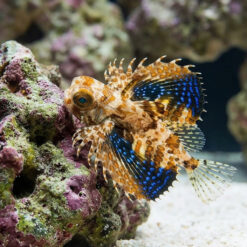
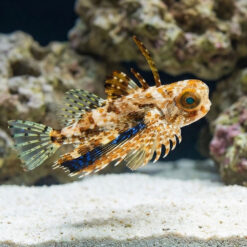
Flying Fish
Dactyloptena sp.
| Stock | Variations | Price | Quantity |
|---|
Every order ships with our standard 3-hour live arrival guarantee. Need more time? Add our 5-Day Guarantee at checkout.
Full guarantee terms →Ships Monday – Thursday for next-day arrival at your nearest FedEx Hold location — typically ready by 9 AM. We monitor every delivery.
Shipping details →
Monday – Friday 8 AM – 9 PM
Saturday 12 PM – 4 PM
Sunday 12 PM – 9 PM
Healthy, stable animals from vetted suppliers — inspected before packing, shipped overnight. Decades of experience built this model so we can deliver premium livestock at 30%+ less than you'd pay elsewhere.
| Care Level | Expert |
|---|---|
| Temperament | Peaceful |
| Reef Safe | With Caution |
| Functional Benefit | Ornamental Only |
| Diet Type | Carnivore |
| Mininum Tank Size | 180 gallons |
| Max Size | 18 inches |
| Temperature | 72–78°F |
| pH Range | 8.1–8.4 |
| Specific Gravity | 1.022–1.025 |
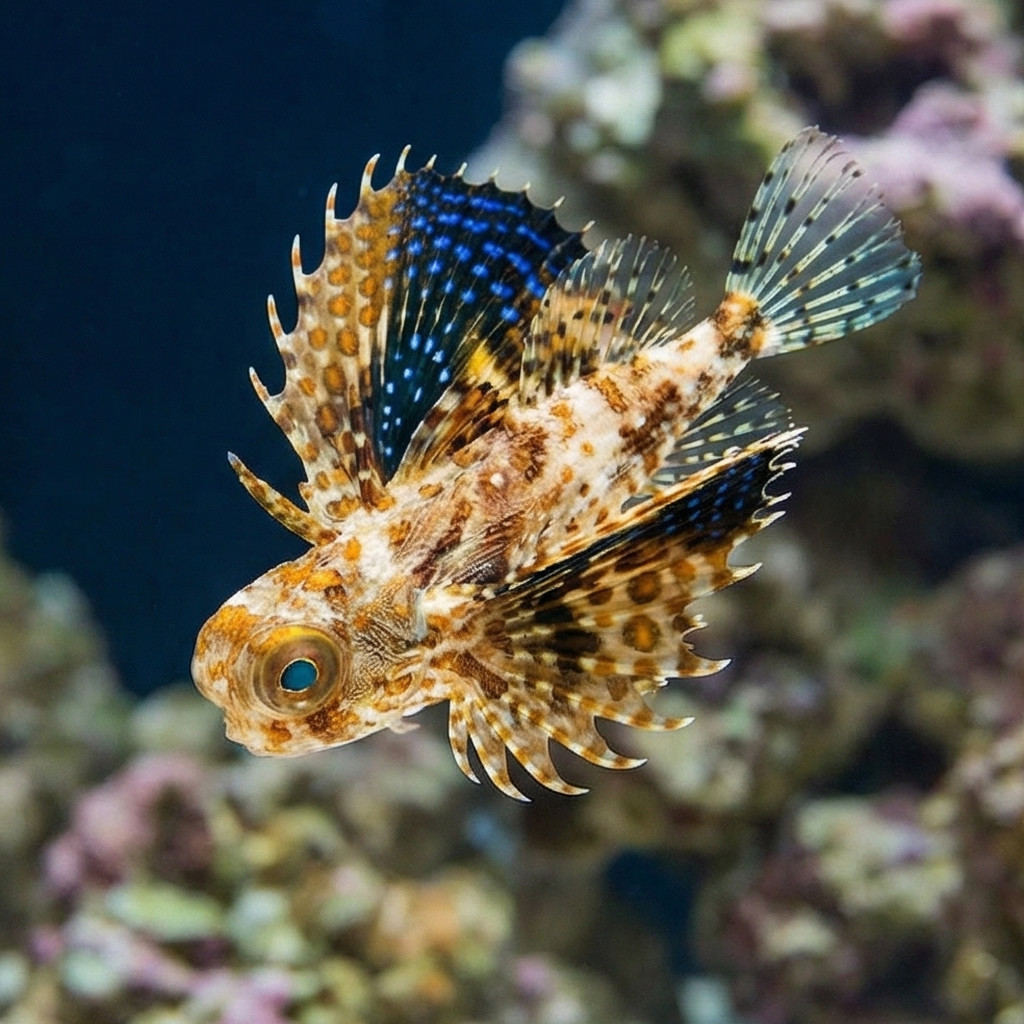
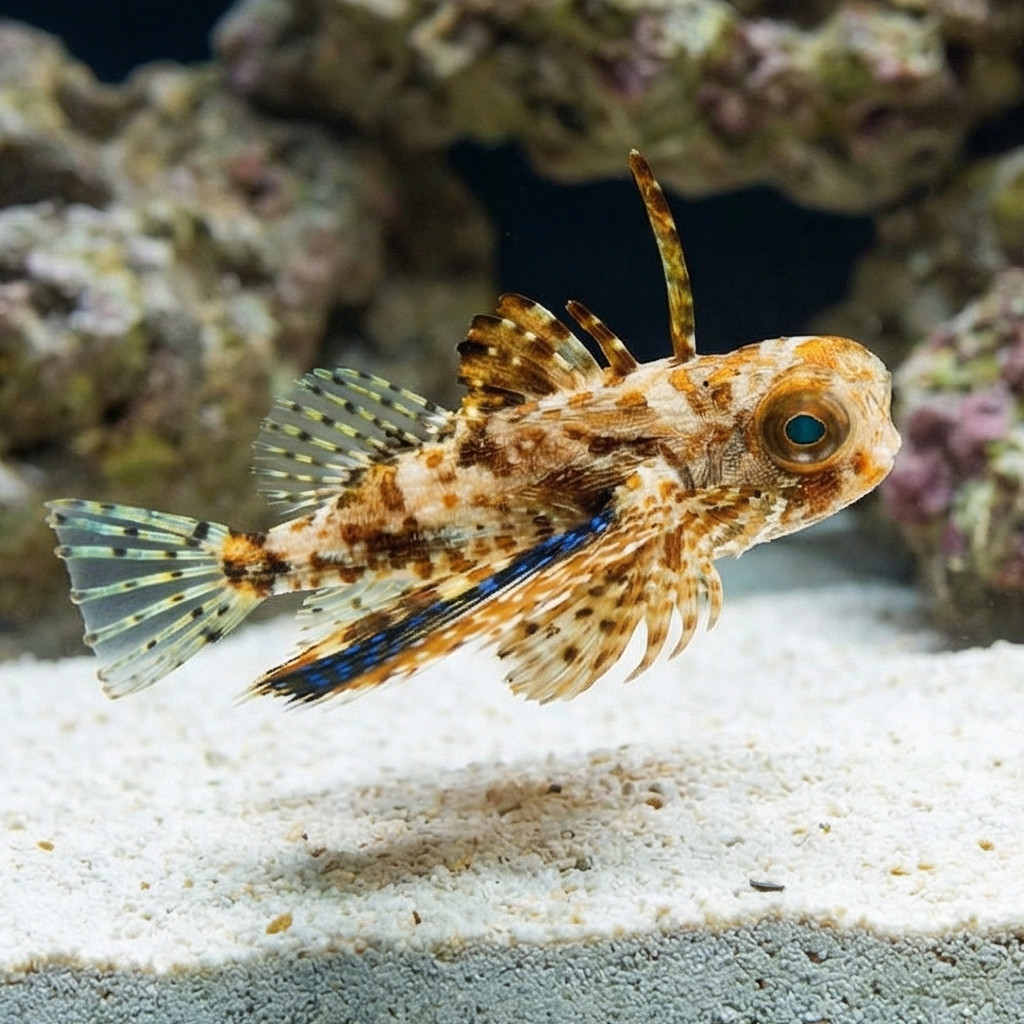
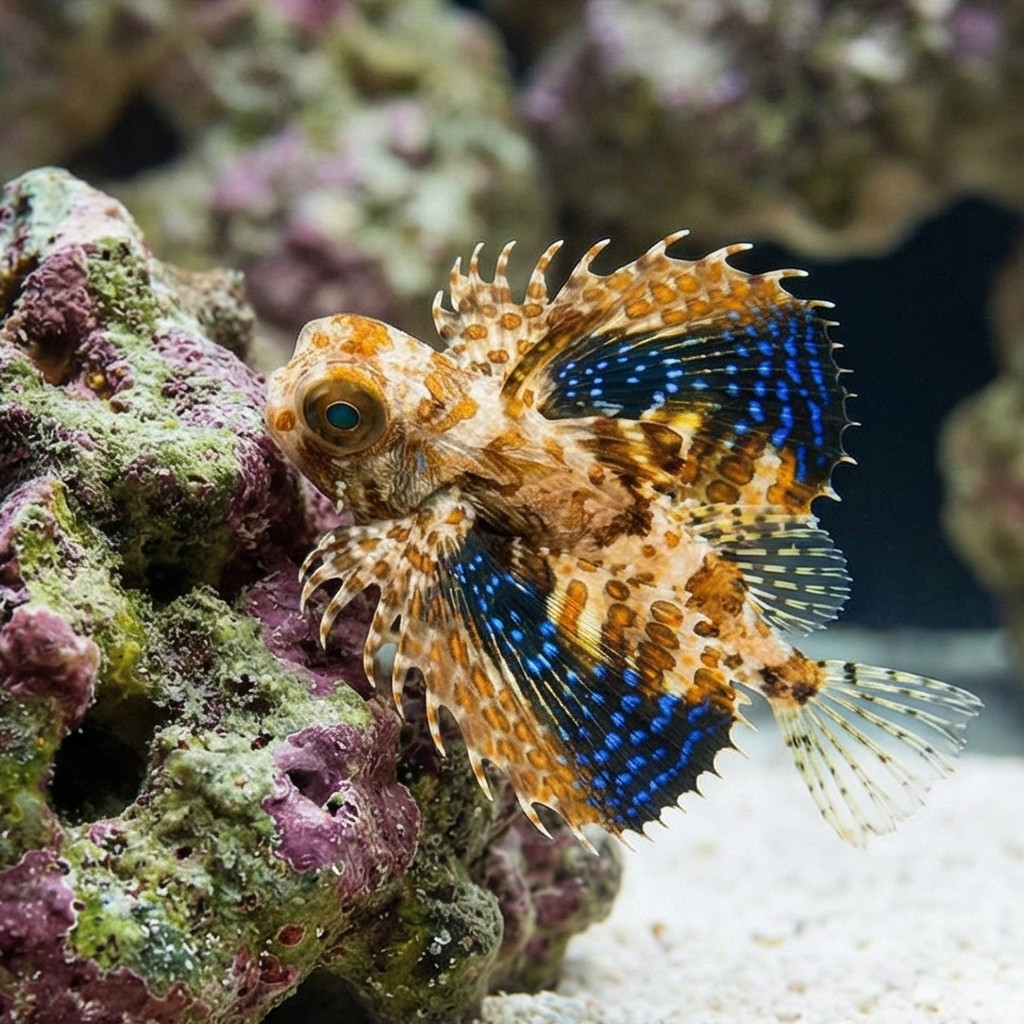
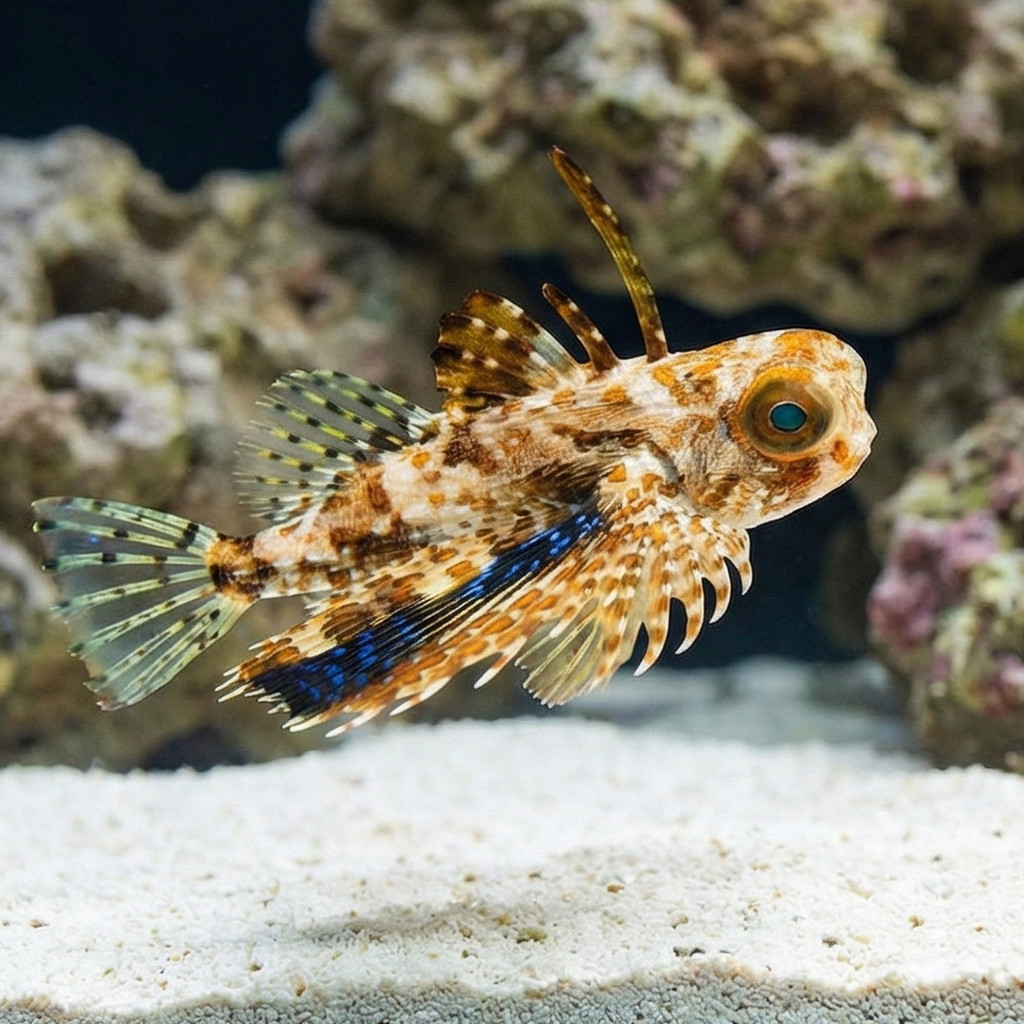
Often sold as a Flying Gurnard, Dactyloptena sp. is a bottom-oriented marine fish known for large, fan-like pectoral fins that it flares into a wide “wing” display. It typically shows a tan-to-brown base color with darker spotting and blue edging on the expanded fins.
What You’ll Observe:
- Perching and “walking” along the sand using modified fin rays, with short swims between open areas
- Sudden fin-flaring displays that make the fish look much larger for a moment
- Foraging behavior focused on the substrate, pausing to probe and investigate the bottom
- A consistent daily routine of cruising the tank footprint and settling back onto the sand
To do well with this species, provide a large aquarium with a broad, open sandy bottom and plenty of unobstructed floor space. Offer meaty foods that reach the bottom (such as mysis shrimp, chopped shrimp, and other marine-based items) so it can feed naturally at its level. Plan tankmates so the Flying Fish has room to move and feed without constant bottom-level competition.
Is this a “true” flyingfish?
No—Dactyloptena are flying gurnards that live on the bottom and use their “wings” as a display rather than gliding above the surface.
Will it spend most of its time on the sand?
Most of the activity is on or just above the substrate, with the fish cruising the tank footprint and stopping frequently to perch.
Does it need more footprint space than you’d expect?
Yes—keepers often find the usable floor space matters as much as overall gallons, especially in tanks with other bottom-focused animals.
How do you make sure it gets food in a tank with faster fish?
Many hobbyists target-feed near the bottom using tongs or a feeding stick, and keep a consistent feeding spot so the fish learns where food lands.
Is it normal for the fins to flare out suddenly?
Yes—flaring is a common, brief display when the fish is excited or startled, and it usually settles back down quickly.
Each fish is checked for strong appetite and activity before we approve it for your tank.
Recently viewed products