
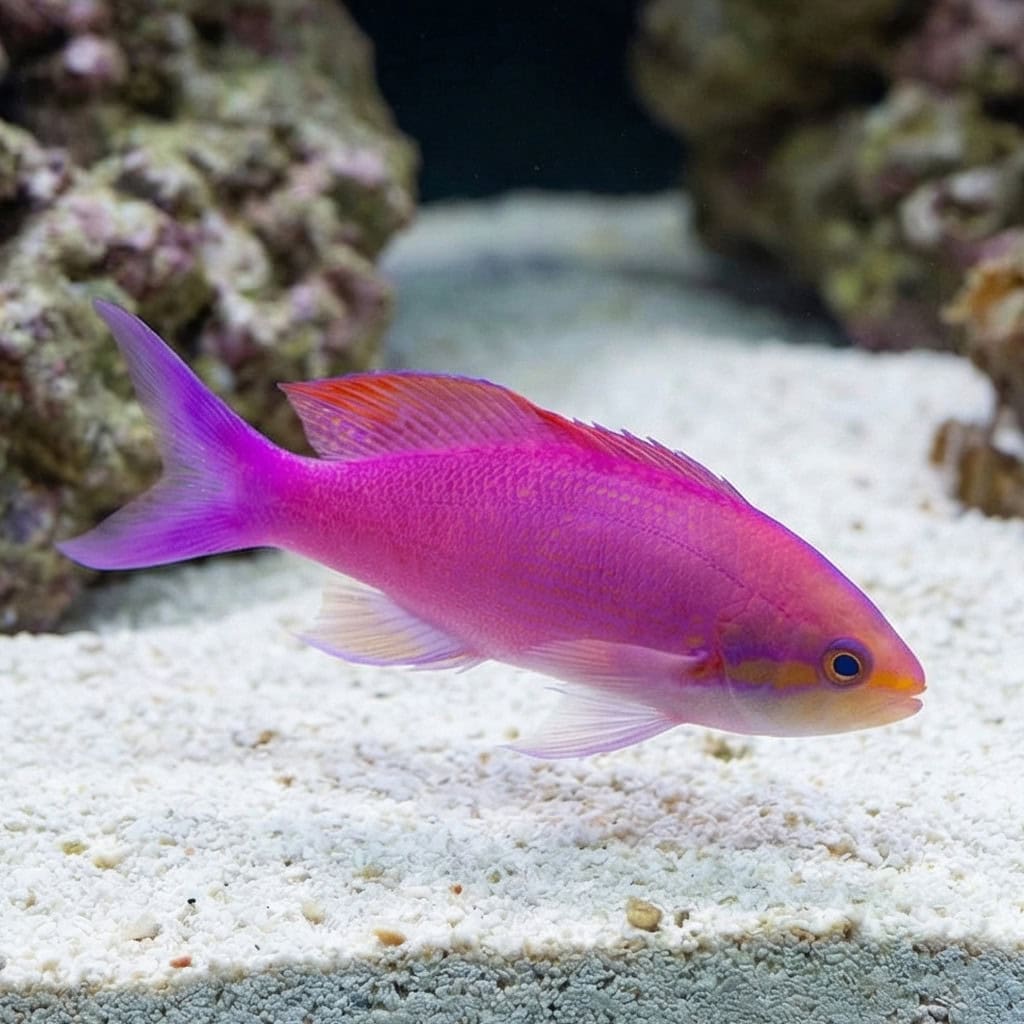
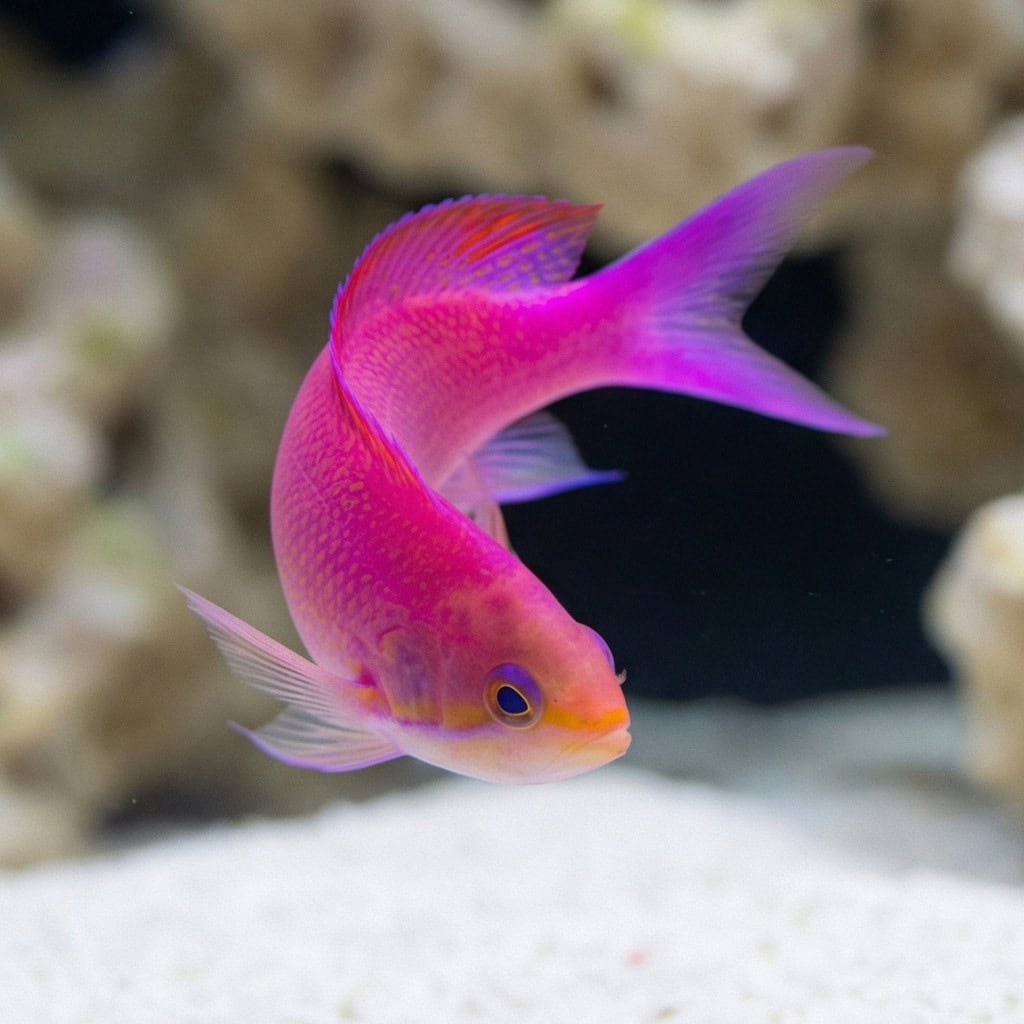
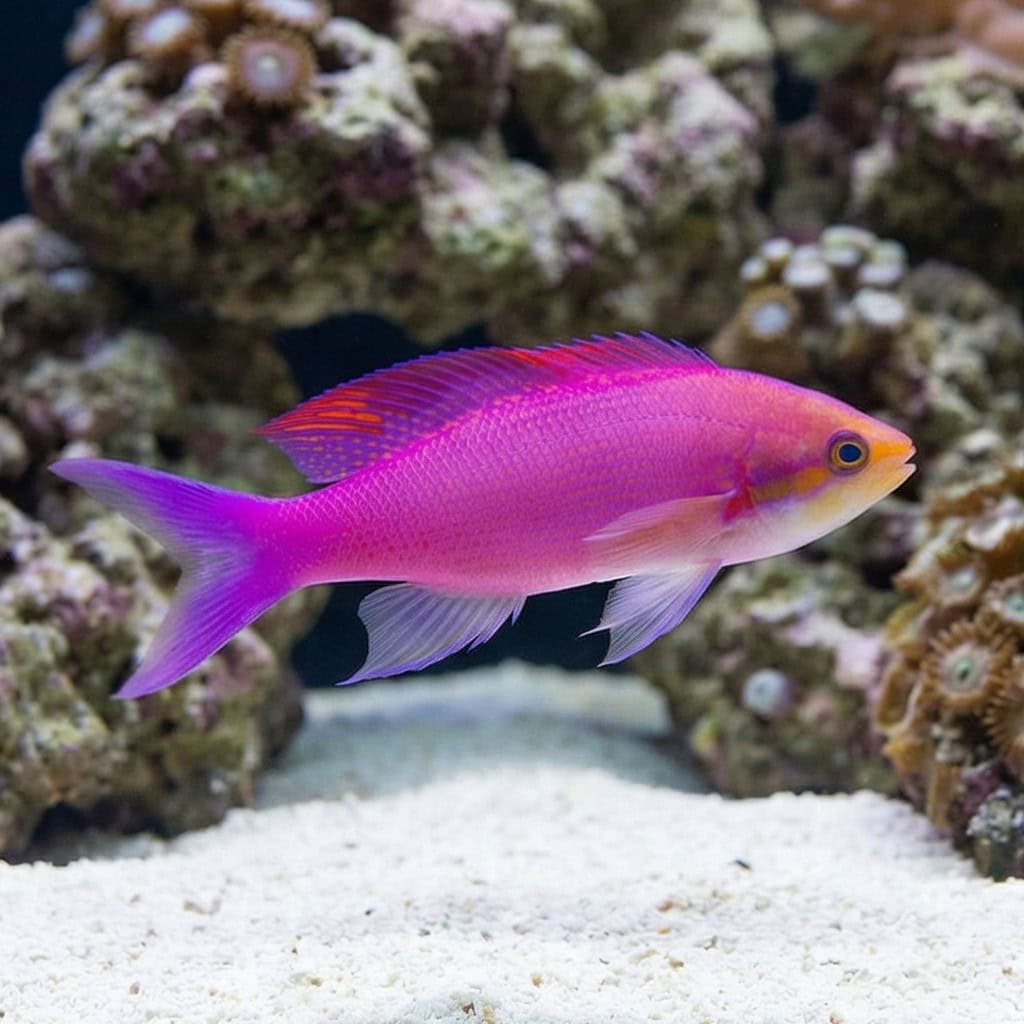
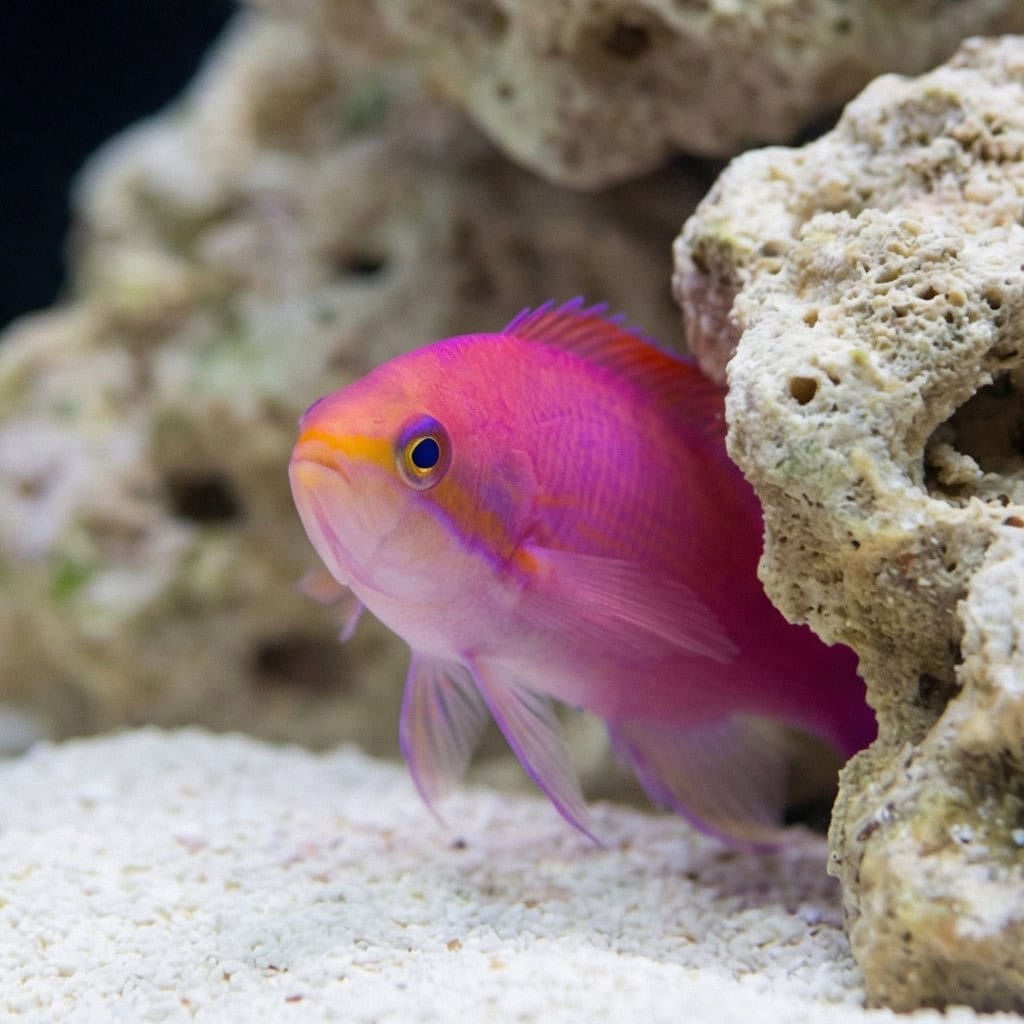
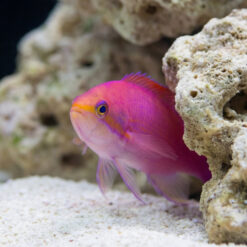
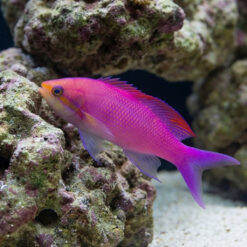
Purple Queen Anthias
Pseudanthias tuka
| Stock | Variations | Price | Quantity |
|---|
Every order ships with our standard 3-hour live arrival guarantee. Need more time? Add our 5-Day Guarantee at checkout.
Full guarantee terms →Ships Monday – Thursday for next-day arrival at your nearest FedEx Hold location — typically ready by 9 AM. We monitor every delivery.
Shipping details →
Monday – Friday 8 AM – 9 PM
Saturday 12 PM – 4 PM
Sunday 12 PM – 9 PM
Healthy, stable animals from vetted suppliers — inspected before packing, shipped overnight. Decades of experience built this model so we can deliver premium livestock at 30%+ less than you'd pay elsewhere.
| Care Level | Expert |
|---|---|
| Temperament | Peaceful |
| Reef Safe | Yes |
| Functional Benefit | Ornamental Only |
| Diet Type | Planktivore |
| Mininum Tank Size | 120 gallons |
| Max Size | 5 inches |
| Temperature | 72–78°F |
| pH Range | 8.1–8.4 |
| Specific Gravity | 1.022–1.025 |
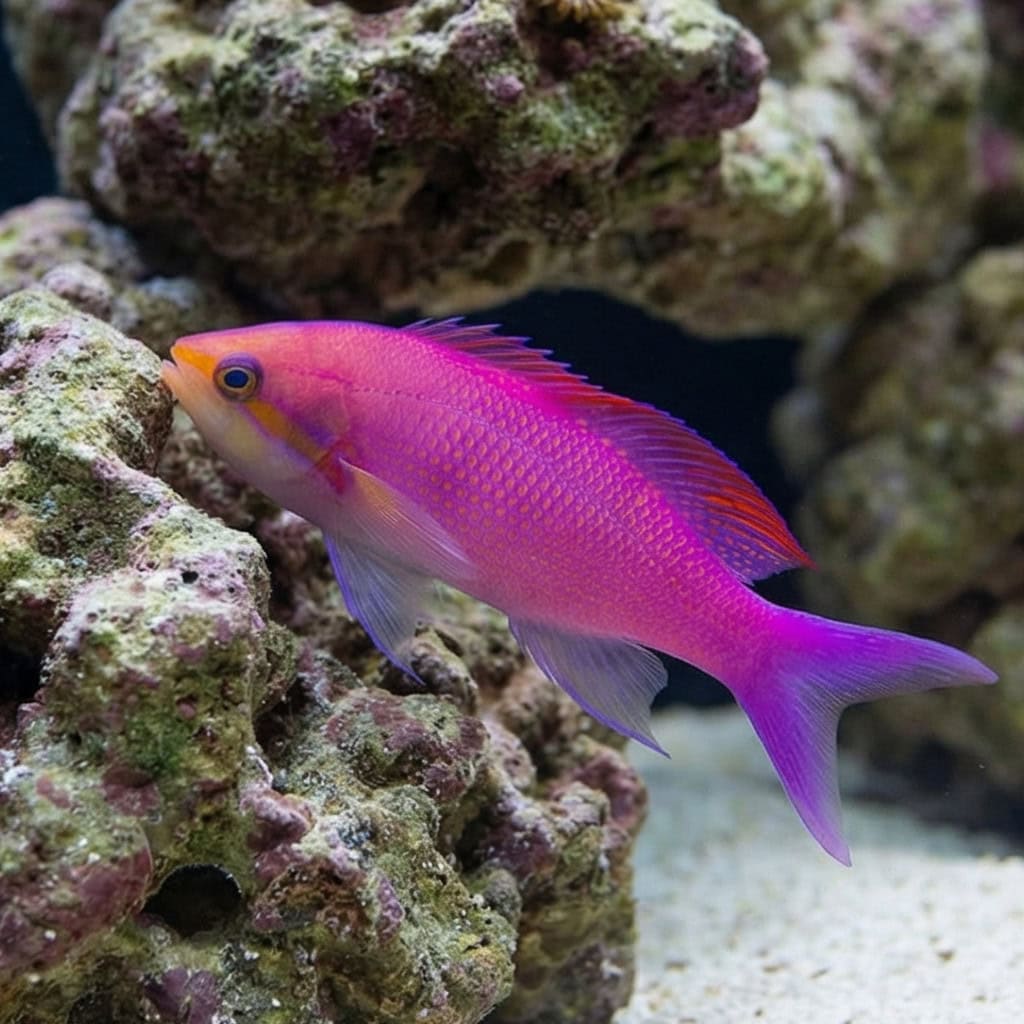
The Purple Queen Anthias (Pseudanthias tuka) is a midwater reef anthias known for a purple body with contrasting accent colors that show best under reef lighting. In established reef tanks, it typically spends most of its time in open water near rockwork, where it can move in and out of cover between feedings.
What You’ll Observe:
- Holding position in the water column where flow is strongest, then making quick passes to grab fine foods
- A “follow-the-leader” pattern when kept with other anthias, with the group moving together
- Short retreats into caves and overhangs, then returning to the same midwater zone
- Increased activity and feeding response when small food particles stay suspended
Provide a tank with open swimming room plus multiple caves and ledges so the fish can reset between meals without leaving the water column. Offer small, frequent feedings of fine meaty plankton foods (and gradually larger items as it settles in) to match its natural grazing style. If keeping more than one, a larger group with plenty of space helps spread attention and encourages consistent feeding.
Will it ignore food at first even if it ate at the store?
It’s common for the first feeding response to be delayed; steady, small offerings of suspended foods help it “lock on” to feeding in a new tank.
Why does it hover in one high-flow corner for long periods?
Many keepers report they prefer to sit in a strong current and pick food drifting past, rather than searching the rockwork.
Do they do better alone or in a group once established?
Hobbyists often see more confident midwater behavior in groups, especially when multiple fish begin feeding together.
What foods are people most successful with during the first weeks?
Reports frequently mention very small items (baby brine, rotifers/cyclops-type foods, fish roe) before transitioning to larger frozen and then pellets.
Is it normal to spit out larger pieces of frozen food?
Yes—keepers often note they mouth and reject oversized pieces; offering finely chopped or naturally small particles improves uptake.
Each fish is checked for strong appetite and activity before we approve it for your tank.
Recently viewed products