
Black Longnose Tang
Zebrasoma rostratum
| Stock | Variations | Price | Quantity | |
|---|---|---|---|---|
| Out of Stock | 5.5 -7" - Central Pacific | Original price was: $4,253.99.$2,233.99Current price is: $2,233.99. | Email me |
Every order ships with our standard 3-hour live arrival guarantee. Need more time? Add our 5-Day Guarantee at checkout.
Full guarantee terms →Ships Monday – Thursday for next-day arrival at your nearest FedEx Hold location — typically ready by 9 AM. We monitor every delivery.
Shipping details →
Monday – Friday 8 AM – 9 PM
Saturday 12 PM – 4 PM
Sunday 12 PM – 9 PM
Healthy, stable animals from vetted suppliers — inspected before packing, shipped overnight. Decades of experience built this model so we can deliver premium livestock at 30%+ less than you'd pay elsewhere.
| Care Level | Moderate |
|---|---|
| Temperament | Semi-Aggressive |
| Reef Safe | Yes |
| Functional Benefit | Algae Control |
| Diet Type | Herbivore |
| Mininum Tank Size | 120 gallons |
| Max Size | 8 inches |
| Temperature | 72–78°F |
| pH Range | 8.1–8.4 |
| Specific Gravity | 1.022–1.025 |
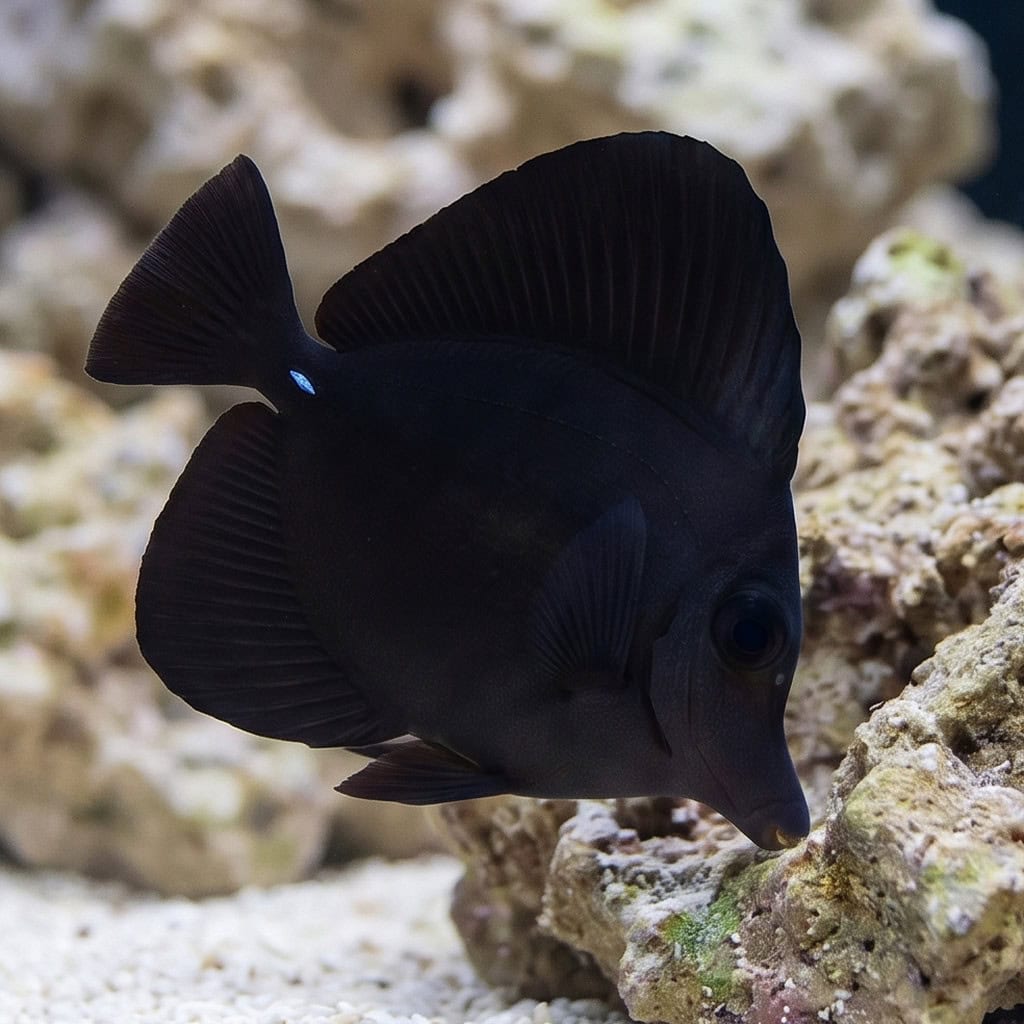
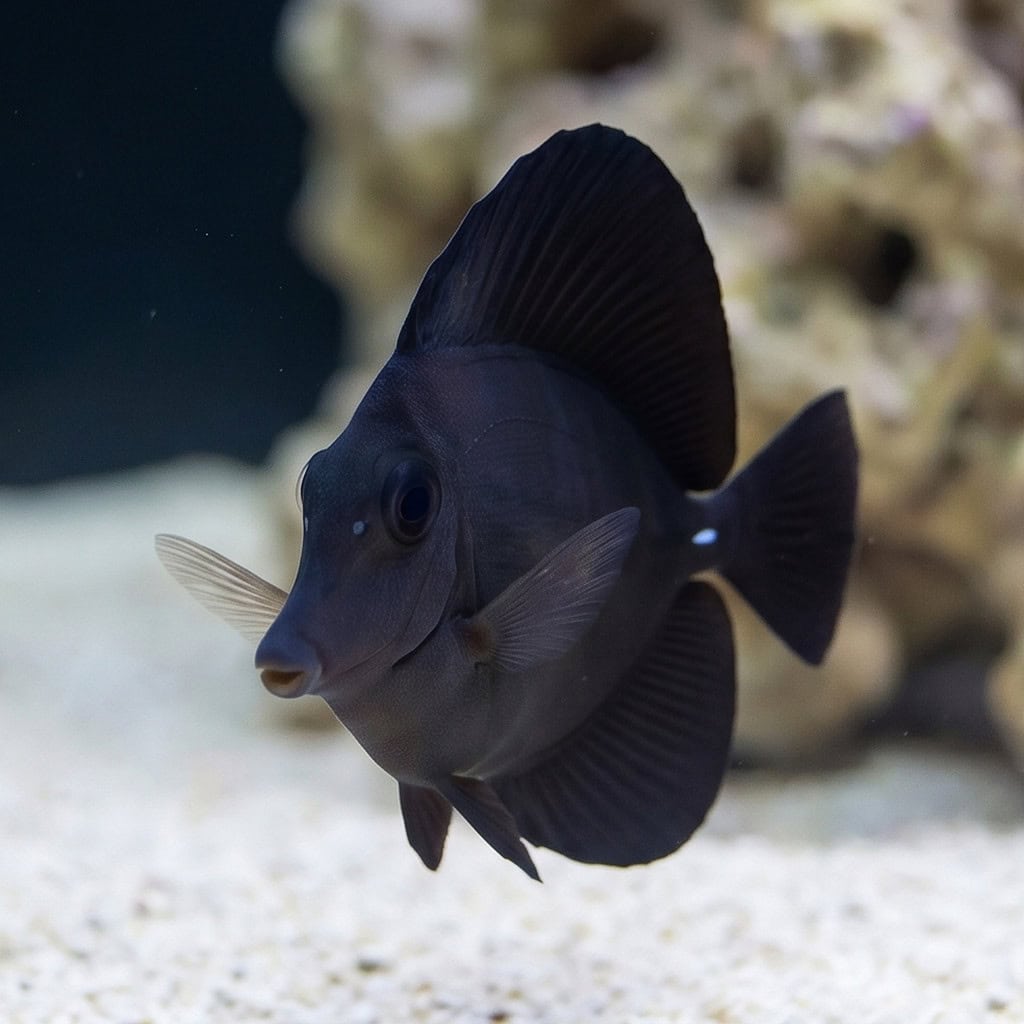
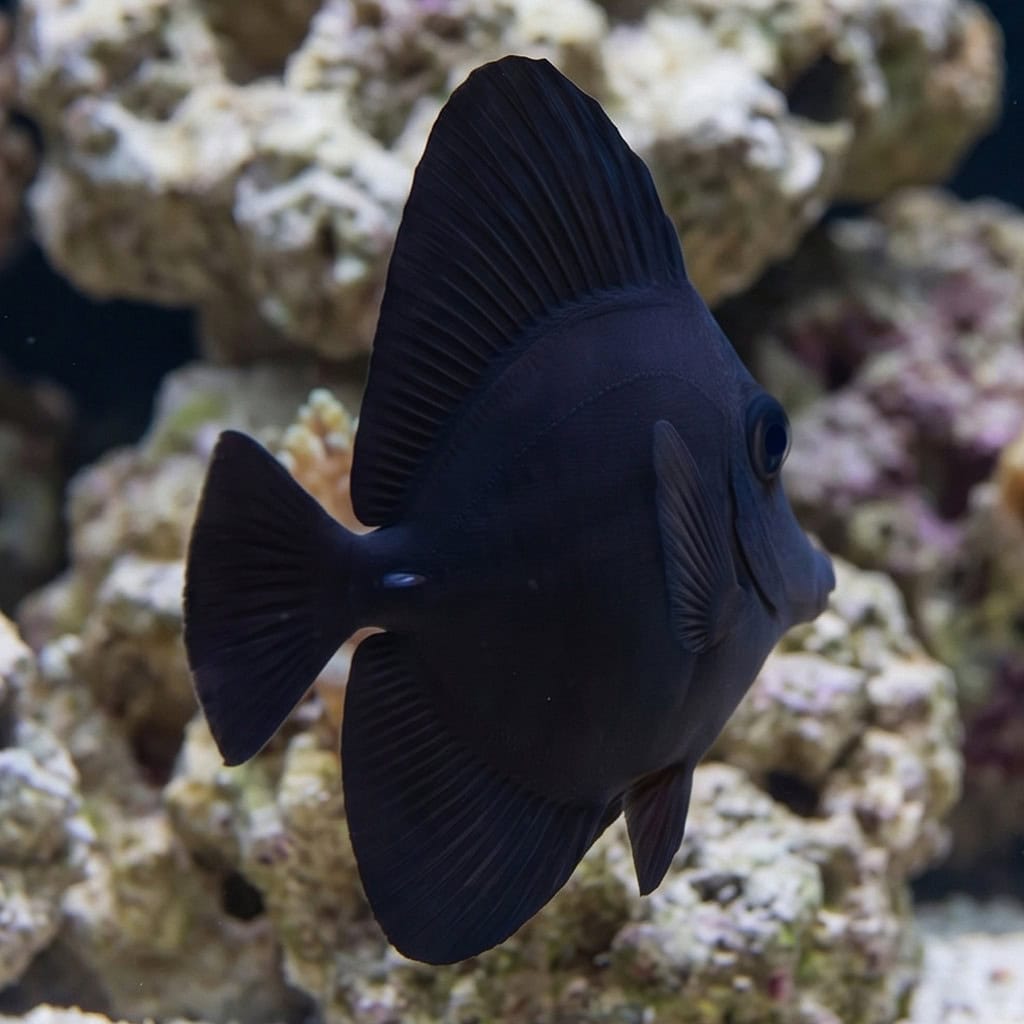
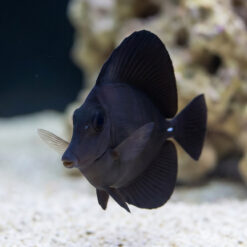
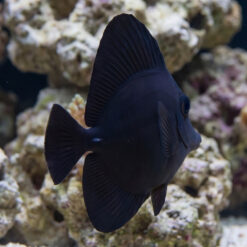
The Black Longnose Tang (Black Tang), Zebrasoma rostratum, is a persistent algae grazer that helps keep rockwork and hard surfaces picked clean throughout the day. Adults are typically deep black with a noticeably extended snout and a small white accent near the tail spine, giving the classic “longnose surgeonfish” look.
What You’ll Observe:
- Steady “patrol” laps around the rockwork, with frequent stops to graze and peck at film algae
- Quick fin displays and side-turns when it passes other similarly shaped fish
- A consistent routine around feeding time, often learning the usual spot where foods are offered
- Short bursts of speed through open water, then weaving back into the aquascape
- Subtle color shifts under different lighting, from jet black to a softer charcoal tone
To succeed, provide an established reef with open swimming lanes plus plenty of rock surface for daily grazing. Offer regular sheets of dried algae along with veggie-forward pellets and mixed frozen foods to keep body condition strong. In mixed-tang systems, this species settles best when introduced with ample space and a clear feeding routine.
How can I tell a true Black Longnose Tang from a very dark Scopas Tang or a hybrid?
Look for the distinctly longer “beaked” snout as it matures; very dark Scopas types usually keep a shorter, rounder face profile. Clear side photos (straight-on and from above) make the difference easier to see.
Why does it sometimes show a faint silver streak or a slight greenish sheen?
Many keepers notice subtle highlights that appear or disappear depending on angle, LED spectrum, and how the fish is displaying. These changes are often most noticeable when the fish is cruising with fins fully extended.
Is it normal if it ignores the algae clip at first?
Yes—some individuals graze natural growth for a while before recognizing a clip as food. Keeping the clip in the same location daily and offering smaller, fresher pieces often helps it “connect the dots.”
Will it graze the whole tank or focus on one area?
Most develop favorite routes and grazing zones, especially along high-traffic rock faces and edges where algae regrows fastest. Over time, the pattern usually expands as it becomes comfortable with the full layout.
Can it live with other tangs long-term?
Many aquarists report the smoothest results when each tang has its own swimming room and multiple feeding stations, so no single area becomes “the” food spot. A consistent routine and plenty of grazing surface tends to keep day-to-day interactions calm.
Each fish is checked for strong appetite and activity before we approve it for your tank.
Recently viewed products